
The nickname \"The Lone Star State\" evokes powerful imagery of independence, resilience, and identity. For many, the single star on the Texas flag is more than a design—it’s a symbol deeply rooted in the state’s struggle for sovereignty and its enduring spirit. But how did this moniker come to define Texas? The answer lies in a dramatic chapter of American and Mexican history, where revolution, nationhood, and pride converged to create one of the most recognizable state identities in the United States.
The Origin of the Lone Star Symbol
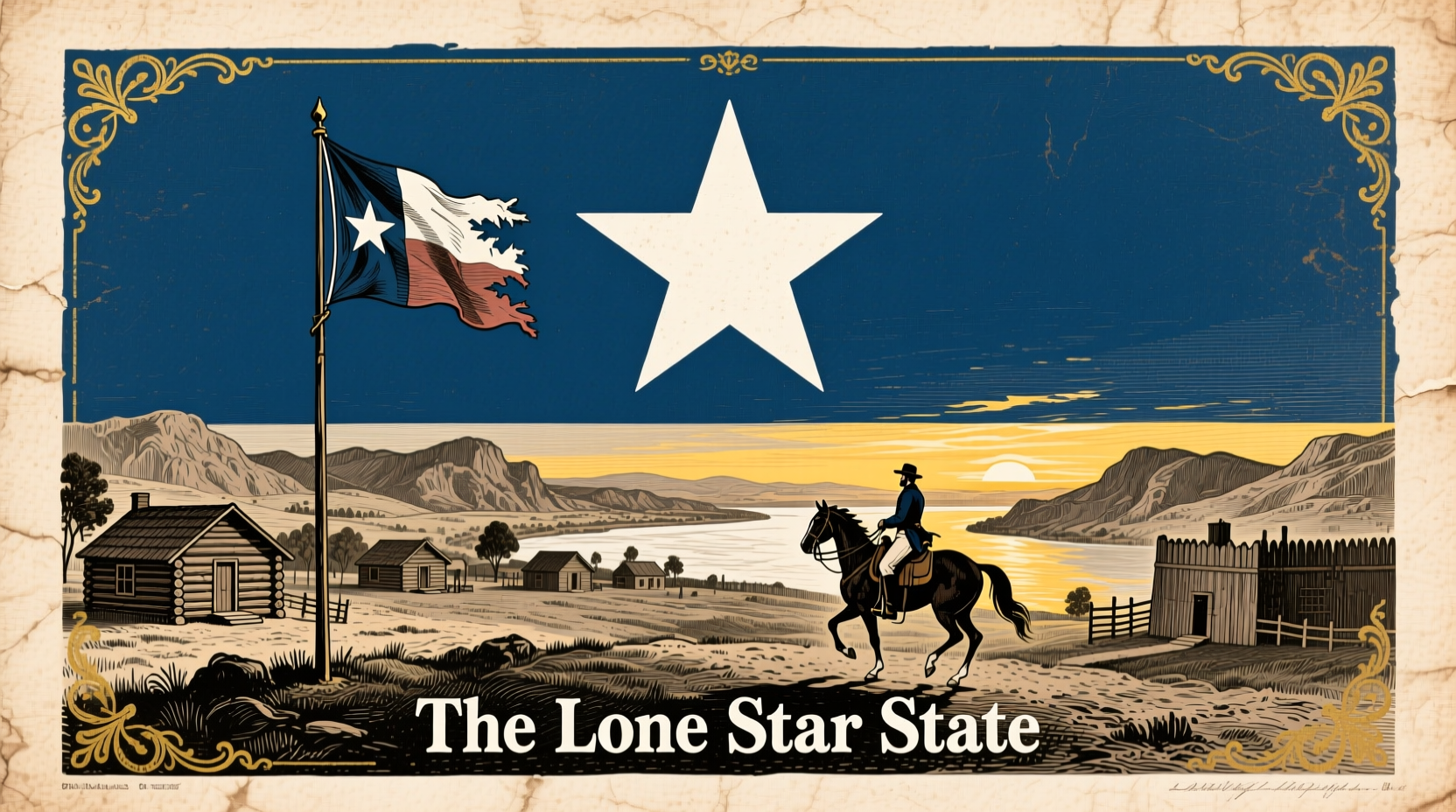
The lone star predates Texas’s statehood and even its time as a republic. Its origins trace back to earlier revolutionary movements in Latin America, where a single star was used to represent unity and independence from colonial rule. When Anglo-American settlers moved into Mexican Texas in the 1820s and 1830s, they brought with them aspirations for self-governance. As tensions grew between the settlers and the centralist government of Mexico, the idea of an independent Texas gained momentum.
The first official use of the lone star in Texas came during the short-lived Republic of Fredonia in 1826, an unsuccessful rebellion by settlers in Nacogdoches. Though the revolt failed, the lone star flag became a lasting emblem of resistance. It reappeared in 1836 during the Texas Revolution, when Texan forces declared independence from Mexico. The banner flown at key battles, including the Alamo and San Jacinto, featured a single white star on a field of blue—a stark declaration of autonomy.
“Texas is not a state, it is a state of mind.” — John Steinbeck, author of *Travels with Charley*
A Timeline of Independence and Identity
The path from Mexican province to U.S. state was neither smooth nor guaranteed. Below is a chronological breakdown of pivotal moments that solidified the Lone Star as a national and later state symbol:
- 1821: Mexico gains independence from Spain; Texas becomes part of the new Mexican nation.
- 1835–1836: The Texas Revolution begins after growing friction over governance and immigration policies. The Battle of the Alamo ends in defeat, but the rallying cry “Remember the Alamo!” unites Texan forces.
- April 21, 1836: General Sam Houston defeats General Santa Anna at the Battle of San Jacinto, securing de facto independence.
- 1836–1845: The Republic of Texas exists as a sovereign nation, complete with its own president, constitution, currency, and international diplomacy. Its national flag prominently features a single large star.
- December 29, 1845: Texas is annexed by the United States and admitted as the 28th state, retaining the lone star on its state flag as a tribute to its unique past.
The Meaning Behind the Symbol
The lone star carries multiple layers of meaning. At its most basic level, it represents unity—the idea that Texans stand together as one people, regardless of background. But historically, it also signifies defiance, independence, and exceptionalism. During its years as a republic, Texas was one of the few nations in North America not under British, French, Spanish, or U.S. control. The star stood alone, just as the republic stood apart.
Culturally, the symbol has evolved. While some associate it with Southern pride or states’ rights (particularly during the Civil War era), modern usage emphasizes heritage, courage, and individuality. The Texas state motto, \"Friendship,\" may seem at odds with the image of rugged independence, but the two are intertwined: the lone star reflects a willingness to stand up for what’s right, even if standing alone.
Comparing National and State Flags
The design of the current Texas state flag, adopted in 1839, closely resembles the national flag of the former Republic of Texas. Here's how it compares to other significant flags in Texas history:
| Flag | Year Adopted | Design Elements | Symbolic Meaning |
|---|---|---|---|
| Republic of Texas Flag | 1836 | Single white star on azure field, with red, white, and green stripes | National sovereignty and revolutionary ideals |
| Current Texas State Flag | 1839 (officially readopted 1933) | Blue vertical bar with white star, horizontal red and white stripes | Continuity with republic era; loyalty, bravery, purity |
| Battle of Gonzales Flag (\"Come and Take It\") | 1835 | Black cannon, lone star, and words \"Come and Take It\" | Defiance against Mexican military authority |
| Alamo Defenders' Flag (Sullivan & Navarro Flags) | 1836 | Variants with single star and inscriptions like \"Liberty or Death\" | Sacrifice and commitment to freedom |
Why No Other State Has This Distinction
While other states have nicknames—California is the \"Golden State,\" New York the \"Empire State\"—none carry the same weight of political history as Texas’s \"Lone Star.\" The reason is simple: Texas is the only U.S. state that was once an independent country. This unique status allowed it to negotiate special terms upon joining the Union, including the right to retain public lands and, theoretically, to divide into up to five states (though this has never been exercised).
This legacy fosters a distinct cultural mindset. Many Texans speak proudly of their state’s history not as a colony or territory, but as a nation. The lone star is more than nostalgia—it’s a daily reminder of self-determination.
Real Example: The 1936 Centennial Celebration
When Texas celebrated its 100th anniversary as a republic in 1936, the lone star took center stage. The Texas Centennial Exposition in Dallas drew millions and featured monumental architecture, historical reenactments, and exhibitions highlighting the republic years. The star appeared on souvenirs, posters, and even commemorative coins minted by the U.S. Treasury. Historians note that this event cemented the lone star not just as a historical relic, but as a living symbol of Texan pride accessible to every generation.
Common Misconceptions About the Lone Star
- Myth: The lone star represents Texas’s secession from the Union. Reality: The symbol predates the Civil War by decades and was tied to independence from Mexico, not the Confederacy.
- Myth: The star stands for Texas being the 28th state. Reality: While Texas was the 28th state admitted, the star symbolizes unity and sovereignty, not numerical order.
- Myth: Only Texans use the symbol. Reality: The lone star appears in regional branding across the South and Southwest, often associated with authenticity and grit.
Frequently Asked Questions
What does the lone star on the Texas flag represent?
The lone star symbolizes unity and independence. It reflects Texas’s history as a sovereign nation and its enduring spirit of self-reliance.
Can Texas legally secede from the United States?
No. Although Texas joined the Union under unique conditions, the U.S. Supreme Court ruled in Texas v. White (1869) that no state can unilaterally secede. The lone star is a cultural emblem, not a legal claim to separation.
Why is the Texas flag the only state flag allowed to fly at the same height as the U.S. flag?
This is a popular myth. In reality, all state flags may fly at the same height as the U.S. flag when displayed on separate poles, per the U.S. Flag Code. Texas’s status as a former republic does not grant it special flag privileges, though many Texans believe otherwise.
How to Honor the Lone Star Legacy Today
Understanding the history behind the lone star is the first step in honoring it respectfully. Whether you’re a lifelong resident or a newcomer, consider these actions:
- Visit historic sites like the Alamo, the San Jacinto Monument, or the Texas State Capitol to learn firsthand about the state’s journey.
- Display the flag properly—never let it touch the ground, and illuminate it at night if flown after dark.
- Educate others about the true meaning of the symbol beyond stereotypes or political slogans.
- Support preservation efforts for Texas’s historical landmarks and archives.
- Teach children the difference between myth and documented history when discussing Texas identity.
“The lone star isn’t about isolation—it’s about integrity. It means standing for something, even when it’s hard.” — Dr. Maria Hernandez, Texas historian and professor at UT Austin
Conclusion
The title \"The Lone Star State\" is far more than a catchy nickname. It is a testament to a bold experiment in self-rule, a revolution fought for autonomy, and a cultural legacy that continues to shape Texas today. From the battlefields of the 1830s to classrooms, sports arenas, and city halls, the single star endures as a beacon of unity, courage, and identity. Understanding its history allows us to appreciate not just a flag, but a people who value independence, resilience, and pride in equal measure.




 浙公网安备
33010002000092号
浙公网安备
33010002000092号 浙B2-20120091-4
Comments
No comments yet. Why don't you start the discussion?