
The Bill of Rights—comprising the first ten amendments to the United States Constitution—is more than a historical document; it is the foundation of individual liberty in America. Ratified in 1791, these amendments were born from a deep concern that a powerful federal government could infringe upon personal freedoms without explicit safeguards. Today, they remain central to American identity, law, and civic life. Understanding their importance goes beyond memorizing rights—it involves recognizing how these protections shape daily life, legal decisions, and national values.
Historical Origins: A Response to Fear of Tyranny
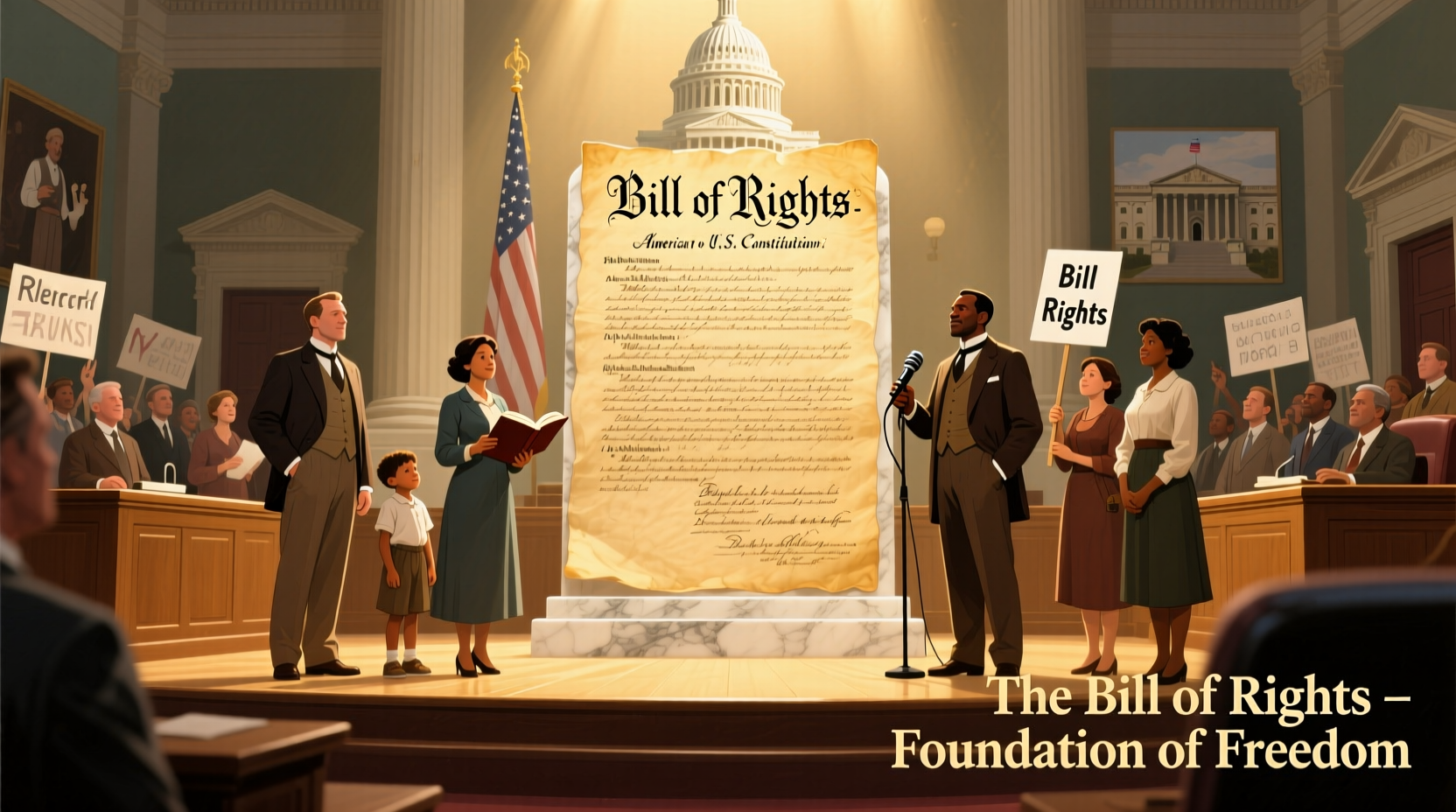
When the original Constitution was drafted in 1787, it established the structure of the federal government but did not include specific protections for individual liberties. This omission alarmed many citizens and state leaders who had just fought a revolution against what they viewed as an oppressive monarchy. They feared that without clear limits on government power, the new republic might evolve into another form of tyranny.
Anti-Federalists, including figures like Patrick Henry and George Mason, argued passionately for a bill of rights. Their pressure led James Madison, initially skeptical, to draft a series of amendments based on existing state declarations and Enlightenment philosophy. Influenced by thinkers such as John Locke and Montesquieu, these amendments enshrined fundamental rights—freedom of speech, religion, due process, and protection from unreasonable searches.
The ratification of the Bill of Rights in 1791 was not merely procedural; it represented a profound commitment to the idea that government exists to serve the people, not control them. This foundational principle continues to guide American jurisprudence and public discourse.
Core Protections and Their Modern Applications
The strength of the Bill of Rights lies in its broad yet precise language, allowing its principles to adapt across centuries. Below is a summary of key amendments and how they function today:
| Amendment | Right Protected | Modern Example |
|---|---|---|
| First | Freedom of speech, religion, press, assembly, petition | Protests, news reporting, religious expression in public spaces |
| Second | Right to keep and bear arms | Debates over gun control and self-defense laws |
| Fourth | Protection from unreasonable searches and seizures | Warrant requirements for digital data collection |
| Fifth | Due process, protection against self-incrimination | \"Pleading the Fifth\" in criminal trials |
| Eighth | Protection from cruel and unusual punishment | Legal challenges to death penalty procedures |
These rights are not abstract—they are invoked daily in courtrooms, classrooms, and communities. For example, when journalists report on government misconduct, they operate under First Amendment protections. When law enforcement officers obtain a warrant before searching a home, they adhere to Fourth Amendment standards. These applications show that the Bill of Rights is not frozen in time but actively interpreted to meet evolving societal needs.
“Liberty lies in the hearts of men and women; when it dies there, no constitution, no law, no court can save it.” — Learned Hand, U.S. Judge
A Living Shield: The Bill of Rights in Crisis and Change
The true test of any constitutional framework is how it holds up during times of national stress. The Bill of Rights has been both upheld and challenged during wars, social movements, and public emergencies. During World War I, for instance, the Espionage Act led to prosecutions of individuals criticizing the draft—raising serious First Amendment concerns. In the post-9/11 era, debates over surveillance programs highlighted tensions between national security and Fourth Amendment privacy rights.
Yet, each challenge has also reinforced the necessity of these protections. Landmark Supreme Court cases like Tinker v. Des Moines (1969), which upheld students’ right to wear black armbands in protest of the Vietnam War, reaffirmed that even unpopular speech is protected. Similarly, Miranda v. Arizona (1966) strengthened Fifth Amendment rights by requiring law enforcement to inform suspects of their rights—a practice now embedded in American culture.
These moments underscore a vital truth: the Bill of Rights serves as a check on overreach, especially when emotions run high and majority sentiment may threaten minority rights. It ensures that dissent is not silenced, that justice is not rushed, and that power remains accountable.
Mini Case Study: The Right to Protest
In 2020, following the killing of George Floyd, millions of Americans took to the streets in peaceful protest. While some demonstrations turned violent, the vast majority were expressions of free speech and assembly—protected under the First Amendment. In several cities, authorities attempted to impose curfews or disperse crowds using force, raising legal questions about the balance between public order and constitutional rights.
Courts intervened in multiple instances, blocking overly broad restrictions. Federal judges ruled that governments could not ban protests outright without violating constitutional protections. This real-time application of the Bill of Rights demonstrated its role not just as a legal doctrine, but as a living defense of democratic participation.
How Citizens Can Uphold the Bill of Rights
The endurance of the Bill of Rights depends not only on courts and lawmakers but on informed and engaged citizens. Understanding and defending these rights requires ongoing effort. Here’s a checklist of actions individuals can take:
- Educate yourself on what each amendment guarantees and how it applies today.
- Speak up when you see rights being undermined in your community or workplace.
- Support organizations that defend civil liberties through advocacy or litigation.
- Vote for representatives who respect constitutional limits and protect individual freedoms.
- Teach others, especially young people, about the importance of civic rights and responsibilities.
Frequently Asked Questions
Does the Bill of Rights apply to everyone in the U.S.?
Yes. The protections in the Bill of Rights apply to all individuals within U.S. jurisdiction, regardless of citizenship status. This includes immigrants, visitors, and undocumented persons. For example, the Fifth Amendment’s due process clause protects non-citizens facing deportation.
Can the Bill of Rights be changed or removed?
Technically, yes—but only through the formal amendment process outlined in Article V of the Constitution, which requires broad consensus. No amendment has ever successfully repealed part of the Bill of Rights, reflecting its deeply entrenched status in American law and culture.
Why are the first ten amendments called the 'Bill of Rights'?
The term “bill of rights” originates from English legal tradition, most notably the English Bill of Rights of 1689, which limited royal power and affirmed parliamentary authority. American founders adopted the term to emphasize that these amendments formally list essential rights retained by the people.
Conclusion: A Call to Vigilance and Engagement
The Bill of Rights is not self-enforcing. Its continued relevance depends on a citizenry that understands its value and acts to preserve it. From safeguarding free expression to ensuring fair treatment under the law, these ten amendments form the moral and legal backbone of American democracy.
In an era of rapid technological change, political polarization, and global uncertainty, the principles enshrined in 1791 are more vital than ever. They remind us that freedom requires constant care, that rights must be claimed as well as defended, and that every generation has a role in upholding justice.




 浙公网安备
33010002000092号
浙公网安备
33010002000092号 浙B2-20120091-4
Comments
No comments yet. Why don't you start the discussion?