
The Euphrates River, one of the most historically significant waterways in human civilization, is facing an unprecedented crisis. Once the lifeblood of Mesopotamia and a vital source of water for millions across Turkey, Syria, and Iraq, the river is now drying at an alarming rate. Reduced flow, prolonged droughts, and rising demand are pushing the Euphrates toward ecological collapse. This isn’t just an environmental issue—it’s a threat to food security, regional stability, and cultural heritage.
Understanding why the Euphrates is drying up—and what’s at stake—requires examining climate change, upstream damming, agricultural strain, and geopolitical tensions. The consequences extend far beyond receding water levels; they touch on survival, sovereignty, and sustainability in one of the world’s most vulnerable regions.
Climate Change and Prolonged Drought
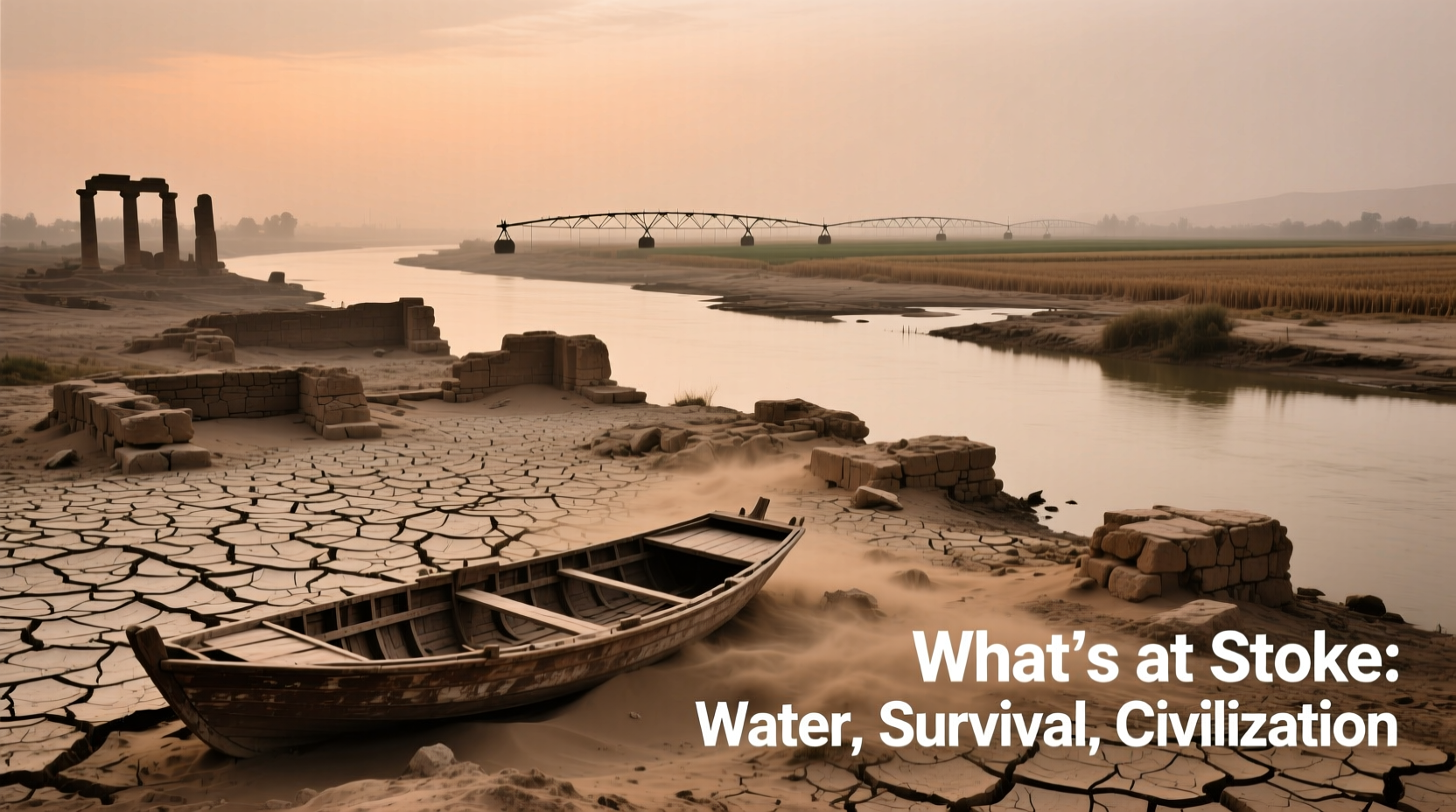
The most fundamental driver behind the Euphrates’ decline is climate change. The Middle East has warmed nearly 50% faster than the global average over the past century, according to the World Bank. This accelerated warming has disrupted precipitation patterns, leading to extended droughts across the Fertile Crescent—the historic arc where the Euphrates flows.
Between 2006 and 2010, the region endured its worst drought in 900 years, severely reducing snowpack in the Taurus Mountains of eastern Turkey—the primary source of the Euphrates. With less snowmelt feeding into the river each spring, downstream flow has diminished dramatically. Recent data from the UN Environment Programme shows that annual rainfall in the Euphrates Basin has dropped by 15–30% since the 1970s.
Higher temperatures also increase evaporation rates from reservoirs and soil, further reducing available water. As droughts become more frequent and intense, natural replenishment cannot keep pace with demand.
Upstream Damming and Water Diversion
Turkey controls approximately 90% of the Euphrates’ headwaters. Through its Southeastern Anatolia Project (GAP), Turkey has constructed 22 dams and 19 hydroelectric plants along the Euphrates and Tigris rivers. While these projects aim to boost energy production and irrigate 1.8 million hectares of farmland, they drastically reduce downstream flow.
The Atatürk Dam, one of the largest in the system, can store up to 48 billion cubic meters of water. When filled, it holds back enough water to delay or diminish flow into Syria and Iraq for months. During dry years, Turkey has reduced Euphrates discharge by up to 60%, sparking diplomatic tensions.
Syria and Iraq have limited leverage to negotiate fair water shares. International water law, such as the UN Convention on the Law of the Non-Navigational Uses of International Watercourses, supports equitable use, but it is not binding on all parties. Without enforceable agreements, upstream control translates to downstream vulnerability.
“The Euphrates is no longer a shared river—it’s a contested resource. Without cooperative management, we risk irreversible damage.” — Dr. Ayşe Kudat, Water Policy Analyst, Middle East Institute
Agricultural Overuse and Inefficient Irrigation
Agriculture accounts for over 85% of water consumption in the Euphrates Basin. In Iraq and Syria, vast stretches of land rely on flood irrigation—a method that loses up to 50% of water to evaporation and runoff. Cotton, wheat, and rice farming, while economically important, place enormous pressure on dwindling supplies.
In central Iraq, farmers continue to plant water-intensive crops despite shrinking river flow. Groundwater pumping has surged as surface water declines, leading to aquifer depletion and soil salinization. In some areas, wells have run dry, forcing rural communities to abandon their land.
Modernizing irrigation infrastructure could save billions of cubic meters annually. Drip irrigation, for example, improves efficiency by 30–60%. Yet adoption remains low due to high costs, lack of subsidies, and weak governance.
What’s at Stake: Food, People, and Peace
The drying of the Euphrates threatens far more than ecosystems. It endangers food systems, public health, and regional stability. Here’s what’s on the line:
- Food Security: Iraq produces only 40% of its wheat needs today, down from self-sufficiency two decades ago. Declining river flow reduces crop yields and livestock viability.
- Displacement: Over 1 million people in southern Iraq have been affected by water shortages since 2021, with many migrating to urban centers.
- Public Health: Reduced water quality increases risks of waterborne diseases. In Basra, contaminated water has caused repeated outbreaks of cholera and typhoid.
- Ecological Collapse: The Mesopotamian Marshes, a UNESCO World Heritage site, are drying up. These wetlands once supported migratory birds, fish nurseries, and the Marsh Arab communities.
- Conflict Risk: Competition over water has fueled local clashes and could escalate into interstate disputes if cooperation fails.
| Stakeholder | Primary Concern | Potential Impact |
|---|---|---|
| Farmers | Irrigation access | Crop failure, loss of livelihood |
| Urban Populations | Drinking water supply | Water rationing, health crises |
| Government Agencies | Resource management | Political instability, migration |
| Environmental Groups | Wetland preservation | Biodiversity loss |
| Regional Powers | Geopolitical influence | Diplomatic friction, conflict |
Mini Case Study: The Disappearing Marshes of Southern Iraq
In the 1990s, Saddam Hussein drained the Mesopotamian Marshes to punish the Marsh Arabs, reducing the wetlands by 90%. After 2003, efforts to restore them brought partial recovery. But today, new threats loom. With the Euphrates running at record-low levels, marsh water levels have dropped by over 40% since 2020.
Fishermen like Ahmed al-Khuzai, who returned after decades in exile, now struggle to survive. “The water used to reach my doorstep,” he says. “Now I walk two kilometers just to find a stream. My nets come up empty.” Scientists warn that without sustained inflow, the marshes could vanish entirely within a decade.
This case illustrates how environmental degradation compounds social and economic hardship. The loss of the marshes isn’t just ecological—it erases a way of life thousands of years old.
Action Plan: Steps Toward Sustainable Water Management
Reversing the Euphrates’ decline requires coordinated, long-term action. No single country can solve this alone. The following steps offer a realistic path forward:
- Negotiate Binding Water-Sharing Agreements: Turkey, Syria, and Iraq must establish a trilateral commission with enforceable flow guarantees during droughts.
- Invest in Modern Irrigation: Redirect agricultural subsidies toward drip systems and moisture sensors to reduce waste.
- Promote Drought-Resistant Crops: Replace water-intensive staples like rice with sorghum or millet.
- Restore Wetlands Strategically: Prioritize marsh re-flooding using managed releases from upstream reservoirs.
- Monitor Water Data Transparently: Share real-time river flow and dam release data via a joint platform to build trust.
FAQ
Can the Euphrates River be saved?
Yes, but only through urgent regional cooperation, climate adaptation, and investment in sustainable water use. While full restoration may not be possible, stabilizing flow and protecting critical ecosystems is achievable.
Is Turkey solely responsible for the drying Euphrates?
No single country bears full responsibility. Turkey’s dams play a major role, but climate change, inefficient agriculture in downstream countries, and population growth all contribute. Solutions must be shared.
How does the Euphrates’ decline affect drinking water?
As river flow drops, salinity and pollution concentrate. In cities like Basra, treatment plants cannot keep up, leading to unsafe drinking water and frequent service interruptions.
Conclusion: A Call for Collective Action
The Euphrates River is more than a geographic feature—it’s a symbol of civilization, resilience, and interdependence. Its drying reflects broader challenges of climate change, resource mismanagement, and geopolitical fragmentation. But it also presents an opportunity: to rebuild cooperation, innovate sustainably, and protect a shared future.
The time for incremental fixes is over. Farmers, policymakers, scientists, and citizens must act together. Support water-saving technologies, advocate for fair treaties, and raise awareness about this silent crisis. The fate of the Euphrates is not sealed. What we do—or fail to do—today will echo for generations.




 浙公网安备
33010002000092号
浙公网安备
33010002000092号 浙B2-20120091-4
Comments
No comments yet. Why don't you start the discussion?