
In 1215, a group of rebellious English barons forced King John to affix his seal to a document at Runnymede, a meadow beside the River Thames. That document—known as the Magna Carta—was initially intended as a peace treaty between the king and his nobles. Yet what began as a feudal compromise evolved into one of the most influential legal texts in history. Though many of its original clauses are obsolete, the Magna Carta laid foundational principles that continue to shape democratic governance, individual rights, and the rule of law across the world.
The Historical Context of the Magna Carta
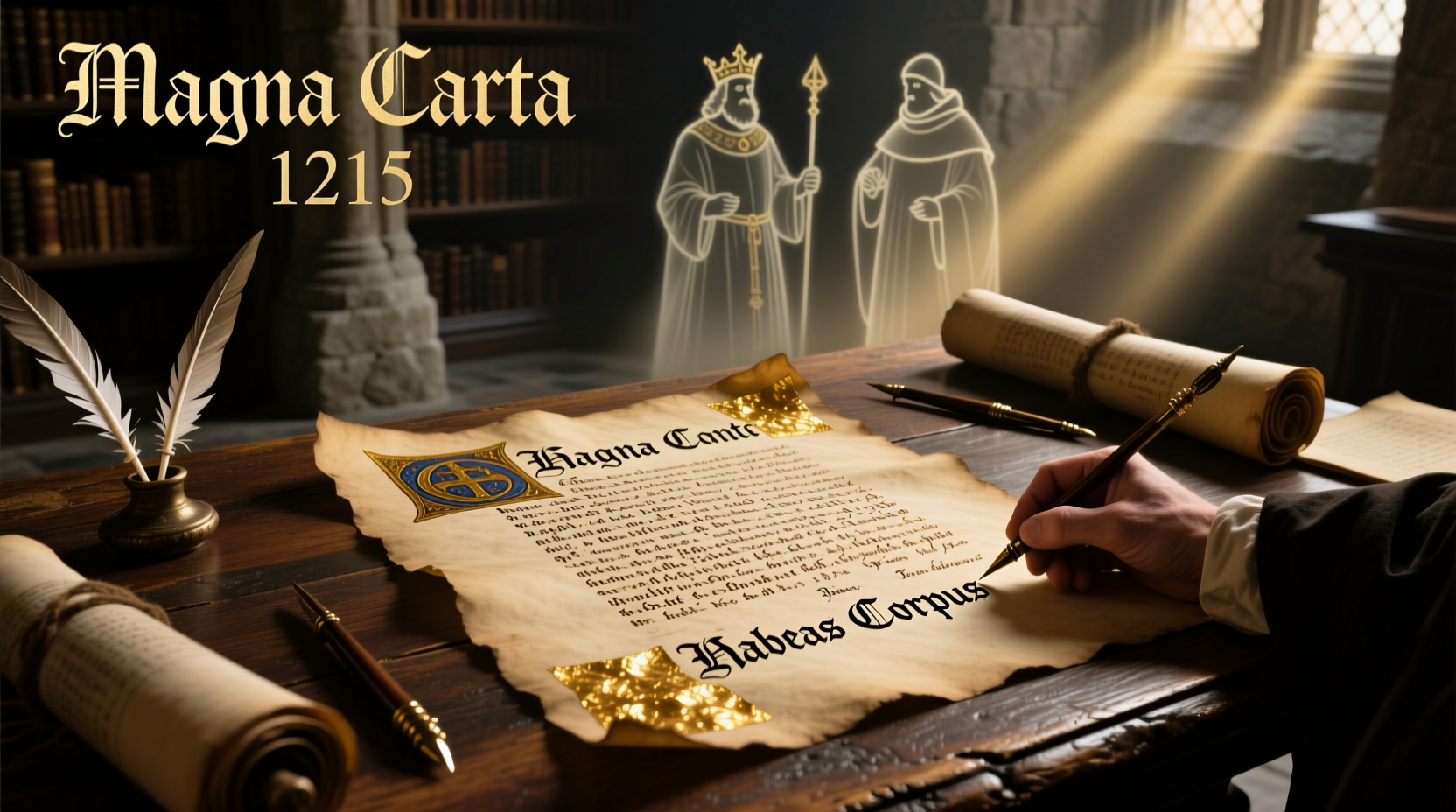
King John’s reign was marked by military defeats, heavy taxation, and strained relations with the Church and his barons. After losing Normandy to France and facing excommunication by Pope Innocent III, John resorted to extracting funds from his subjects through arbitrary fines and seizures. By 1215, discontent had reached a boiling point. A coalition of barons marched on London, capturing the city and compelling the king to negotiate.
The resulting agreement—the Magna Carta—contained 63 clauses addressing grievances ranging from inheritance rights to protection against unlawful imprisonment. While it failed to prevent civil war immediately, its symbolic value endured. The charter was reissued several times under subsequent monarchs, gradually transforming from a feudal contract into a broader statement of legal principle.
“Magna Carta planted the seed for the idea that no one is above the law—not even the king.” — Sir Robert Worcester, Historian and Legal Scholar
Core Principles Introduced by the Magna Carta
The true importance of the Magna Carta lies not in its medieval specifics but in the enduring legal concepts it introduced. Although only three of its original clauses remain part of British law today, their influence echoes throughout modern constitutions and human rights frameworks.
- Habeas Corpus: Clause 39 states that “No free man shall be seized or imprisoned… except by the lawful judgment of his peers or by the law of the land.” This became a cornerstone for due process and protection against arbitrary detention.
- Rule of Law: For the first time, a monarch formally acknowledged that his power was subject to legal constraints. This principle underpins all modern democracies.
- Right to a Fair Trial: The Magna Carta established that justice should not be sold, denied, or delayed—affirming access to impartial legal proceedings.
- Limits on Taxation: Clause 12 required royal taxes to have the “common counsel of the realm,” laying early groundwork for parliamentary consent.
Global Influence Across Centuries
The Magna Carta did not immediately transform England into a democracy. However, during the 17th century, English jurists like Sir Edward Coke revived it as a weapon against absolute monarchy. They cited it in legal challenges to royal overreach, embedding its principles into common law.
Its influence crossed the Atlantic, shaping the foundations of American governance. The framers of the U.S. Constitution drew directly from Magna Carta ideals when drafting the Bill of Rights. The Fifth Amendment’s guarantee that no person shall be “deprived of life, liberty, or property, without due process of law” is a direct descendant of Clause 39.
Nearly every liberal democracy today incorporates elements traceable to the Magna Carta, including:
- Independent judiciaries
- Legal protections for accused individuals
- Constitutional limits on executive power
A Real Example: The Warren Court and Due Process
In the 1960s, the U.S. Supreme Court under Chief Justice Earl Warren expanded civil liberties through rulings grounded in due process. In Mapp v. Ohio (1961), the Court ruled that evidence obtained in violation of the Fourth Amendment could not be used in state courts—a decision rooted in the same spirit of accountability and fairness championed by the Magna Carta. Legal scholars often cite this era as a modern reaffirmation of the charter’s core values.
Key Clauses and Their Modern Equivalents
| Original Clause (1215) | Meaning | Modern Equivalent |
|---|---|---|
| Clause 39 | No free man shall be imprisoned without lawful judgment by peers or by law of the land. | Fifth and Fourteenth Amendments (Due Process) – U.S. Constitution |
| Clause 40 | To no one will we sell, refuse, or delay right or justice. | Equal Protection Clause; access to courts worldwide |
| Clause 12 | No tax shall be levied without common counsel of the realm. | \"No taxation without representation\" – basis for parliamentary systems |
| Clause 61 | A council of 25 barons could override the king if he violated the charter. | Checks and balances; impeachment procedures |
Common Misconceptions About the Magna Carta
Despite its revered status, the Magna Carta is often misunderstood. It did not grant universal rights—only “free men,” a small portion of the population, were protected. Women, serfs, and peasants were largely excluded. Nor was it a democratic manifesto; its primary aim was to protect aristocratic privileges, not establish popular government.
Moreover, the original 1215 version was annulled by Pope Innocent III within weeks, declaring it “not only shameful and demeaning, but illegal and unjust.” Yet its reissuance in 1216, 1217, and 1225 ensured its survival as a symbol of lawful authority.
Timeline of Key Reissues and Influences
- 1215: First sealing at Runnymede; annulled months later.
- 1216: Revised version issued after King John’s death; some clauses removed.
- 1225: Reissued by Henry III with further modifications; accepted by Parliament.
- 1628: Sir Edward Coke uses Magna Carta to challenge Charles I’s arbitrary taxation.
- 1776: American colonists invoke Magna Carta in protests against British rule.
- 1948: Universal Declaration of Human Rights reflects Magna Carta principles.
- Today: Three clauses remain in force in UK law: habeas corpus, church rights, and fair trial.
How the Magna Carta Shaped Modern Democracies
The Magna Carta’s greatest contribution is its transformation from a tactical concession into a powerful symbol of liberty. It established the precedent that rulers must operate within a legal framework. This idea spread through British colonialism and Enlightenment thought, influencing constitutional developments in Canada, Australia, India, and beyond.
In post-war Europe, the European Convention on Human Rights (1950) echoed Magna Carta themes, particularly in Article 5 (right to liberty) and Article 6 (right to a fair trial). Even international bodies like the United Nations reference its legacy when advocating for judicial independence and human dignity.
FAQ: Common Questions About the Magna Carta
Did the Magna Carta create democracy?
No, it did not establish democracy. However, it introduced the idea that authority should be limited by law, which later enabled democratic institutions to develop.
Is the Magna Carta still law today?
Only three clauses remain in active legal force in England and Wales: the freedom of the English Church, the rights of the City of London, and the right to a fair trial. The rest have been repealed or superseded.
Where can I see an original copy of the Magna Carta?
Four surviving originals from 1215 exist: two at the British Library, one at Salisbury Cathedral, and one at Lincoln Cathedral. Others are held in museums and libraries worldwide.
Conclusion: Why the Magna Carta Still Matters
The Magna Carta was neither perfect nor revolutionary in its time. But its endurance lies in its adaptability—its phrases have been invoked by abolitionists, suffragettes, civil rights leaders, and judges defending constitutional order. It represents the ongoing struggle to hold power accountable and protect individual freedoms.
Understanding the Magna Carta is not about worshiping an ancient text, but recognizing how foundational ideas take root and grow. From courtroom procedures to national constitutions, its legacy lives on every time someone demands justice under the law.




 浙公网安备
33010002000092号
浙公网安备
33010002000092号 浙B2-20120091-4
Comments
No comments yet. Why don't you start the discussion?