
The latest iPhone release is always a moment of excitement—unless you're comparing prices between countries. For Indian consumers, the sticker shock is real: an iPhone 15 Pro Max can cost over ₹1,40,000 in India, while the same model retails for around $1,199 (₹99,500) in the US. That’s a difference of nearly ₹40,000. Why such a gap? And more importantly, is it actually worth buying an iPhone from the US and bringing it to India?
The answer isn’t as simple as “just buy it abroad.” While the upfront price looks tempting, several factors—including import duties, warranty limitations, and compatibility issues—can erode or even eliminate your savings. Let’s explore the full picture.
Tax and Duty Structures: The Core Reason for Price Differences
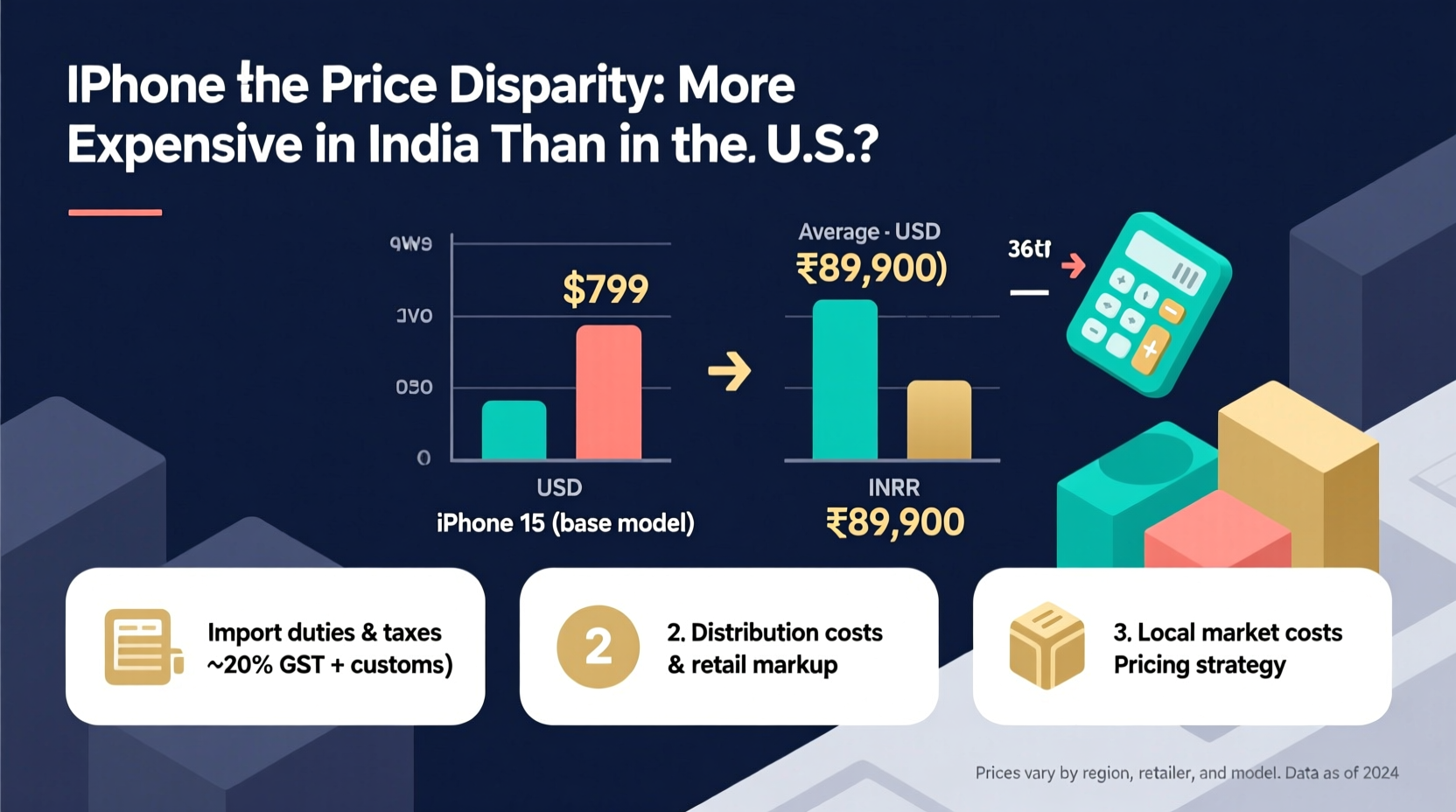
The primary reason iPhones are significantly more expensive in India lies in the country's tax and import policy. Apple does not manufacture iPhones in India at scale for global export, so most units sold domestically are either imported directly or assembled locally using imported components—all of which are subject to various levies.
India imposes a basic customs duty of up to 20% on imported smartphones. On top of that, there's a 18% Goods and Services Tax (GST), which applies to both locally sold and imported devices. Additional cesses and regulatory fees further inflate the final retail price. In contrast, the US has no federal sales tax on electronics at the national level, and state-level taxes average between 6–10%, making the effective tax burden far lower.
Apple also adjusts pricing based on market conditions, including currency fluctuations, local competition, and purchasing power. However, even after accounting for these, the tax component remains the biggest driver of the price gap.
Is Buying an iPhone from the US Cheaper After All Costs?
Let’s run the numbers. Suppose you want an iPhone 15 Pro Max with 256GB storage:
| Location | Base Price | Taxes & Duties | Total Cost (INR) |
|---|---|---|---|
| US Retail | $1,199 ≈ ₹99,500 | ~$60 (state tax) ≈ ₹5,000 | ₹1,04,500 |
| Shipping to India | ~₹3,500 | Insurance: ~₹1,500 | ₹5,000 |
| Indian Import Duty | 42% (customs + IGST) on assessed value | ~₹44,000 | |
| Total Estimated Cost | ₹1,53,500 | ||
| India Retail Price | Official Apple India Store | ₹1,39,900 |
Surprisingly, importing the phone yourself ends up costing over ₹13,000 more than buying it directly in India—even before factoring in risks like damage during transit or customs delays.
“Importing personal electronics may seem economical, but high ad-valorem duties on smartphones make it counterproductive in India.” — Rajiv Kumar, Trade Policy Analyst at ICRIER
Warranty and Service Limitations Abroad
Another critical factor is warranty coverage. Apple offers a one-year limited warranty, but it is generally region-locked. An iPhone purchased in the US will not be eligible for service at Apple Authorized Service Providers in India unless under international warranty terms, which do not apply to iPhones.
If your device develops a hardware issue six months after purchase, you’d need to ship it back to the US for repair—or pay out-of-warranty fees in India, which can be substantial. Even software support may be affected; certain carrier-specific models (like those from Verizon or AT&T) have locked features or eSIM configurations that don’t work seamlessly on Indian networks.
Additionally, Apple India uses a different power adapter standard (Type D/M). US models come with Type A/C plugs, so you’ll need a physical adapter or a new charger—a small but persistent inconvenience.
Network Compatibility and SIM Support
While modern iPhones are largely globally compatible, some variants differ in supported LTE/5G bands. Most US models include mmWave 5G, which is not used in India. Conversely, they may lack certain frequency bands optimized for Indian carriers like Jio or Airtel, potentially affecting signal strength and network performance.
eSIM support is another consideration. The US version supports dual eSIM functionality, whereas India still relies heavily on physical nano-SIMs. If you plan to use two physical SIMs, the US model won't accommodate that without sacrificing eSIM flexibility.
Mini Case Study: Priya’s Cross-Border Purchase Decision
Priya, a software engineer based in Bangalore, was planning to upgrade her iPhone 13 to the iPhone 15 Pro. Her cousin in California offered to buy it and ship it via courier. The total cost came to $1,250, including shipping and insurance—roughly ₹1,04,000.
At customs, the package was held for inspection. The declared value was questioned, and Indian Customs assessed the phone at ₹1,30,000 for duty calculation. With 42% duty, she paid ₹54,600 in charges—more than half the original device cost. Total spent: ₹1,58,600.
When her phone’s camera malfunctioned eight months later, Apple India refused service due to region mismatch. She eventually paid ₹28,000 for an out-of-warranty replacement. In hindsight, buying locally would have saved her time, money, and hassle.
Step-by-Step Guide: Should You Import an iPhone from the US?
- Compare total landed cost: Add US price, shipping, insurance, and estimate 40–42% import duty on the total value.
- Check model compatibility: Look up the US model number (e.g., A2848) and verify 4G/5G band support for India.
- Review warranty terms: Confirm whether Apple India will honor repairs or replacements.
- Consider alternatives: Look for year-end discounts, exchange offers, or EMI plans on Indian e-commerce sites.
- Make a decision: Only proceed if the final cost is lower than India’s MRP and you accept the risks.
FAQ
Can I avoid import duty by carrying the iPhone in my luggage?
Travelers entering India can bring one personal-use electronic device duty-free under Rule 27 of the Customs Baggage Rules. If you’re returning from a trip and carrying the iPhone for personal use (not resale), you may avoid duty. However, carrying multiple devices or declaring high-value items may trigger scrutiny.
Will an iPhone bought in the US work with Indian SIM cards?
Yes, most US models support GSM networks and physical nano-SIMs. However, some carrier-locked versions (especially from Verizon or Sprint) may require unlocking. Factory-unlocked models from Apple.com work best.
Are refurbished iPhones from the US a better deal?
Apple Certified Refurbished iPhones from the US are cheaper and come with a warranty, but the same import rules apply. Once shipped to India, they lose warranty validity and face the same duty charges—making them less attractive financially.
Conclusion: Think Beyond the Sticker Price
The higher price of iPhones in India is primarily driven by government-imposed duties and taxes designed to encourage local manufacturing and protect domestic industry. While the US price appears dramatically lower, importing a device personally often results in higher overall costs due to customs, shipping, and loss of warranty benefits.
For most Indian consumers, buying locally—especially during festive sales on platforms like Amazon or Flipkart—is smarter and safer. Exchange offers, bank discounts, and no-cost EMIs can reduce the effective price significantly, sometimes matching or beating overseas deals when all factors are considered.




 浙公网安备
33010002000092号
浙公网安备
33010002000092号 浙B2-20120091-4
Comments
No comments yet. Why don't you start the discussion?