
The stock market’s daily movements often leave investors puzzled—especially when indices like the S&P 500, Dow Jones, or Nasdaq close in the red without an obvious trigger. When the market declines, it's rarely due to a single event but rather a confluence of macroeconomic data, corporate earnings, central bank policy expectations, and global developments. Understanding why the stock market is down today requires a layered approach that separates noise from meaningful signals. This article breaks down the most influential factors behind market downturns, offering clarity for both novice and experienced investors.
Economic Data Releases and Inflation Pressures
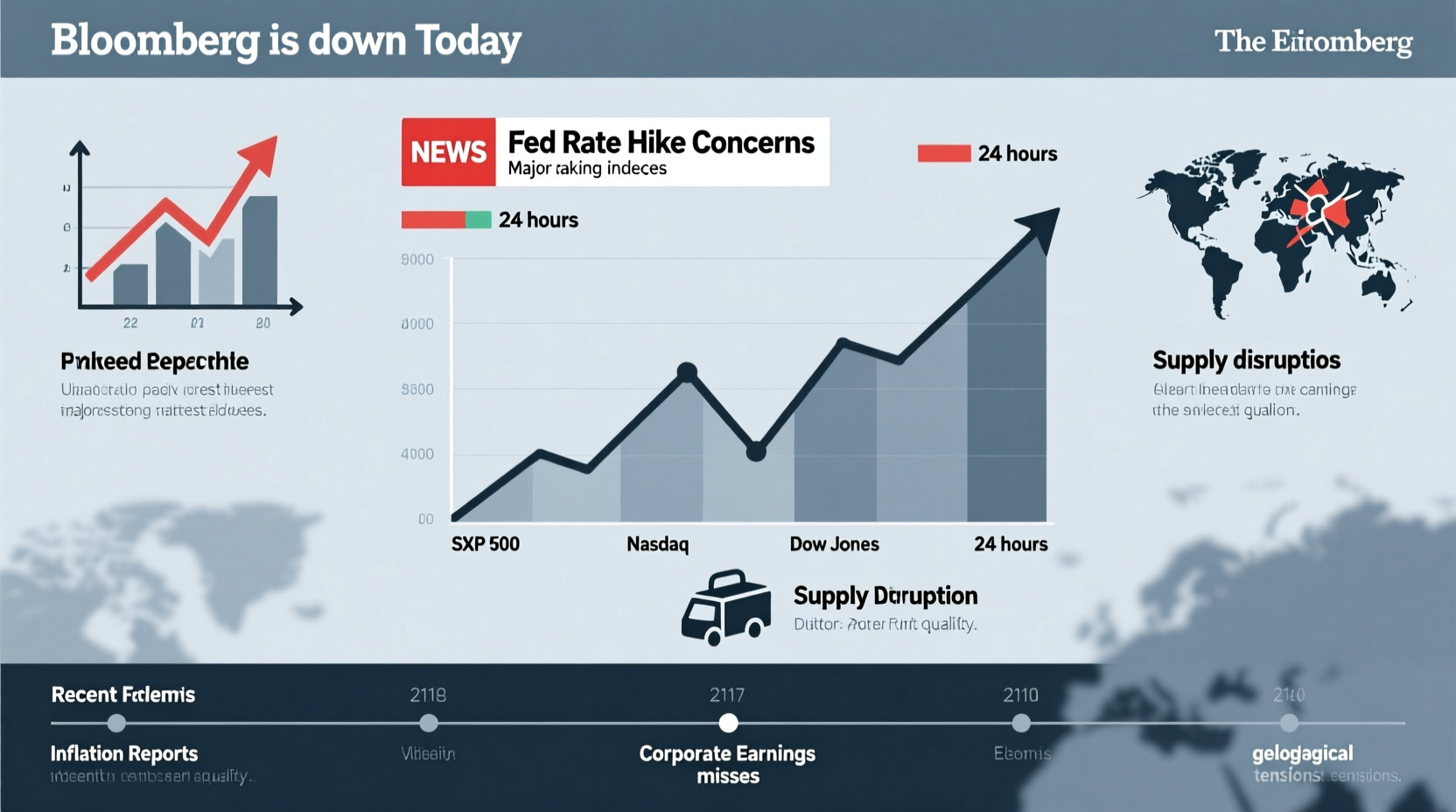
One of the most immediate triggers for a market drop is the release of key economic indicators. Data such as the Consumer Price Index (CPI), Producer Price Index (PPI), employment reports, and GDP growth figures can shift investor sentiment rapidly. For example, if inflation comes in higher than expected, markets may react negatively because elevated inflation increases the likelihood of more aggressive interest rate hikes by the Federal Reserve.
In recent years, inflation has been a dominant concern. Persistent price pressures reduce consumers' purchasing power and squeeze corporate profit margins, especially when companies cannot pass on higher costs to customers. A hotter-than-expected CPI report might signal that inflation remains sticky, prompting fears of prolonged tight monetary policy and slower economic growth.
Central Bank Policy and Interest Rate Expectations
The Federal Reserve plays a pivotal role in shaping market direction. When the Fed signals a hawkish stance—meaning it may raise interest rates or delay rate cuts—the cost of borrowing increases across the economy. Higher interest rates make bonds and savings accounts more attractive relative to stocks, leading investors to rebalance portfolios away from equities.
Market participants closely follow statements from Fed Chair Jerome Powell, FOMC meeting minutes, and the dot plot (which shows officials’ rate projections). Even subtle shifts in tone can cause volatility. For instance, if Powell says inflation “remains a concern” during a press conference, traders may revise their expectations for future rate cuts, pushing yields higher and stocks lower.
“Markets hate uncertainty, and when central banks pivot unexpectedly, even well-prepared investors can be caught off guard.” — Dr. Linda Chen, Senior Economist at Capital Insights Group
Geopolitical Tensions and Global Risk Sentiment
Global conflicts, trade disputes, or political instability can trigger risk-off behavior in financial markets. When tensions rise—such as escalations in the Middle East, U.S.-China relations, or disruptions in energy supplies—investors often flee to safe-haven assets like gold, Treasury bonds, or the U.S. dollar, selling off equities in the process.
For example, a sudden flare-up in the Israel-Gaza conflict could disrupt oil shipments through the Red Sea, raising fears of supply chain bottlenecks and higher fuel prices. Since transportation and production costs are tied to energy, such developments threaten corporate profitability and consumer spending, leading to broader market selloffs.
Additionally, currency fluctuations caused by geopolitical stress can impact multinational corporations’ earnings. A stronger dollar, for instance, makes U.S. exports more expensive abroad, reducing overseas revenue when converted back into dollars.
Corporate Earnings and Forward Guidance
Company-specific news, particularly earnings reports, can ripple across entire sectors or indexes. If major tech firms like Apple, Microsoft, or Amazon post weak quarterly results or issue conservative future guidance, it can drag down the Nasdaq and influence broader market sentiment.
Investors don’t just react to what companies earned last quarter—they care more about what they expect to earn next. A company might beat earnings estimates but still see its stock fall if management warns of declining demand, rising input costs, or reduced capital expenditures. These forward-looking statements shape long-term valuations.
During earnings season, analysts and algorithms scan every sentence of CEO commentary for clues about the health of the economy. A pattern of cautious outlooks across multiple industries—technology, retail, manufacturing—can signal a looming slowdown, prompting portfolio adjustments that amplify downward pressure on the market.
Market Structure and Algorithmic Trading Dynamics
Beyond fundamentals, technical and structural factors contribute to intraday volatility. High-frequency trading (HFT) and algorithmic systems now account for a significant portion of daily volume. These programs respond to predefined triggers—like moving average breakouts, volume spikes, or options expiration flows—and can accelerate sell-offs once certain thresholds are breached.
For example, if the S&P 500 drops below its 200-day moving average, some quantitative funds automatically liquidate positions based on risk models. This creates a feedback loop: more selling leads to more stop-loss orders being triggered, deepening the decline. Flash crashes, though rare, illustrate how quickly automated systems can destabilize markets under stress.
VIX, the so-called \"fear index,\" often surges during these episodes, reflecting increased demand for downside protection via put options. Elevated volatility discourages passive investing and emboldens short sellers, further weighing on equity prices.
Key Factors That Influence Daily Market Moves
| Factor | Impact on Market | Typical Timeframe |
|---|---|---|
| Inflation Data (CPI/PPI) | Negative if higher than expected | Short-term (1–3 days) |
| Fed Rate Decisions | Negative if hawkish; positive if dovish | Medium-term (weeks) |
| Geopolitical Events | Risk-off selloffs; flight to safety | Variable (days to months) |
| Corporate Earnings | Sector-wide impact if major players miss | Short to medium-term |
| Technical Triggers | Amplifies momentum during sell-offs | Intraday to weekly |
Actionable Investor Checklist During Market Downturns
When the market falls, emotional reactions can lead to poor decisions. Instead, use structured evaluation. Here’s a checklist to guide your response:
- Review your portfolio allocation – Are you overexposed to volatile sectors like tech or crypto?
- Avoid panic selling – Short-term drops don’t erase long-term value unless fundamentals have changed.
- Check valuation metrics – Has the correction made quality stocks more attractively priced?
- Reassess risk tolerance – Is your investment strategy aligned with your time horizon and goals?
- Dollar-cost average into positions – Consider adding gradually instead of timing the bottom.
- Monitor bond yields and credit spreads – Rising yields may signal tightening financial conditions.
Real-World Example: The March 2023 Banking Sector Selloff
In March 2023, the stock market dropped sharply following the collapse of Silicon Valley Bank (SVB). While SVB served a niche tech clientele, its failure sparked fears of broader contagion in the banking sector. Investors worried that other regional banks held similar unrealized losses on long-duration bonds due to rising interest rates.
The KBW Bank Index fell over 20% in a week. Even healthy institutions like JPMorgan and Bank of America saw share prices decline due to sector-wide de-risking. The Fed responded with emergency liquidity measures, but the damage was done: confidence wavered, credit conditions tightened, and the market repriced financial stability risks.
This episode illustrates how a single institution’s failure, amplified by macro conditions (high rates), can trigger systemic concerns and widespread equity declines—even among unrelated companies.
FAQ: Common Questions About Market Declines
Is a down day in the stock market something to worry about?
Not necessarily. Daily fluctuations are normal. Markets average about 80 days per year with losses of 1% or more. What matters is the underlying cause and whether it reflects a shift in long-term fundamentals.
Should I sell my stocks when the market drops?
Reacting emotionally often leads to buying high and selling low. If your investment thesis hasn’t changed, staying the course—or selectively adding to strong positions—may be wiser than exiting entirely.
How do I protect my portfolio during downturns?
Diversification across asset classes (stocks, bonds, real estate), maintaining an emergency fund, and avoiding leverage reduce vulnerability. Consider hedging strategies like protective puts only if you understand the risks.
Conclusion: Turning Volatility Into Opportunity
Understanding why the stock market is down today isn’t about assigning blame to one headline—it’s about recognizing the interplay of data, psychology, policy, and structure. Every downturn carries risk, but also opportunity. Historically, markets have recovered from every major drop, often rewarding disciplined investors who avoid knee-jerk reactions.
Instead of reacting to daily swings, focus on building a resilient portfolio grounded in research, diversification, and long-term goals. Stay informed, stay calm, and remember: volatility is not the enemy of investing—it’s the price of admission for higher returns.




 浙公网安备
33010002000092号
浙公网安备
33010002000092号 浙B2-20120091-4
Comments
No comments yet. Why don't you start the discussion?