
The question of why the United States might attack Iran is not merely a matter of current headlines—it reflects decades of geopolitical friction, ideological opposition, and strategic competition. While no full-scale war currently exists between the two nations, the specter of military confrontation looms due to recurring escalations in the Middle East. Understanding this dynamic requires more than surface-level analysis; it demands a deep look into history, foreign policy objectives, regional influence struggles, and the actions of non-state actors tied to both countries.
Historical Roots of U.S.-Iran Tensions
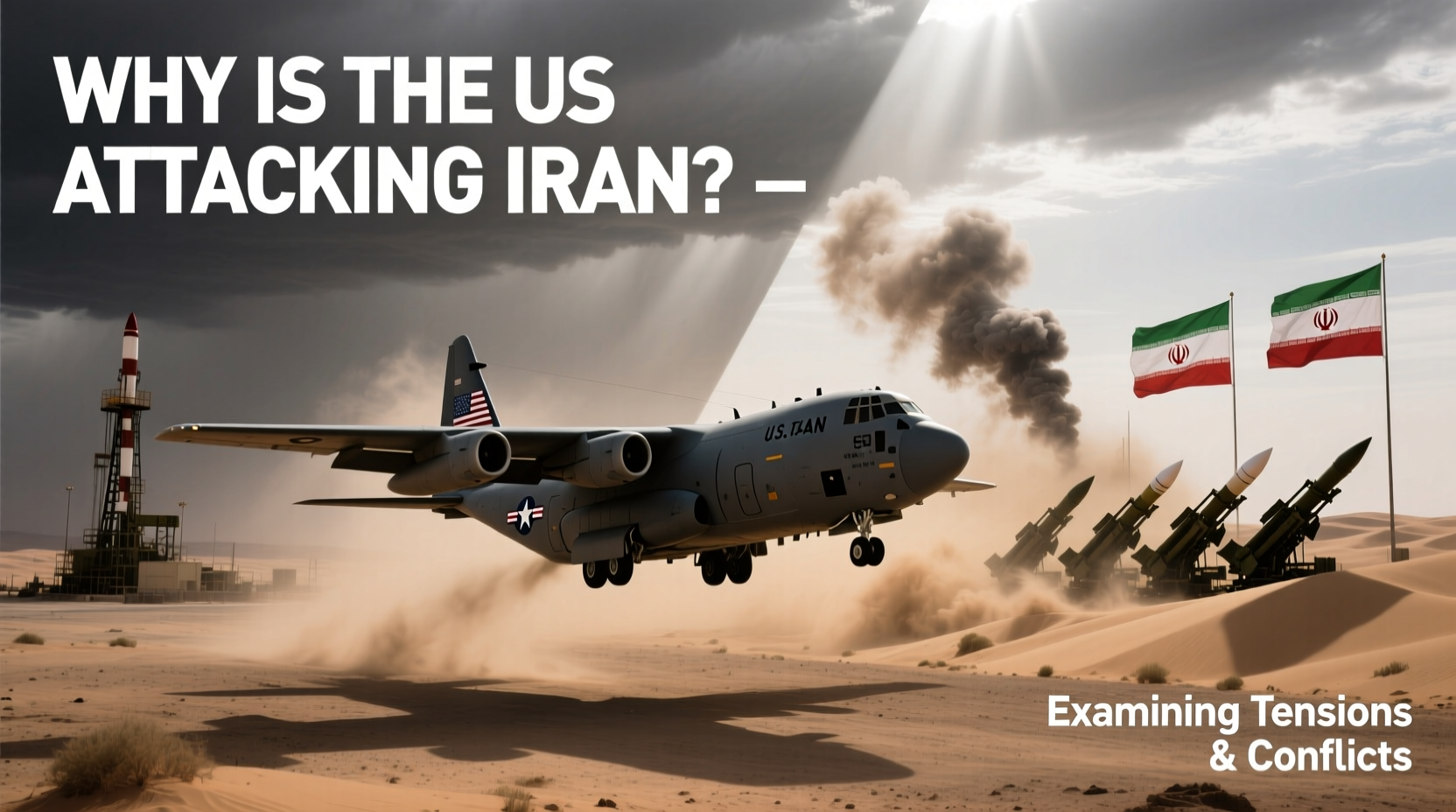
The modern rift between the United States and Iran began in 1953 with the CIA-backed coup that overthrew democratically elected Prime Minister Mohammad Mossadegh after he nationalized Iran’s oil industry. This event planted long-standing distrust toward American interventionism in Iranian politics. The rupture deepened during the 1979 Islamic Revolution, when students stormed the U.S. Embassy in Tehran and held 52 Americans hostage for 444 days—an incident that defined bilateral relations for generations.
Since then, the U.S. has viewed Iran as a state sponsor of terrorism, citing its support for Hezbollah, Hamas, and Shia militias across Iraq, Syria, and Yemen. In return, Iran sees the U.S. as a “Great Satan” interfering in sovereign Muslim nations, imposing sanctions, and backing adversarial regimes like Israel and Saudi Arabia.
“The legacy of 1953 still echoes in Tehran. Every American policy move is filtered through that trauma of regime manipulation.” — Dr. Ramin Mehmanparast, International Relations Scholar at Georgetown University
Geopolitical Flashpoints Fueling Conflict
Several overlapping issues keep U.S.-Iran tensions near boiling point:
- Nuclear Program: Iran's uranium enrichment activities have triggered international concern since the early 2000s. Although the 2015 Joint Comprehensive Plan of Action (JCPOA) temporarily curbed these efforts, the U.S. withdrawal under President Trump in 2018 reignited fears of nuclear proliferation.
- Military Presence in the Gulf: The Persian Gulf remains a critical chokepoint for global oil supplies. Both nations conduct naval operations here, leading to dangerous close encounters—such as drone shootdowns and ship seizures.
- Proxy Conflicts: In Iraq, Syria, and Yemen, Iranian-backed groups clash indirectly with U.S.-supported forces. These shadow wars increase the risk of direct confrontation.
- Sanctions and Economic Warfare: U.S. sanctions have crippled Iran’s economy, restricting oil exports and access to global banking. Iran accuses Washington of economic terrorism.
Recent Escalations and Military Posturing
In January 2020, the U.S. conducted a drone strike near Baghdad International Airport that killed Qasem Soleimani, commander of Iran’s Quds Force. The assassination marked one of the most aggressive acts by the U.S. against a top Iranian official. Iran responded with missile strikes on U.S. bases in Iraq—causing traumatic brain injuries among troops but no fatalities.
More recently, heightened attacks on commercial shipping in the Red Sea—orchestrated by Houthi rebels in Yemen with Iranian-supplied weapons—have drawn U.S. airstrikes on Houthi targets. While these actions target proxies rather than Iran directly, they represent an expansion of conflict zones influenced by Tehran.
Additionally, intelligence reports indicate increased Iranian drone and missile development, some capable of reaching U.S. allies in the region. Cyberattacks attributed to Iranian actors have targeted American infrastructure, further straining diplomatic channels.
Timeline of Key Events Leading to Current Tensions
- 1979: Hostage crisis begins after the fall of the Shah.
- 1980–1988: Iran-Iraq War; U.S. supports Saddam Hussein despite knowledge of chemical weapons use.
- 2002: Bush administration labels Iran part of the “Axis of Evil.”
- 2015: JCPOA signed; Iran limits nuclear program in exchange for sanctions relief.
- 2018: U.S. unilaterally withdraws from JCPOA and reimposes harsh sanctions.
- 2019: Attacks on oil tankers in the Gulf; U.S. blames Iran.
- 2020: Soleimani assassination and retaliatory Iranian missile strikes.
- 2023–2024: U.S. conducts airstrikes on Iranian-backed militias in Syria and Iraq amid rising regional instability.
Is the U.S. Actually Attacking Iran?
As of now, the United States is not engaged in open warfare with Iran. However, it has launched numerous strikes against Iranian-backed militias operating in Iraq and Syria—actions justified under self-defense doctrines protecting U.S. personnel. These engagements blur the line between indirect and direct conflict.
Critics argue such strikes risk miscalculation. A single escalation—like the downing of a manned aircraft or a cyberattack on civilian infrastructure—could rapidly spiral into broader war. Supporters maintain that limited kinetic responses deter aggression without committing ground troops.
| Action Type | Target | U.S. Justification | Risk Level |
|---|---|---|---|
| Airstrikes | Shia militias in Iraq/Syria | Retaliation for attacks on U.S. bases | Medium-High |
| Naval Interdiction | Weapons shipments to Houthis | Enforcing UN arms embargo | Medium |
| Cyber Operations | Iranian missile systems | Disrupting launch capabilities | High (covert) |
| Diplomatic Sanctions | Iranian banks & officials | Non-proliferation pressure | Low (economic) |
Expert Insight: Can Diplomacy Prevail?
Despite hostilities, many experts believe diplomacy remains viable. Reviving a modified version of the JCPOA—or negotiating a “longer, stronger” agreement covering ballistic missiles and regional behavior—is seen as the best path to de-escalation.
“We’re closer to accidental war than intentional war. That means backchannel talks, confidence-building measures, and third-party mediators like Oman or Qatar can still pull us back.” — Ambassador Thomas Pickering, former Under Secretary of State
The challenge lies in domestic politics on both sides. In Iran, hardliners oppose concessions to the U.S., while in America, bipartisan skepticism about trusting Tehran persists. Still, periodic prisoner swaps and indirect nuclear negotiations suggest lines of communication remain open.
Frequently Asked Questions
Has the U.S. ever officially declared war on Iran?
No. The U.S. has never declared war on Iran. All military actions have been conducted under presidential authority as self-defense measures or under existing congressional authorizations for use of military force (AUMF), particularly those related to counterterrorism.
Does Iran have nuclear weapons?
As of 2024, there is no confirmed evidence that Iran possesses nuclear weapons. However, the International Atomic Energy Agency (IAEA) reports that Iran has enriched uranium up to 60% purity—close to the 90% needed for weapons-grade material. Experts warn this shortens breakout time to potentially just weeks if a decision were made to weaponize.
Why doesn’t the U.S. invade Iran like it did Iraq?
Invasion is widely considered too costly and destabilizing. Iran is larger, more populous, and better armed than Iraq was in 2003. Ground war would likely trigger massive casualties, regional chaos, and prolonged insurgency. Most U.S. strategists favor containment over regime change today.
Conclusion: Navigating a Precarious Peace
The idea that the U.S. is “attacking” Iran oversimplifies a complex reality of shadow conflicts, proxy engagements, and strategic brinkmanship. While full-scale war has been avoided so far, the frequency and intensity of confrontations continue to rise. The absence of formal diplomacy amplifies risks of misinterpretation and unintended escalation.
For citizens, journalists, and policymakers alike, understanding the nuances behind each headline—whether it's a drone strike in Syria or new sanctions from Washington—is essential. The path to lasting peace won’t come from military dominance, but from sustained dialogue, mutual recognition of security interests, and regional cooperation.




 浙公网安备
33010002000092号
浙公网安备
33010002000092号 浙B2-20120091-4
Comments
No comments yet. Why don't you start the discussion?