
The Yellow River, known in China as Huang He, is the second-longest river in Asia and has long been revered as the cradle of Chinese civilization. Yet, despite its cultural and historical significance, it carries a grim nickname: “China’s Sorrow.” This title is not poetic exaggeration—it reflects centuries of catastrophic flooding, displacement, and death. To understand why the Yellow River earned this somber moniker, we must examine its geography, hydrology, historical flood patterns, and the complex relationship between nature and human intervention.
Geography and Unique Characteristics of the Yellow River
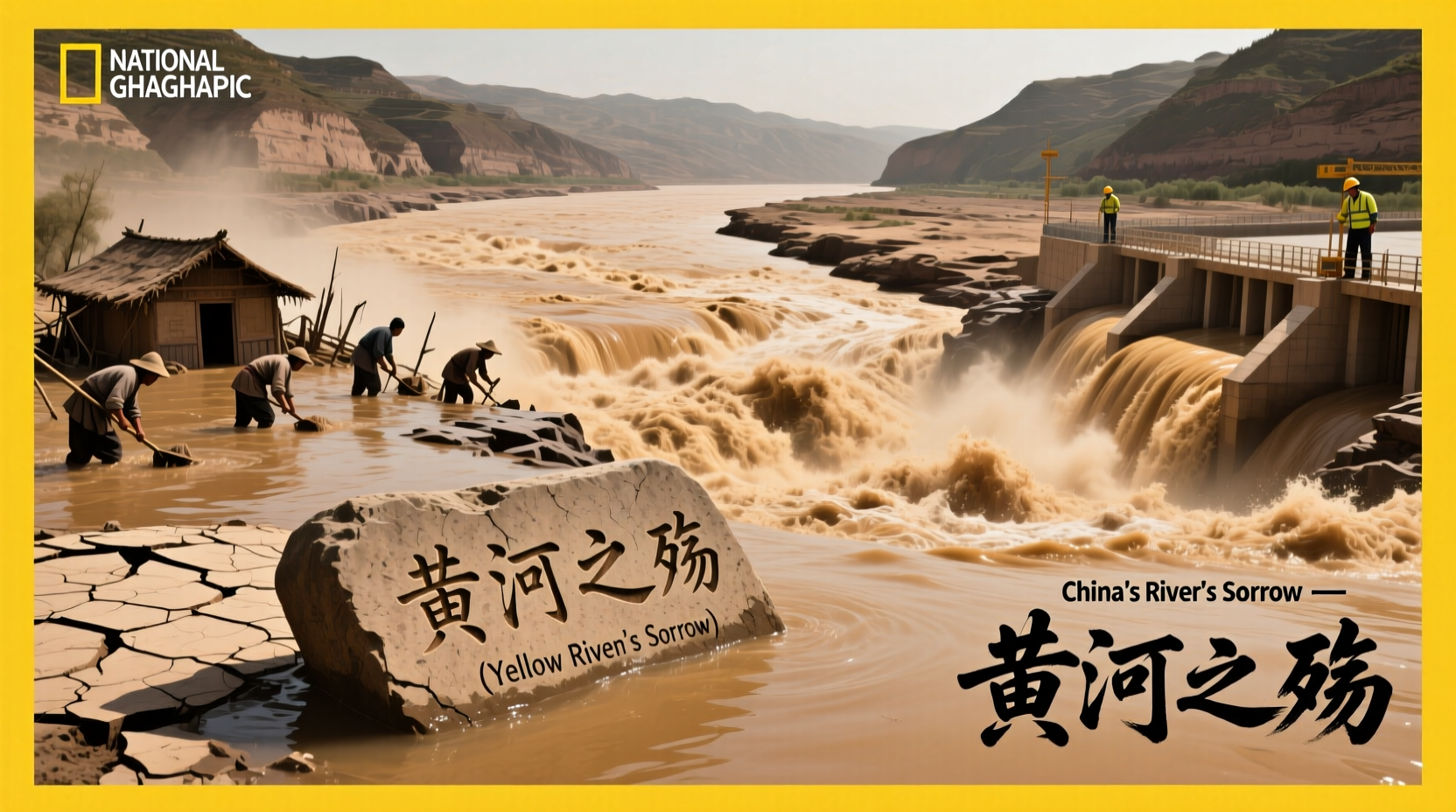
Stretching approximately 5,464 kilometers (3,395 miles), the Yellow River originates in the Bayan Har Mountains on the Tibetan Plateau and flows eastward across northern China before emptying into the Bohai Sea. Its basin covers about 750,000 square kilometers and supports nearly 140 million people. What sets the Yellow River apart from other major rivers is its exceptionally high sediment load. It carries an average of 1.6 billion tons of silt annually—more than any other river in the world—giving it its distinctive yellow hue.
This sediment comes primarily from the Loess Plateau, a region with soft, wind-blown soil that erodes easily. As the river moves through this area, it picks up massive amounts of fine particles. While this silt has historically enriched farmland downstream, it also leads to severe problems: sediment deposition raises the riverbed over time, creating what are known as “elevated rivers” or “hanging rivers,” where the water flows above the surrounding land level.
A History of Catastrophic Floods
The Yellow River has changed course at least 26 times in recorded history and burst its banks over 1,500 times. Some of these floods rank among the deadliest natural disasters in human history. For example:
- 1887 flood: Estimated to have killed between 900,000 and 2 million people—the highest death toll of any flood on record.
- 1931 flood: Part of the broader China floods, which affected multiple rivers but were most severe along the Yellow River. Death toll estimates range from 1 to 4 million.
- 1938 breach: A man-made disaster during the Second Sino-Japanese War when Nationalist forces deliberately breached dikes to slow Japanese advances. Over 800,000 civilians died, and millions were displaced.
These events weren’t isolated tragedies—they were recurring nightmares. Each major flood submerged vast agricultural regions, destroyed villages, and triggered famine and disease outbreaks. Entire provinces were left underwater for months. Recovery was slow, and rebuilding often meant reinforcing already unstable levee systems, setting the stage for future disasters.
The Role of Human Engineering and Mismanagement
While the Yellow River’s natural tendency to flood stems from its heavy sediment load, human activity has significantly worsened the problem. Since the Han Dynasty (206 BCE–220 CE), successive governments have constructed levees to contain the river. Initially effective, these structures gradually created a feedback loop: as sediment built up behind levees, engineers raised them higher, elevating the riverbed further above the surrounding plains.
By the Ming and Qing dynasties, large stretches of the lower Yellow River flowed 10 to 15 meters above the nearby land. This made the system extremely fragile. Any weakness in the levee could lead to a catastrophic breach. Moreover, political corruption, inadequate maintenance, and poor coordination between regional authorities often delayed repairs or led to substandard construction.
“Controlling the Yellow River was not just an engineering challenge—it was a test of imperial legitimacy. When floods came, they weren't just natural disasters; they were seen as signs of Heaven’s displeasure.” — Dr. Li Wei, Historian of Chinese Environmental Policy
Modern Efforts to Tame the River
In the 20th century, especially after the founding of the People’s Republic of China in 1949, the government launched ambitious projects to control the Yellow River. These included:
- Construction of large dams like the Sanmenxia Dam (completed in 1960) and Xiaolangdi Dam (1999).
- Systematic dredging and sediment flushing operations.
- National flood forecasting systems and emergency response protocols.
- Reforestation programs on the Loess Plateau to reduce erosion.
While these measures have reduced the frequency of catastrophic breaches, challenges remain. The Sanmenxia Dam, for instance, became heavily silted within years, losing much of its functionality. Sediment continues to accumulate, and climate change is increasing the variability of rainfall, raising the risk of extreme flood events.
| Era | Flood Control Method | Major Drawback |
|---|---|---|
| Imperial China | Levee construction and reinforcement | Levees raised riverbed, increasing flood risk upon failure |
| Early PRC (1950s–70s) | Dam building (e.g., Sanmenxia) | Poor sediment management led to rapid silting |
| Modern Era (1990s–present) | Multidams, sediment flushing, reforestation | High cost, ecological disruption, uncertain long-term sustainability |
Case Study: The 1938 Dike Breach – Nature and War Intertwined
One of the most tragic chapters in the Yellow River’s history occurred during the Second Sino-Japanese War. In June 1938, retreating Kuomintang (Nationalist) forces under Chiang Kai-shek ordered the destruction of dikes at Huayuankou, Henan Province, to create a flood barrier against advancing Japanese troops. The plan succeeded militarily—the Japanese advance was halted—but at a horrific civilian cost.
The unleashed waters inundated parts of Henan, Anhui, and Jiangsu provinces, covering over 12,000 square kilometers. The floodwaters didn’t recede for years. Canals shifted, farmland turned to sand, and entire communities vanished. The breach wasn’t sealed until 1947, by which time the river had carved a new path to the sea. This event exemplifies how the Yellow River’s destructive power can be amplified—and weaponized—by human decisions, turning a natural hazard into a prolonged humanitarian catastrophe.
Tips for Understanding the River’s Legacy Today
- Recognize that floodplains are dynamic systems; suppressing natural processes can increase long-term risks.
- Understand that sediment management is critical in rivers with high erosion basins.
- Study historical records to identify patterns of vulnerability and resilience.
- Support sustainable land-use policies in upstream regions to reduce erosion.
- Advocate for integrated water resource management that balances agriculture, energy, and ecological needs.
Frequently Asked Questions
Why is the Yellow River so muddy?
The river gets its color and sediment load from the Loess Plateau, where soft, fine-grained soil erodes easily and is carried downstream. It transports more sediment per cubic meter than any other major river in the world.
Has the Yellow River ever run dry?
Yes. Due to overuse for irrigation, industrial demand, and climate variability, the lower reaches of the Yellow River failed to reach the sea almost every year from 1972 to 1996. Flow has improved since water allocation reforms, but seasonal drying remains a concern.
Is the Yellow River still dangerous today?
While modern infrastructure has reduced the risk of catastrophic flooding, the river remains vulnerable. Elevated riverbeds, aging levees, and changing precipitation patterns due to climate change mean that the threat of a major breach persists.
Conclusion: Learning from China’s Sorrow
The Yellow River’s legacy as “China’s Sorrow” is a powerful reminder of the delicate balance between human ambition and natural forces. For millennia, it has sustained civilizations while also destroying them. Its story underscores the importance of humility in engineering, respect for ecological limits, and foresight in governance. As climate change intensifies global water challenges, the lessons of the Yellow River are more relevant than ever—not just for China, but for all societies living with powerful, unpredictable rivers.




 浙公网安备
33010002000092号
浙公网安备
33010002000092号 浙B2-20120091-4
Comments
No comments yet. Why don't you start the discussion?