
Every pair of classic five-pocket jeans includes a small, seemingly impractical compartment stitched inside the front right pocket. Measuring just over an inch wide and two inches tall, this miniature pouch often goes unnoticed or dismissed as useless. Yet, it has survived more than 140 years of fashion evolution, outlasting trends, redesigns, and material shifts. Its persistence suggests purpose. So why does this tiny pocket exist? What was its original function, and how has its role changed in modern times? From gold prospectors to smartphone users, the story behind this diminutive feature reveals much about utility, design, and cultural adaptation.
The Origins: A Pocket for Gold Watch Chains
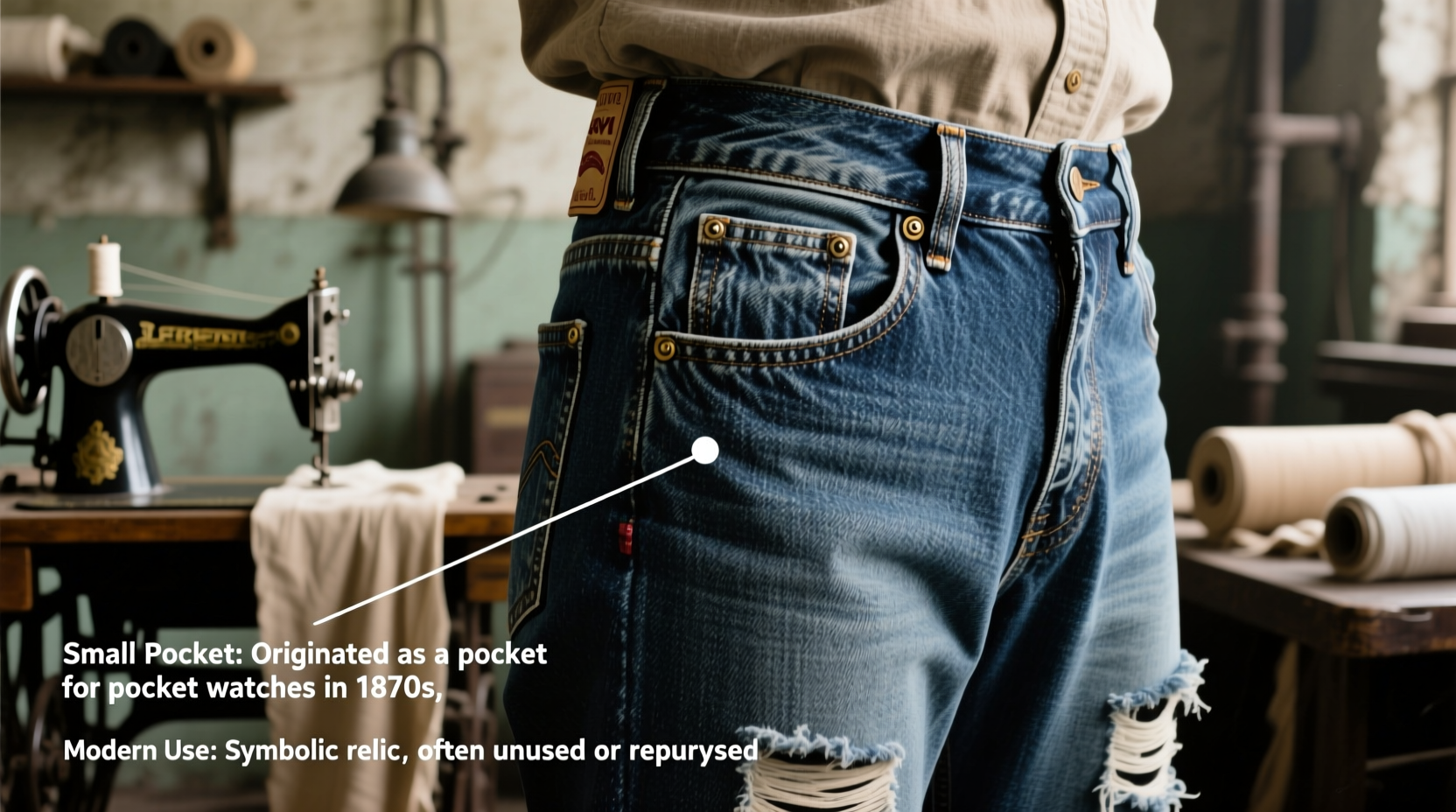
The tiny pocket, officially known as the \"watch pocket,\" was first introduced in 1873 by Jacob Davis and Levi Strauss, the inventors of blue jeans. Originally designed for laborers, miners, and cowboys, early denim trousers prioritized durability and practicality. One common accessory among working men of the era was the pocket watch—a valuable, fragile device that needed secure storage. Wearing it in a regular pants pocket risked damage from jostling tools, falling rocks, or rough movement.
To solve this, Davis and Strauss added a second, smaller pocket inside the larger right front pocket. This allowed wearers to thread their watch’s chain through the top of the outer pocket and clip it to the inner one, keeping the timepiece safely anchored and visible. The design prevented the watch from swinging loose or being lost during physical work. At the time, this wasn’t an afterthought—it was essential functionality.
“Functional details like the watch pocket weren’t decorative—they were solutions born from real-world problems.” — Dr. Rebecca Earle, historian of material culture and clothing
This innovation coincided with the rise of industrialization and westward expansion in the United States. Miners rushing to Nevada and California during silver and gold booms relied on sturdy clothing. The tiny pocket became a standard feature across denim workwear, even appearing on other brands that followed Levi’s lead.
Design Evolution: From Utility to Symbol
As wristwatches gained popularity in the early 20th century—especially after World War I, when soldiers found them more practical than pocket watches—the need for a dedicated watch pocket diminished. Yet, manufacturers kept the feature. Why?
One reason was brand identity. By the 1930s, Levi’s had become synonymous with rugged American style. Removing a long-standing detail could have disrupted consumer recognition. The tiny pocket remained as a signature element, subtly signaling authenticity. Over time, it transitioned from functional necessity to symbolic hallmark.
In the 1950s and 60s, jeans shifted from workwear to youth fashion. Teenagers adopted denim as a symbol of rebellion, inspired by icons like James Dean and Marlon Brando. Designers began tailoring fits and experimenting with finishes, but the watch pocket endured—even on slimmer, non-utilitarian cuts. It had become part of the aesthetic DNA of jeans.
Today, most denim brands replicate the feature regardless of intended use. Even slim-fit women’s jeans, which rarely cater to manual laborers, include the tiny pocket. Its presence now communicates heritage rather than utility.
Modern Uses: Reclaiming the Forgotten Compartment
Though no longer used for watches, the tiny pocket has found new life through user ingenuity. In an age dominated by digital devices and minimalist carry habits, people have repurposed it in surprisingly practical ways.
Some common modern uses include:
- Storing coins (especially quarters for laundry)
- Holding a house key or USB drive
- Keeping a SIM card eject tool handy
- Carrying a small piece of gum or mint
- Securing a ring or earring during workouts
A 2022 survey by *Fashion Tech Review* found that 68% of respondents used the tiny pocket regularly, with coin storage being the most popular application. Another 15% admitted using it to prevent losing small items while transferring clothes between washes.
Mini Case Study: Urban Cyclist’s Solution
Take Mark Tran, a bike courier in Portland, Oregon. He wears jeans daily but struggled with his phone slipping out during rides. Instead of buying specialized gear, he started placing his spare key in the tiny pocket. “It’s perfectly sized for a single house key,” he said. “And because it’s inside the main pocket, it doesn’t bounce around or fall out when I’m pedaling hard.” His solution highlights how legacy design elements can adapt to contemporary lifestyles without modification.
Do’s and Don’ts: How to Use the Tiny Pocket Wisely
| Do | Don't |
|---|---|
| Use it for lightweight, flat items like coins or cards | Overstuff it with bulky objects |
| Store emergency cash separately from your wallet | Put sharp items that may tear the lining |
| Keep a backup earplug or hearing aid safe during transit | Forget to empty it before washing jeans |
| Use it to organize one frequently misplaced item | Rely on it for high-value or irreplaceable objects |
The structural limitations of the pocket—its shallow depth and lack of closure—mean it’s best suited for low-risk, frequently accessed items. Heavy keys or thick metal objects can stress the stitching over time, potentially causing tears in the main pocket lining.
Why Manufacturers Haven’t Removed It
Given its limited utility for many modern consumers, one might expect the tiny pocket to fade away. Yet, few major brands have eliminated it. There are several reasons:
- Brand Consistency: Altering a defining feature risks alienating loyal customers who associate authenticity with traditional design.
- Manufacturing Efficiency: Jeans patterns are standardized. Removing one pocket would require retooling production lines, increasing costs for minimal gain.
- Niche Demand: Some markets, like heritage denim enthusiasts and outdoor workers, still value the original functionality.
- Cultural Nostalgia: Consumers respond positively to details that evoke craftsmanship and history.
In fact, some premium denim labels have begun emphasizing the watch pocket in marketing. Brands like Naked & Famous and Tellason highlight its presence as proof of adherence to vintage specifications. Others, such as Levi’s Vintage Clothing line, reproduce exact 1880s-era stitching techniques around the pocket, appealing to collectors.
Expert Insight: Preserving Purpose in Design
“The tiny pocket is a lesson in industrial design: sometimes the most enduring features aren’t the flashiest, but the ones rooted in real human behavior.” — Naomi Kaltman, industrial designer and author of *Worn: The Stories Behind Everyday Objects*
Kaltman argues that removing such elements purely for aesthetics risks losing the narrative embedded in clothing. “When we strip away functional history, we make fashion more disposable,” she says. “The watch pocket reminds us that clothes once served us—not just styled us.”
Step-by-Step Guide: Maximizing the Tiny Pocket Today
If you’ve ignored this compartment, here’s how to make practical use of it:
- Assess Your Daily Carry: Identify one small item you frequently misplace—like a key, coin, or ID tag.
- Test Fit: Place the item in the tiny pocket while wearing the jeans. Ensure it doesn’t bulge or strain the fabric.
- Label It Mentally: Assign the pocket a specific purpose (e.g., “emergency quarter” or “backup fob”) to avoid clutter.
- Check Before Washing: Make it a habit to empty the pocket during laundry prep—set a reminder if needed.
- Evaluate Long-Term Use: After two weeks, decide whether the arrangement works. Adjust or abandon based on comfort and reliability.
This method turns a forgotten space into a functional micro-storage zone, reducing reliance on wallets or bags for minor essentials.
Frequently Asked Questions
Is the tiny pocket only on men’s jeans?
No, though it originated in men’s workwear, most five-pocket women’s jeans also include the feature. However, due to narrower front pockets in women’s sizing, the inner pocket is often smaller or less accessible.
Can the tiny pocket be removed or altered?
Yes, but it requires precise tailoring. Sewing it shut or removing it entirely may affect the integrity of the main pocket. Most alterations are cosmetic and not recommended unless done by a professional.
Are there jeans without the tiny pocket?
Yes. Some modern brands, especially those focused on sleek silhouettes or sustainable minimalism, omit the pocket. Examples include certain Uniqlo and Everlane styles. However, these remain exceptions rather than the norm.
Conclusion: A Small Pocket With Big Legacy
The tiny pocket in jeans is far more than a relic. It is a testament to thoughtful design born from necessity, preserved through tradition, and reinvented by everyday users. What began as a solution for 19th-century miners now serves urban commuters, travelers, and minimalists alike. Its survival speaks to a deeper truth: the most enduring innovations are often subtle, practical, and adaptable.
Next time you slip your hand into your jeans pocket and brush against that little inner pouch, consider its journey—from gold rush camps to smartphone era pockets. Whether you use it for coins, keys, or nothing at all, you’re touching a piece of wearable history.




 浙公网安备
33010002000092号
浙公网安备
33010002000092号 浙B2-20120091-4
Comments
No comments yet. Why don't you start the discussion?