
In recent years, many individuals prescribed Adderall for ADHD have encountered unexpected delays or denials at their local pharmacies. What was once a reliably accessible medication has become increasingly difficult to obtain, sparking widespread concern among patients, caregivers, and healthcare providers. The Adderall shortage is not just a temporary inconvenience—it reflects deeper systemic issues in pharmaceutical manufacturing, regulation, and supply chain logistics. Understanding the root causes, real-world impacts, and practical steps to navigate this challenge is essential for anyone relying on this medication.
The Origins of the Adderall Shortage
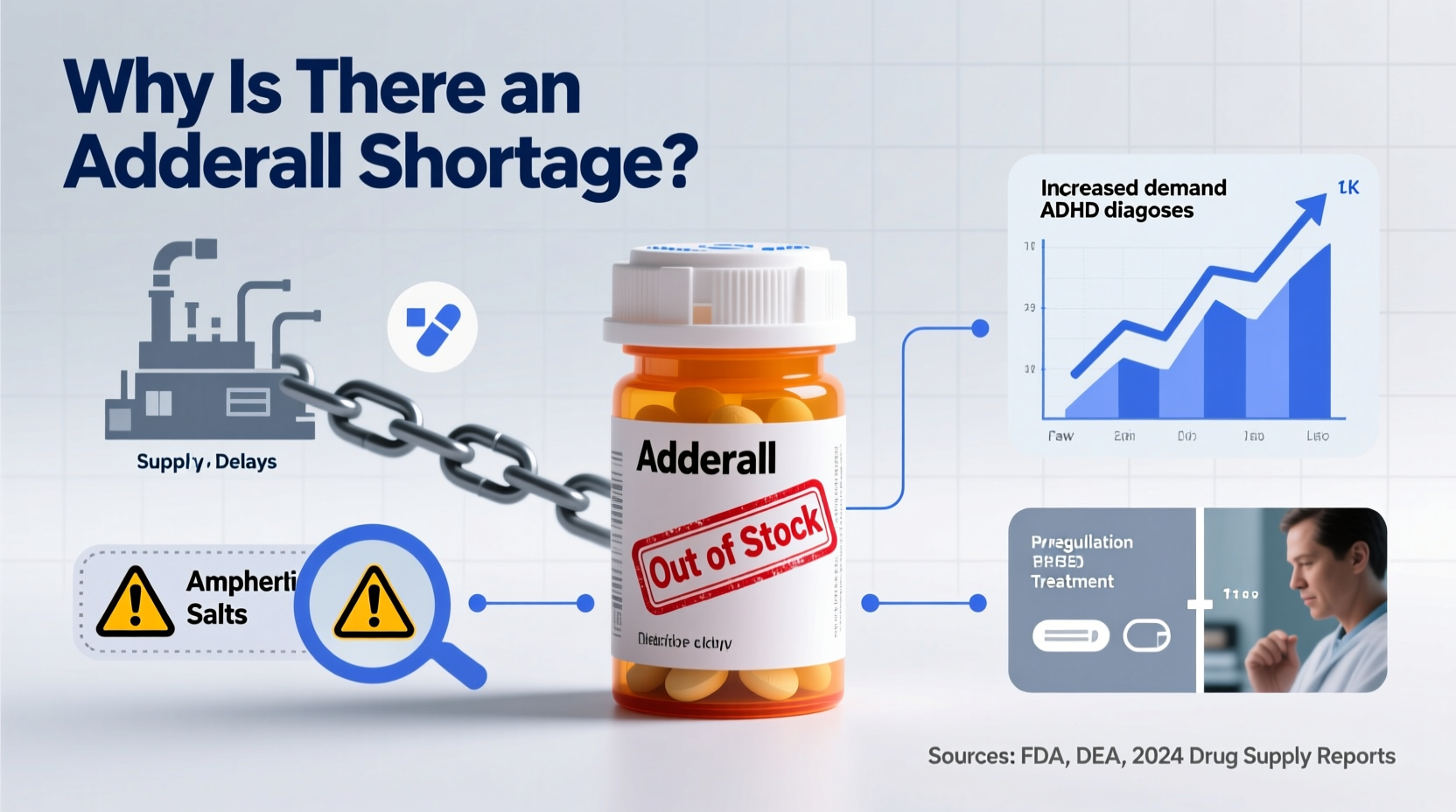
Adderall, a combination of amphetamine salts, has been a cornerstone treatment for attention-deficit/hyperactivity disorder (ADHD) since its FDA approval in the 1990s. Despite its long-standing use, shortages began emerging prominently around 2022 and have persisted into 2024. The U.S. Food and Drug Administration (FDA) officially listed Adderall as \"in shortage\" due to multiple overlapping factors.
One primary cause lies in manufacturing constraints. Teva Pharmaceuticals, one of the largest generic manufacturers of Adderall, faced production delays linked to quality control issues and facility inspections. When a single manufacturer supplies a significant portion of the market, any disruption cascades across the national supply. Additionally, increased demand over the past decade—driven by greater awareness of ADHD and rising diagnosis rates—has strained existing production capacity.
Key Factors Behind the Shortage
The Adderall shortage isn’t attributable to a single event but rather a convergence of structural and regulatory challenges:
- Manufacturing Delays: Several facilities producing Adderall or its active ingredients underwent FDA inspections that identified compliance issues, leading to pauses in production.
- Supply Chain Vulnerabilities: Global disruptions from the pandemic affected raw material sourcing, packaging, and transportation logistics.
- Increased Prescription Rates: Data from the CDC shows a 30% increase in ADHD diagnoses among adults between 2016 and 2022, significantly boosting demand.
- Generic Drug Market Pressures: Low profit margins for generics discourage investment in new production lines or redundancy planning.
- Regulatory Oversight: As a Schedule II controlled substance, Adderall is subject to strict quotas set by the Drug Enforcement Administration (DEA), limiting annual production volumes regardless of demand.
“Even minor disruptions in the supply chain for controlled substances can lead to prolonged shortages because of the layers of oversight and limited number of approved manufacturers.” — Dr. Lena Patel, Health Policy Analyst at Johns Hopkins Bloomberg School of Public Health
How the DEA Quota System Impacts Availability
One of the most underdiscussed contributors to the Adderall shortage is the DEA’s annual Aggregate Production Quota (APQ) system. This program limits how much of certain controlled substances—including amphetamines—can be legally manufactured each year. While designed to prevent misuse and diversion, the quota does not always adjust quickly to rising medical demand.
In 2023, the DEA increased the amphetamine quota by 25%, responding to public pressure. However, manufacturers cannot instantly scale up. Re-tooling equipment, training staff, and passing quality audits take months. By the time production ramps up, the allocated quota may already be exhausted, leaving patients waiting.
| Year | DEA Amphetamine Production Quota (kg) | Notable Shortage Events |
|---|---|---|
| 2020 | 54,700 | Minor regional shortages |
| 2021 | 54,700 | Stable supply |
| 2022 | 49,500 | Nationwide Adderall shortage begins |
| 2023 | 61,900 | Partial relief; delays persist |
Real-World Impact: A Patient's Experience
Sarah M., a 32-year-old graphic designer from Portland, was diagnosed with ADHD in 2020. For two years, Adderall XR 20mg allowed her to manage deadlines and maintain focus. In late 2022, her pharmacy informed her they were out of stock—with no estimated restock date. Over the next six months, she visited seven different pharmacies, called her doctor twice weekly, and tried two alternative medications before finally securing a consistent supply.
\"I missed work, felt constantly overwhelmed, and even considered quitting my job,\" Sarah shared. \"It wasn’t just about the medication—it was losing stability in every area of life.\" Her experience mirrors thousands of others who rely on timely access to effective treatment.
What Patients Can Do: Practical Steps and Alternatives
While systemic fixes take time, individuals can take proactive measures to manage the shortage:
- Contact Multiple Pharmacies: Inventory varies widely. Use online tools or call ahead to locate available stock.
- Ask About Authorized Generics: Some insurers cover authorized versions made by brand-name companies, which may be more readily available.
- Discuss Alternatives with Your Doctor: Medications like Vyvanse, methylphenidate (Ritalin), or non-stimulants like atomoxetine (Strattera) may offer similar benefits.
- Request Smaller Quantities More Frequently: Some pharmacies receive allocations based on prescription volume. Weekly fills may improve access.
- Consider Mail-Order Services: Large pharmacy chains with centralized distribution sometimes have better inventory control.
Checklist: Navigating the Adderall Shortage
- ☑ Call 3–5 local pharmacies to compare stock
- ☑ Ask your prescriber about therapeutic alternatives
- ☑ Request a partial fill if full supply is unavailable
- ☑ Verify insurance coverage for substitute medications
- ☑ Sign up for pharmacy notification systems
- ☑ Keep records of all refill attempts and communications
Frequently Asked Questions
Is the Adderall shortage over?
As of mid-2024, the shortage has improved but not fully resolved. The FDA has removed Adderall from its official shortage list in some formulations, yet many patients still report difficulty obtaining specific dosages, particularly immediate-release tablets and higher strengths.
Can I get a 90-day supply during the shortage?
Policies vary by pharmacy and insurer. Some limit fills to 30 days to stretch supply. Discuss extended supplies with your provider—they may override restrictions based on medical necessity.
Are compounded versions of Adderall safe?
Compounded stimulants are not FDA-approved and lack standardized potency testing. The FDA advises against using compounded amphetamines unless absolutely necessary and under close medical supervision.
Looking Ahead: Systemic Solutions and Advocacy
Long-term resolution requires policy reform. Experts advocate for dynamic DEA quotas that respond to real-time prescription data, incentives for generic drug manufacturers to diversify production, and investment in domestic pharmaceutical infrastructure. Patient advocacy groups like CHADD (Children and Adults with Attention-Deficit/Hyperactivity Disorder) have lobbied Congress to address the issue, emphasizing that medication access is a public health priority.
Transparency also matters. The FDA now updates its drug shortage database monthly, but earlier warnings could help pharmacies and providers plan ahead. Improved coordination between the DEA, FDA, and manufacturers is critical to preventing future crises.
Conclusion
The Adderall shortage underscores the fragility of our medication supply system, especially for essential mental health treatments. While individual strategies can ease the burden, lasting change depends on structural improvements and heightened awareness. If you're affected, know you're not alone—and your voice matters. Share your experience with your provider, engage with patient advocacy networks, and support policies that prioritize reliable access to necessary medications.




 浙公网安备
33010002000092号
浙公网安备
33010002000092号 浙B2-20120091-4
Comments
No comments yet. Why don't you start the discussion?