
HIV has been one of the most persistent and devastating global health threats since its emergence in the 1980s. Despite decades of research, billions in funding, and advances in immunology, a preventive HIV vaccine remains elusive. Unlike vaccines for diseases such as measles, polio, or even COVID-19, which were developed through well-understood immune responses, HIV presents unique biological hurdles that have stymied scientists. Understanding why there is still no HIV vaccine requires a deep dive into the virus’s complexity, the limitations of the human immune system, and the evolving nature of virology and vaccine science.
The Uniquely Evasive Nature of HIV
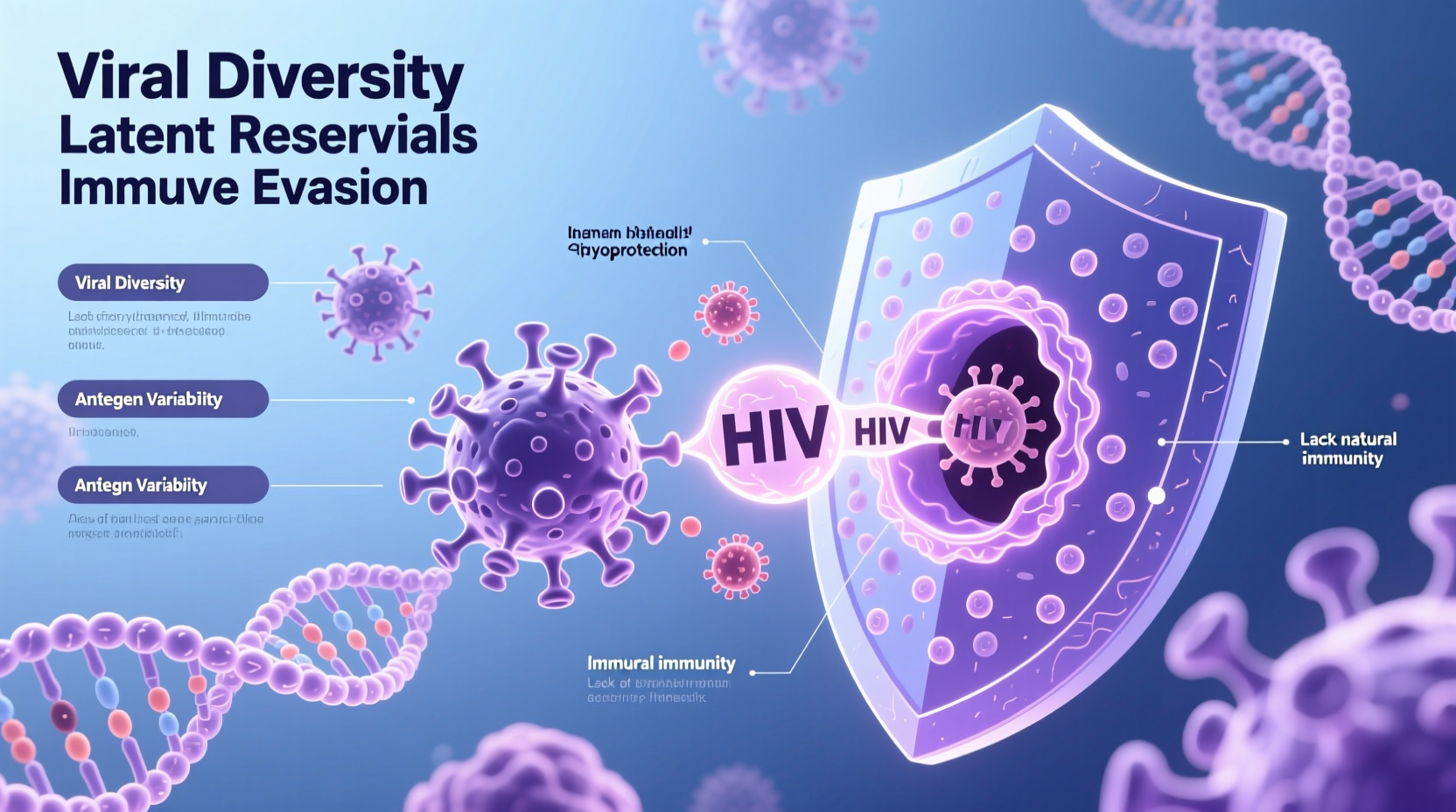
HIV—Human Immunodeficiency Virus—is not just another pathogen. It attacks the very system designed to defend against it: the immune system. Specifically, HIV targets CD4+ T cells, which are central to coordinating immune responses. By destroying these cells, HIV weakens the body’s ability to fight infections and cancers, eventually leading to AIDS if untreated.
But more than its destructive potential, HIV’s genetic variability makes it exceptionally difficult to target with a vaccine. The virus mutates at an extraordinary rate during replication. In fact, within a single infected individual, HIV can generate thousands of genetically distinct variants. This diversity means that any antibody or immune response triggered by a vaccine may quickly become ineffective as the virus evolves.
“HIV is a moving target. By the time your immune system mounts a defense, the virus has already changed its appearance.” — Dr. Anthony Fauci, Former Director, National Institute of Allergy and Infectious Diseases (NIAID)
Challenges in Eliciting Protective Immunity
Most successful vaccines work by mimicking natural infection—teaching the immune system to recognize and neutralize a pathogen before real exposure occurs. However, natural HIV infection does not lead to immunity. In fact, the body never clears the virus on its own. This lack of natural recovery means scientists don’t have a model of protective immunity to replicate—a major disadvantage compared to other diseases.
To be effective, an HIV vaccine would need to do better than natural infection—something rarely required of other vaccines. It must induce broadly neutralizing antibodies (bNAbs) that can target multiple strains of HIV across diverse populations. These bNAbs are rare, take years to develop in natural infection, and target highly conserved but hard-to-reach regions of the virus, like the envelope glycoprotein (Env).
Structural Complexity of the HIV Envelope
The surface of HIV is covered with spike-like proteins known as Env trimers. These spikes are what the virus uses to bind to and enter human cells. They are also the primary target for neutralizing antibodies. However, the Env protein is heavily shielded by sugar molecules (glycans), making it difficult for antibodies to access critical regions.
Additionally, the Env trimer is unstable and changes shape easily, which complicates efforts to use it as a stable antigen in vaccines. Scientists have engineered stabilized versions (like SOSIP trimers), but getting the immune system to respond to these structures in a meaningful way remains a challenge.
| Feature | Challenge for Vaccine Development |
|---|---|
| High mutation rate | Leads to rapid escape from immune recognition |
| Glycan shield | Blocks antibody access to vulnerable sites |
| Latency | Virus hides in reservoirs, avoiding immune detection |
| Lack of natural clearance | No model of protective immunity to mimic |
| Global diversity | Vaccine must protect against multiple subtypes (clades) |
Clinical Trial Setbacks and Lessons Learned
Several large-scale clinical trials have tested HIV vaccine candidates, with mixed or disappointing results. The STEP trial (2007) was halted early when the vaccine appeared to increase susceptibility to HIV in some participants. Later, the HVTN 702 trial in South Africa, based on the modest success of the RV144 trial in Thailand, failed to show efficacy in 2020.
However, not all news has been negative. The RV144 trial did show a modest 31% reduction in infection risk, offering the first proof that an HIV vaccine could provide some protection. Follow-up research identified specific antibody responses linked to lower infection rates, guiding future designs.
More recently, mRNA-based platforms—proven effective with COVID-19—are being explored for HIV. Early-phase trials are testing whether mRNA can instruct cells to produce HIV antigens that stimulate bNAb precursors. While promising, this technology is still in its infancy for HIV applications.
A Real Example: The IAVI G001 Trial
In 2022, the International AIDS Vaccine Initiative (IAVI) reported results from the IAVI G001 trial, which tested a novel vaccine candidate designed to initiate the production of bNAbs. The vaccine successfully primed the immune system in 97% of recipients, stimulating rare B cells capable of evolving into bNAb producers. While this didn’t result in full protection, it marked a critical milestone: proving that the first step in a multi-stage vaccination strategy is feasible.
This “prime and boost” approach—using sequential vaccines to guide antibody maturation—represents a paradigm shift in HIV vaccine design. It acknowledges that immunity won’t come from a single shot but through a carefully orchestrated series of immunizations.
Additional Barriers Beyond Biology
Scientific challenges are only part of the story. Socioeconomic, logistical, and ethical factors also complicate HIV vaccine development:
- Funding fluctuations: While significant investment exists, long timelines and uncertain outcomes deter sustained funding.
- Stigma and recruitment: Trials require high-risk populations, where stigma around HIV can hinder participation.
- Global equity: A vaccine must be effective across diverse genetic backgrounds and HIV subtypes prevalent in different regions (e.g., subtype C in Southern Africa).
- Regulatory pathways: Without a clear correlate of protection (a measurable immune marker that predicts efficacy), regulatory approval remains uncertain.
What Needs to Happen Next? A Step-by-Step Path Forward
Developing an effective HIV vaccine will likely require a coordinated, multi-phase strategy. Here’s a realistic roadmap based on current scientific consensus:
- Prime the immune system with a vaccine that activates rare B cells capable of producing bNAbs.
- Boost with tailored antigens over time to guide antibody maturation toward broad neutralization. <3> Test combinations of vaccine platforms (e.g., DNA + mRNA + protein subunit) for optimal response.
- Conduct large-scale efficacy trials in diverse populations across multiple continents.
- Establish correlates of protection to streamline future development and regulatory approval.
Frequently Asked Questions
Can’t we just use the same technology as the COVID-19 vaccines?
mRNA technology holds promise, but HIV is fundamentally different from SARS-CoV-2. While the coronavirus produces consistent spike proteins that the immune system can easily target, HIV’s spike is highly variable and shielded. mRNA vaccines for HIV are in early trials but face greater scientific hurdles.
Are there any HIV vaccines available today?
No preventive HIV vaccine is currently approved for public use. However, therapeutic vaccines (aimed at controlling the virus in infected individuals) and passive immunization strategies (infusing bNAbs) are under investigation.
If we have effective treatments, why do we still need a vaccine?
Antiretroviral therapy (ART) controls HIV but doesn’t cure it, requires lifelong adherence, and isn’t universally accessible. A vaccine could prevent transmission altogether, reduce reliance on medication, and bring us closer to ending the epidemic.
Conclusion: The Road Ahead
The absence of an HIV vaccine after more than 40 years reflects not a failure of science, but the extraordinary complexity of the virus itself. Each setback has yielded valuable insights, refining our understanding of immunology and viral evasion. Today, researchers are closer than ever to strategies that could finally overcome these barriers—through germline targeting, mRNA delivery, and sequential immunization.
An effective HIV vaccine won’t emerge overnight, but the momentum is building. With sustained investment, global collaboration, and innovative science, the goal is no longer a matter of “if,” but “when.” Until then, prevention tools like PrEP, education, and access to treatment remain vital in bridging the gap.




 浙公网安备
33010002000092号
浙公网安备
33010002000092号 浙B2-20120091-4
Comments
No comments yet. Why don't you start the discussion?