
The visibility of transgender individuals has increased significantly over the past decade, yet this visibility has been met not only with progress but also with a surge in hostility, misinformation, and legislative aggression. Trans people continue to face disproportionate levels of discrimination, violence, and social rejection. Understanding why such intense hate exists requires examining historical, cultural, psychological, and political factors that fuel transphobia.
Transphobia—the irrational fear, hatred, or discomfort toward transgender people—is not a new phenomenon, but its modern manifestations are shaped by evolving societal dynamics. To confront it effectively, we must move beyond surface-level outrage and explore the deeper mechanisms that sustain prejudice.
The Historical Roots of Gender Policing
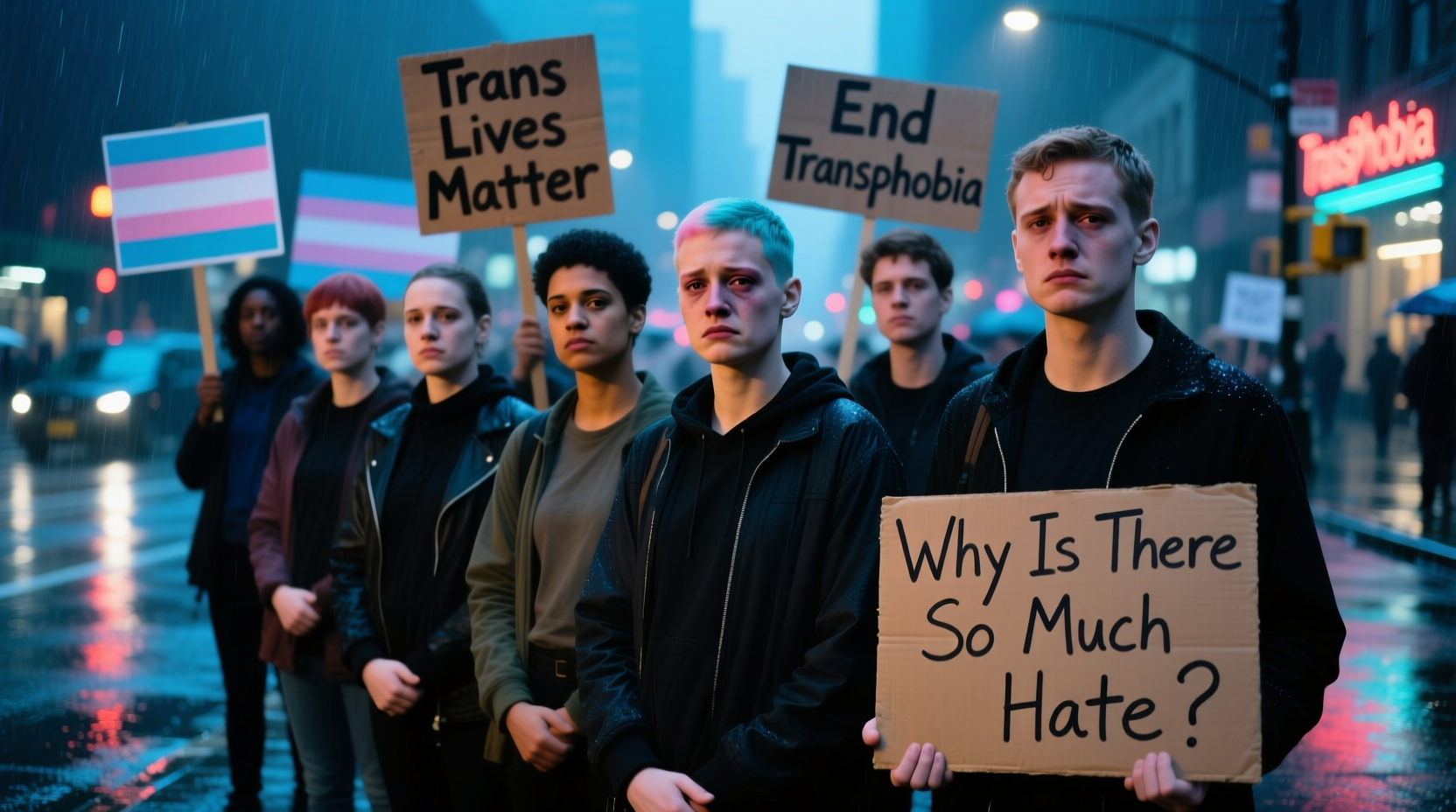
Societies have long enforced rigid gender roles, often codifying them through religion, law, and tradition. The idea that one must conform to a binary system—male or female, man or woman—has been central to maintaining social order in many cultures. Deviations from these norms have historically been punished, pathologized, or erased.
In the 19th and early 20th centuries, medical and psychiatric institutions labeled gender nonconformity as a mental illness. This pathologization laid the groundwork for systemic stigma. Even after advancements like the declassification of being transgender as a mental disorder (removed from the DSM-5’s main list in 2013), the legacy of these labels persists in public perception.
Colonial powers imposed strict gender binaries on indigenous cultures that once recognized multiple gender identities—from the Two-Spirit people in Native American communities to the hijra in South Asia. These erasures were not just cultural suppression; they were acts of control. Today’s transphobia inherits this colonial logic: the belief that gender must be fixed, visible, and unchanging.
Media Representation and Misinformation
Media plays a powerful role in shaping public attitudes. For decades, transgender characters were either absent or portrayed as tragic figures, deceivers, or punchlines. Think of classic films where trans characters are revealed as a “twist” to shock audiences—a narrative device rooted in deception and danger.
Even today, sensationalist media coverage often focuses on extreme or isolated incidents involving trans people, reinforcing stereotypes. Headlines frequently question trans identities under the guise of “debate,” giving equal weight to evidence-based perspectives and baseless opinions. This false balance distorts reality and legitimizes prejudice.
Political Exploitation of Trans Identities
In recent years, anti-trans rhetoric has become a potent political tool. Legislation targeting trans youth—such as bans on gender-affirming care, restrictions on sports participation, and bathroom bills—has surged across several countries, particularly in the United States. These laws are rarely driven by genuine concern for safety or well-being; instead, they serve as symbolic gestures to mobilize certain voter bases.
Politicians and media figures often frame trans rights as a threat to women’s spaces, children, or societal stability. These claims are not supported by data. For example, no verified cases exist of trans women assaulting cisgender women in restrooms—yet the myth persists because it evokes fear.
“Trans rights are not a threat to anyone’s safety. They are a matter of dignity, survival, and equal protection under the law.” — Dr. Kellan Baker, former Senior Fellow at the Center for American Progress
Pyschological and Social Factors Behind Transphobia
Transphobia is often rooted in cognitive dissonance—when someone’s deeply held beliefs are challenged by new information. For individuals raised to believe that gender is strictly tied to biology, encountering trans people can provoke discomfort. Rather than reevaluate their worldview, some respond with hostility.
Religious fundamentalism also plays a role. Some interpretations of religious texts are used to justify exclusion, despite the fact that many faith traditions include histories of gender diversity. Fear of divine punishment or moral decay can amplify resistance to acceptance.
Additionally, transphobia intersects with other forms of oppression. Trans women of color, especially Black trans women, face compounded discrimination due to racism, misogyny, and transphobia. In 2023 alone, the Human Rights Campaign reported over 30 violent killings of trans people in the U.S., the majority being Black transgender women.
| Factor | How It Fuels Transphobia |
|---|---|
| Lack of Education | Ignorance about gender identity leads to fear and misunderstanding. |
| Political Agenda | Trans lives are weaponized for electoral gain. |
| Media Bias | Sensationalism reinforces negative stereotypes. |
| Religious Doctrine | Rigid interpretations are used to justify exclusion. |
| Social Conformity | People police gender to fit in with dominant norms. |
Real Impact: A Mini Case Study
Jamal, a 17-year-old trans boy in rural Tennessee, began socially transitioning in his sophomore year. With support from his parents and school counselor, he started using his chosen name and pronouns. But when a local news outlet covered a school board debate on trans student policies, an anonymous tip led to a segment featuring “concerned parents” questioning whether allowing Jamal to use the boys’ restroom endangered others.
Overnight, Jamal became a target. He received online threats, was misgendered daily at school, and eventually withdrew from classes. His grades dropped, and he developed severe anxiety. Despite doing nothing wrong, he was treated as a threat simply for existing authentically.
This story is not unique. Across regions with restrictive legislation, trans youth report skyrocketing rates of depression and suicidal ideation. According to The Trevor Project’s 2023 survey, 41% of trans and nonbinary youth seriously considered suicide in the past year—rates that increase dramatically in unsupportive environments.
How to Combat Transphobia: A Practical Checklist
- Educate yourself on gender identity using reputable sources (e.g., GLAAD, Human Rights Campaign, PFLAG).
- Use correct names and pronouns consistently, even when the person isn’t present.
- Challenge transphobic jokes or comments in your circles.
- Support trans-owned businesses and creators.
- Advocate for inclusive policies at work, school, and in local government.
- Amplify trans voices rather than speaking over them.
- Donate to organizations supporting trans rights and healthcare access.
Frequently Asked Questions
Isn’t gender just biological? Why complicate it?
Gender is distinct from sex assigned at birth. While sex refers to biological characteristics, gender is a social and personal identity. Thousands of years of anthropology and modern psychology confirm that gender exists on a spectrum. Many cultures have long recognized more than two genders.
Are children too young to understand if they’re trans?
Research shows that transgender children have self-concepts as strong as cisgender children. Gender identity typically emerges between ages 3 and 7. Social transition (name, pronouns, clothing) for young trans kids is fully reversible and associated with better mental health outcomes.
Does affirming trans identities harm society?
No credible evidence supports this claim. On the contrary, studies show that gender-affirming care reduces depression, anxiety, and suicide risk. Inclusive societies report higher overall well-being and lower healthcare costs in the long term.
Conclusion: Moving From Tolerance to Solidarity
The hate directed at trans people is not inevitable—it is learned, amplified, and sustained by systems that benefit from division. But it can be unlearned. Empathy, education, and ethical leadership can dismantle the myths that fuel transphobia.
Supporting trans people isn’t about political correctness; it’s about basic human decency. Every person deserves to live without fear, to be seen accurately, and to access the same opportunities as others. Change begins with individual action: correcting misgendering, calling out misinformation, and standing beside trans friends, colleagues, and neighbors.




 浙公网安备
33010002000092号
浙公网安备
33010002000092号 浙B2-20120091-4
Comments
No comments yet. Why don't you start the discussion?