
In the increasingly polarized landscape of American politics, nicknames often carry more weight than policy debates. One such moniker that has gained traction—especially in conservative media circles—is “Tampon Tim,” a label applied to Minnesota Governor Tim Walz. While seemingly absurd on the surface, the nickname stems from a real legislative action and has since evolved into a political talking point used both satirically and seriously. Understanding why Walz earned this nickname requires unpacking a mix of policy decisions, partisan rhetoric, and cultural symbolism around gender, healthcare, and fiscal responsibility.
The Origin: What Did Tim Walz Actually Do?
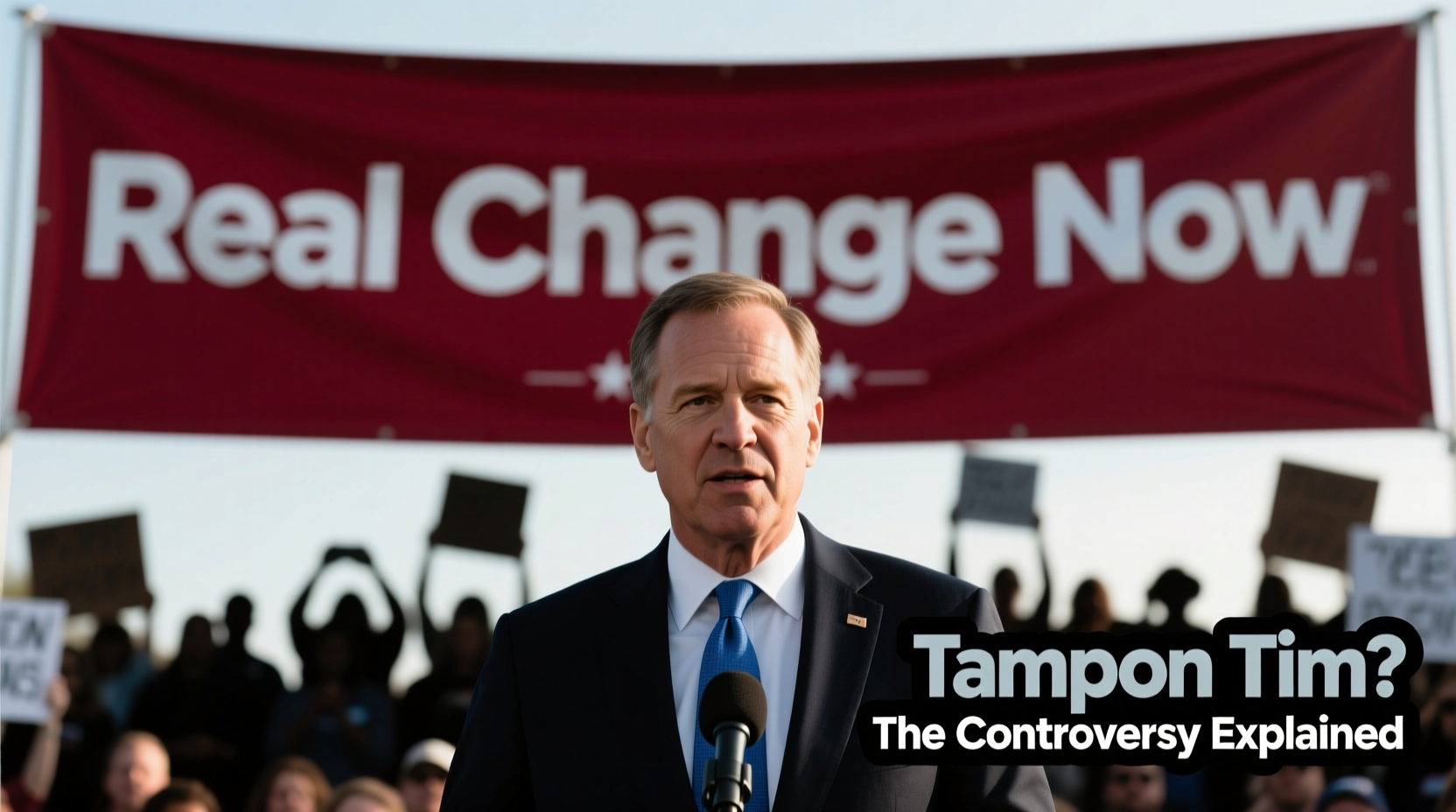
The nickname “Tampon Tim” originated during Walz’s tenure as governor when he signed legislation in 2023 making menstrual products tax-exempt in Minnesota. This move was part of a broader package of budget provisions aimed at expanding access to essential health items. The law eliminated the so-called \"tampon tax\"—a sales tax historically applied to feminine hygiene products—as well as extended similar exemptions to diapers, incontinence supplies, and over-the-counter medications.
Supporters hailed the decision as a long-overdue step toward gender equity. Menstrual products, they argued, are medical necessities, not luxuries, and taxing them amounted to institutional bias. Walz himself framed the policy as both fiscally sound and morally right.
“We’re eliminating taxes on items that people need—not want, but *need*—to live with dignity,” — Governor Tim Walz, May 2023 press conference.
However, critics seized on the optics. Conservative commentators mocked the governor for what they described as prioritizing “feel-good symbolism” over core economic issues like inflation or public safety. Outlets such as Fox News and talk radio hosts began referring to him sarcastically as “Tampon Tim,” implying he was more focused on niche social policies than mainstream governance.
Political Weaponization: From Sarcasm to Strategy
What began as an ironic jab quickly became a strategic label. During the 2024 election cycle, particularly after Walz was floated as a potential vice-presidential running mate for Joe Biden, the nickname resurfaced with renewed intensity. Opponents used it to paint him as out of touch with working-class priorities, suggesting that eliminating a small tax on tampons was emblematic of misplaced liberal focus.
This rhetorical framing relies on a deeper narrative: that progressive leaders prioritize symbolic inclusivity over tangible results. By reducing a complex policy agenda to a single, easily mockable image—governors signing bills about tampons—opponents aim to delegitimize broader reforms related to healthcare access and reproductive rights.
A Timeline of Key Events Leading to the Nickname
- March 2023: Minnesota legislature passes HF 2257, a bill eliminating sales tax on menstrual products, diapers, and select OTC medicines.
- May 2023: Governor Walz signs the bill into law with a public ceremony attended by advocates and lawmakers.
- June 2023: Conservative media outlets begin using “Tampon Tim” in headlines and commentary, often without context.
- August 2023: The phrase trends on social media following a viral clip of Walz discussing period poverty in a town hall.
- July 2024: National GOP figures reference “Tampon Tim” in campaign speeches ahead of the presidential election.
Public Reaction and Media Framing
Public response to the nickname has been sharply divided along ideological lines. On one side, progressive activists and gender equity organizations have pushed back strongly, calling the term demeaning and misogynistic. They argue that mocking a policy designed to reduce period poverty trivializes a serious public health issue affecting millions of low-income individuals.
Conversely, some voters—particularly those skeptical of government spending—have embraced the nickname as shorthand for perceived liberal excess. Online forums and comment sections frequently use “Tampon Tim” to dismiss Walz’s broader record, regardless of his achievements in education reform, infrastructure investment, or veterans’ affairs.
The media plays a crucial role in amplifying or challenging such labels. Neutral outlets tend to avoid the term unless quoting others, while opinion-driven platforms use it freely. This selective usage underscores how language shapes perception: calling someone “the governor who championed menstrual equity” sounds dignified; calling him “Tampon Tim” invites ridicule.
Comparative Analysis: Similar Political Nicknames and Their Impact
| Figure | Nickname | Origin | Impact |
|---|---|---|---|
| John Kerry | “Flip-flop Kerry” | Perceived inconsistency on Iraq War | Undermined credibility in 2004 election |
| Mitt Romney | “47% Mitt” | Leaked video about welfare recipients | Became defining moment of 2012 campaign |
| Tim Walz | “Tampon Tim” | Tax exemption for menstrual products | Used to question policy priorities |
| AOC | “Tax the Rich” AOC | Dress slogan at 2021 Met Gala | Boosted visibility but fueled criticism |
As the table shows, political nicknames often stick not because they’re accurate, but because they’re memorable. The most effective ones distill complex narratives into digestible, emotionally charged phrases—whether fair or not.
Mini Case Study: How “Tampon Tim” Played Out Locally vs. Nationally
In Minnesota, Walz remains relatively popular. His approval ratings stayed above 50% even after the nickname went national. Local journalists noted that constituents were more likely to associate him with job growth, rural broadband expansion, and teacher pay increases than with tampon taxes.
But outside Minnesota, the story differs. In focus groups conducted in Ohio and Pennsylvania during early 2024, undecided voters expressed confusion when asked about Walz. Upon hearing “Tampon Tim,” many assumed he was a fringe candidate focused on niche identity politics. Few connected the nickname to actual legislation or understood its implications for low-income families.
This disconnect illustrates a growing challenge in modern politics: local success doesn’t always translate to national recognition, especially when opponents control the narrative through catchy, reductive labels.
Frequently Asked Questions (FAQ)
Did Tim Walz really only focus on tampons?
No. While the tampon tax repeal received attention, Walz has advanced numerous policies, including free school meals, mental health funding, and workforce development programs. The nickname oversimplifies his record.
Are menstrual products actually taxed in most states?
As of 2024, 22 U.S. states still impose a sales tax on menstrual products. Minnesota is among the growing number that have eliminated it, citing fairness and public health.
Is “Tampon Tim” an offensive nickname?
Many advocates say yes, arguing it mocks women’s health needs and discourages open discussion about menstruation. Others see it as harmless satire. Context and intent matter significantly in evaluating its appropriateness.
Expert Insight: Why Labels Like This Matter
“Nicknames like ‘Tampon Tim’ aren’t just jokes—they shape voter memory. When a single policy becomes a caricature, it can erase years of governance.” — Dr. Lena Peterson, Political Communications Scholar, University of Michigan
Dr. Peterson’s research shows that voters are more likely to recall humorous or emotionally charged labels than detailed policy summaries. This cognitive bias gives opponents a powerful tool: by narrowing a candidate’s identity to one moment or issue, they can dominate public perception—even if inaccurately.
Action Checklist: How to Evaluate Political Nicknames Critically
- Identify the origin: Who coined the term and where did it first appear?
- Check the facts: What specific action or statement inspired the label?
- Analyze the tone: Is it neutral, mocking, or supportive?
- Review the full record: Does the nickname reflect a major part of the person’s work—or just a minor detail?
- Assess media repetition: How widely has it been adopted, and by which outlets?
Conclusion: Beyond the Label
“Tampon Tim” may be easy to say, but it tells only a sliver of the story. Reducing a governor’s legacy to a single line-item veto or ceremonial bill signing ignores the complexity of policymaking and the real impact of removing financial barriers to essential health products. Whether one agrees with the tax change or not, dismissing it as frivolous overlooks the lived experiences of people who struggle with period poverty every month.
Political discourse benefits from scrutiny—but not from mockery disguised as critique. As voters, consumers of news, and participants in democracy, we owe it to ourselves to look past catchy slogans and ask deeper questions about leadership, equity, and the values reflected in public policy.




 浙公网安备
33010002000092号
浙公网安备
33010002000092号 浙B2-20120091-4
Comments
No comments yet. Why don't you start the discussion?