
It’s a familiar scene at Trader Joe’s: customers walk in hoping to grab a chilled pack of their beloved kimbap—only to find the refrigerated case empty. This isn’t an isolated incident. Across locations and time zones, Trader Joe’s kimbap consistently sells out by midday, often earlier on weekends. For fans of this Korean-inspired rice roll, the disappointment is real. But why does it happen so frequently, and what are the best alternatives when it’s gone?
The answer lies in a combination of limited production, high demand, and the perishable nature of fresh prepared foods. Understanding these factors not only explains the scarcity but also opens the door to better solutions—whether that’s timing your shopping right, exploring other brands, or making your own version at home.
Why Trader Joe’s Kimbap Sells Out So Fast
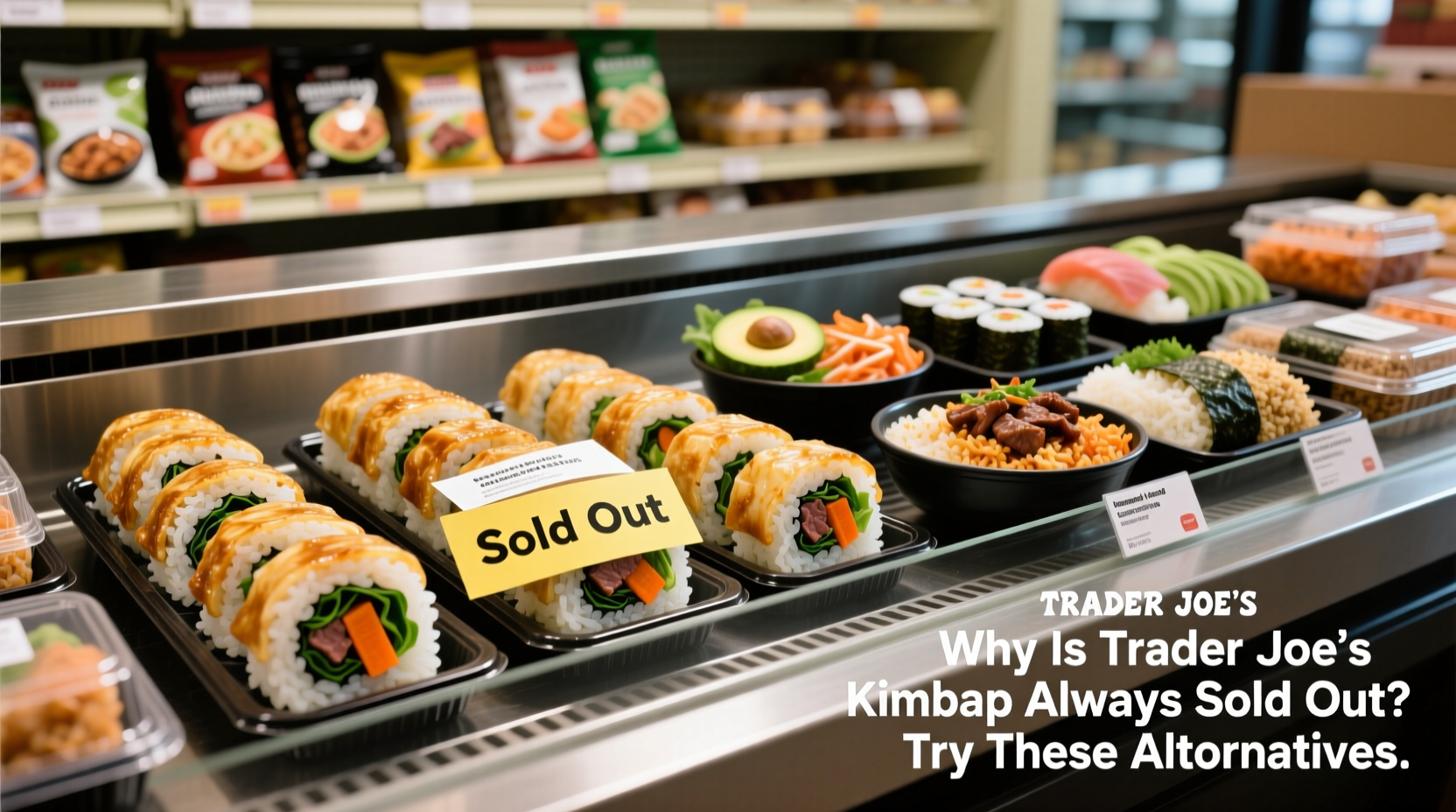
Trader Joe’s operates on a just-in-time inventory model, especially for its fresh prepared foods. Unlike non-perishables, items like kimbap can’t be overstocked due to shelf-life constraints. The chain produces a limited number of units per store per day, based on historical sales data. While this minimizes waste, it also means supply is finite—and often insufficient for actual demand.
Kimbap sits at the intersection of convenience, cultural appeal, and clean labeling—three pillars of Trader Joe’s success. It’s vegan-friendly (in most varieties), gluten-free, portable, and priced under $5. That makes it ideal for quick lunches, picnics, or post-gym fuel. As word spreads through social media and food blogs, demand has surged beyond initial projections.
“Fresh prepared foods at grocery stores have a narrow window between peak freshness and spoilage. Retailers like Trader Joe’s prioritize quality over quantity, which means popular items often disappear quickly.” — Dr. Lena Park, Food Systems Analyst
Additionally, kimbap isn’t shipped daily to all stores. Distribution schedules vary by region, and some locations receive shipments only two to three times per week. If a store runs out and the next delivery isn’t due until tomorrow, customers are simply out of luck.
Top Store-Bought Alternatives to Trader Joe’s Kimbap
While nothing replicates the exact flavor and texture of Trader Joe’s version, several supermarket and specialty brand options come close. These alternatives vary in availability but are worth seeking out—especially when kimbap is unavailable.
| Product | Key Features | Where to Find | Price Range |
|---|---|---|---|
| GimMe Organic Seaweed Snacks & Rolls | Organic ingredients, seaweed-based, plant-powered | Natural grocers, Whole Foods, online | $3.50–$5.00 |
| Plum Organics Just Bento | Packaged meal with rice, veggies, protein; includes kimchi flavor | Target, Kroger, Walmart | $4.99 |
| Snap Pea Roll from Hodo Foods | Fresh tofu, snap peas, pickled carrots; sold in deli sections | Whole Foods, Bay Area markets | $6.99 per roll |
| Seaweed Salad & Rice Rolls by Monterey Market | Regional brand, fresh, minimal packaging | California independent grocers | $4.50 |
| Ito Ramen & Rice Bowl Kits | Not pre-made, but easy DIY kimbap-style meals | Asian supermarkets, Amazon | $3.00–$5.00 |
While none of these are direct replicas, they offer similar textures and flavor profiles. GimMe Organic rolls, for example, use real seaweed sheets and organic rice, making them nutritionally comparable. Plum Organics’ bento boxes include fermented vegetables and balanced macros, appealing to health-conscious eaters.
How to Evaluate a Good Kimbap Alternative
- Rice Quality: Should be slightly seasoned with vinegar or sesame oil, not plain or mushy.
- Filling Variety: Look for a mix of vegetables like spinach, carrots, cucumber, and optionally egg or tofu.
- Seaweed Integrity: Nori should be crisp enough to hold shape but softening slightly after sitting.
- No Artificial Preservatives: Clean label is part of the appeal—avoid rolls with long ingredient lists.
Make Your Own Kimbap: A Practical Guide
If consistency is key, making kimbap at home is the most reliable alternative. With a modest investment in ingredients and about 30 minutes of prep time, you can produce multiple servings that rival—or surpass—the Trader Joe’s version.
Essential Ingredients
- Short-grain white or sushi rice
- Toasted nori sheets (full-size or snack-cut)
- Sesame oil and seeds
- Carrots, spinach, cucumber, and imitation crab or marinated tofu
- Rice vinegar, sugar, salt (for seasoning rice)
- Bamboo rolling mat (optional but helpful)
Step-by-Step Preparation
- Cook the rice: Rinse 1 cup of short-grain rice until water runs clear. Cook with 1¼ cups water. Once cooled slightly, season with 1 tbsp rice vinegar, ½ tsp sugar, and ¼ tsp salt.
- Prepare fillings: Julienne carrots and cucumber. Blanch spinach and squeeze dry. Lightly pan-sear imitation crab or tofu. Season each component lightly with sesame oil.
- Assemble the roll: Lay a nori sheet shiny-side down. Spread a thin, even layer of rice, leaving a 1-inch border at the top. Arrange fillings horizontally near the bottom edge.
- Roll tightly: Use a bamboo mat to help roll from the bottom, pressing gently as you go. Seal the edge with a bit of water.
- Slice and serve: Cut into 1-inch pieces with a sharp, wet knife. Sprinkle with sesame seeds.
Customization Ideas
- Add avocado for creaminess.
- Use spicy gochujang mayo as a drizzle.
- Swap in pickled radish or daikon for tang.
- Create a “rainbow kimbap” with colorful vegetable combinations.
Homemade kimbap keeps well in the refrigerator for up to 48 hours when wrapped tightly in parchment and stored in an airtight container. Freezing is not recommended, as the rice becomes gummy upon thawing.
Mini Case Study: How One Family Solved Their Kimbap Shortage
The Nguyen family in Portland, Oregon, were regular Trader Joe’s shoppers who relied on kimbap for school lunches and weekend outings. After months of coming home empty-handed, they decided to take matters into their own hands. Inspired by YouTube tutorials and a desire for more control over ingredients, they began making kimbap every Sunday evening.
Using a $10 bamboo mat and bulk-purchased nori from an Asian grocery store, they now prepare six large rolls per week. They involve their children in the process, turning it into a fun family activity. Not only do they save money—averaging $2.75 per roll versus $4.99—but they’ve also introduced new variations like sweet potato kimbap and spicy tuna rolls.
“It’s fresher, healthier, and we don’t have to race to the store,” says Mai Nguyen, a registered dietitian. “Plus, our kids actually eat their vegetables when they’re rolled up in rice.”
Expert Tips for Maximizing Availability and Flavor
Whether you’re chasing the last pack at Trader Joe’s or building your own, a few strategic habits can improve your experience significantly.
Check Delivery Schedules
Contact your local Trader Joe’s manager or customer service desk to ask about fresh food delivery days. Most stores receive perishable goods early in the week (Tuesday–Thursday) and on weekends. Planning your visit accordingly increases your odds.
Ask About Hidden Stock
Sometimes, kimbap isn’t truly sold out—it’s merely not visible. Staff may keep a few extra packs behind the counter for later restocking. Politely asking, “Do you have any more in the back?” can yield results.
Freeze Components Ahead
While assembled kimbap doesn’t freeze well, individual components can. Cook and season rice, then freeze in portions. Blanch and freeze spinach. Pre-cut vegetables and store in containers. When ready to assemble, defrost and roll in under 15 minutes.
Support Local Korean Markets
Many Korean grocery stores sell freshly made kimbap in-house. Stores like H Mart, Assi Plaza, or smaller neighborhood shops often have deli counters with rotating varieties—vegetarian, tuna, bulgogi, and more—at competitive prices.
“Local Asian markets are often overlooked, but they offer authentic, fresh kimbap made daily. You’ll get better taste and support small businesses.” — Chef Daniel Lee, Korean Cuisine Instructor
Frequently Asked Questions
Is Trader Joe’s kimbap vegan?
Yes, the classic version of Trader Joe’s kimbap is vegan. It contains seasoned rice, carrots, spinach, cucumber, and sesame seeds, all wrapped in nori. Always check the packaging, as formulations can change.
Can I reheat Trader Joe’s kimbap?
Reheating is not recommended. Kimbap is designed to be eaten cold or at room temperature. Heating will make the rice soggy and cause the nori to lose its structure. If refrigerated, let it sit out for 10–15 minutes before eating for optimal texture.
Why does my homemade kimbap fall apart?
This usually happens due to too much filling or loose rolling. Use moderate amounts of ingredients and roll tightly using a bamboo mat. Also, ensure the rice layer is thin—about ⅛ inch thick—for proper cohesion.
Conclusion: Turn Frustration Into Opportunity
The constant sell-out of Trader Joe’s kimbap reflects its popularity, not poor planning. While inconvenient, it invites a shift toward more sustainable and satisfying solutions. Whether you master the art of homemade rolls, discover new brands, or optimize your shopping strategy, the goal is consistent access to a healthy, flavorful meal.
Instead of viewing the shortage as a setback, treat it as motivation to explore deeper into Korean cuisine and mindful eating. The skills you gain—from rolling techniques to ingredient pairing—will serve you far beyond a single grocery item.




 浙公网安备
33010002000092号
浙公网安备
33010002000092号 浙B2-20120091-4
Comments
No comments yet. Why don't you start the discussion?