
Urbanization—the shift of populations from rural to urban areas—has shaped human civilization for centuries. Today, more than 56% of the world’s population lives in cities, a figure projected to rise to nearly 60% by 2030. This transformation is not just a demographic trend; it's a powerful driver of economic growth, technological innovation, and social change. Understanding why urbanization is important means examining its multifaceted benefits, as well as the challenges it presents. From boosting productivity to straining infrastructure, urbanization reshapes how we live, work, and interact.
Economic Growth and Innovation Hubs
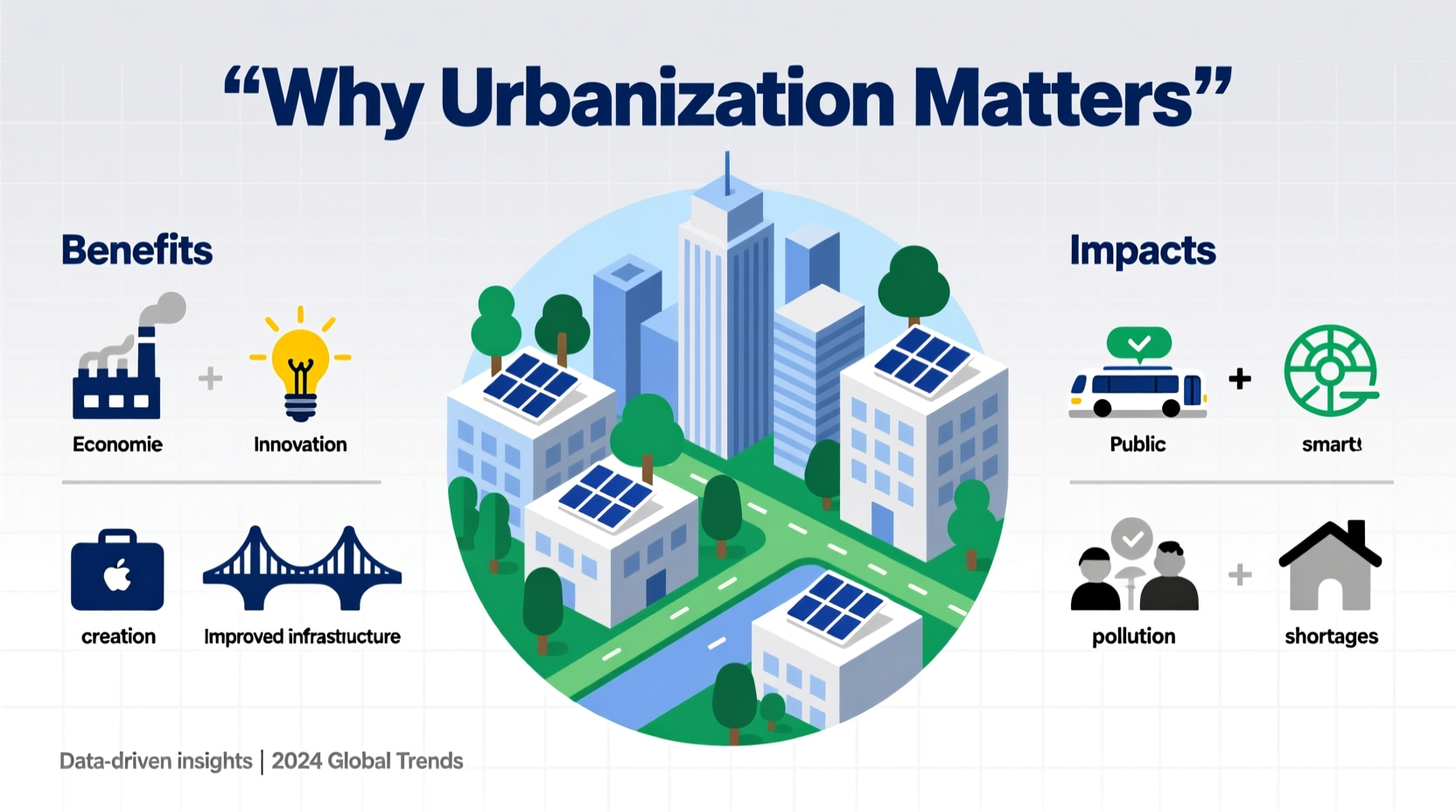
Cities are engines of economic development. They concentrate labor, capital, and knowledge, creating fertile ground for innovation and entrepreneurship. Urban centers attract skilled workers, foster collaboration across industries, and provide access to larger markets. According to the World Bank, cities generate over 80% of global GDP, despite occupying just 3% of the Earth’s land surface.
The clustering effect in cities reduces transportation costs, increases specialization, and accelerates the diffusion of new technologies. For example, tech hubs like Bangalore, Berlin, and San Francisco thrive because proximity enables faster idea exchange and access to venture capital. Small businesses benefit from dense customer bases and shared services, while multinational corporations establish headquarters in urban zones for logistical and strategic advantages.
Social and Infrastructure Advantages
Urban living often provides better access to essential services. Healthcare facilities, schools, public transportation, and sanitation systems are typically more developed in cities than in rural regions. A family in an urban area is more likely to reach a hospital within minutes, enroll children in quality schools, and enjoy reliable electricity and internet connectivity.
Public transit networks in cities reduce per-capita carbon emissions compared to car-dependent rural lifestyles. Efficient mass transit, bike-sharing programs, and walkable neighborhoods promote healthier lifestyles and lower pollution levels. Additionally, digital infrastructure—such as high-speed broadband—is more readily available in urban settings, enabling remote work, e-commerce, and online education.
“Cities are not just places of congestion and cost—they are laboratories of social progress and inclusive development.” — Dr. Ananya Rao, Urban Economist at UN-Habitat
Environmental Trade-offs and Sustainable Planning
While urbanization drives efficiency, it also poses environmental risks. Unplanned expansion leads to deforestation, loss of biodiversity, and increased air and water pollution. However, when managed sustainably, cities can be part of the climate solution.
Dense urban environments allow for energy-efficient buildings, centralized waste management, and reduced per-person ecological footprints. For instance, residents of New York City have the lowest per capita greenhouse gas emissions among Americans due to widespread public transit use and compact housing.
| Aspect | Positive Impact | Negative Impact |
|---|---|---|
| Energy Use | Lower per capita consumption due to shared infrastructure | High total demand strains power grids |
| Transportation | Mass transit reduces emissions | Traffic congestion increases pollution |
| Land Use | Efficient vertical development saves space | Urban sprawl encroaches on farmland and forests |
| Waste Management | Centralized recycling and treatment possible | Overburdened systems lead to dumping |
Case Study: Medellín’s Transformation Through Urban Investment
Once known for violence and poverty, Medellín, Colombia, reimagined its future through strategic urban planning. In the early 2000s, city leaders invested in cable cars connecting hillside slums to downtown jobs, built libraries and parks in underserved neighborhoods, and expanded public transit. These efforts didn’t just improve mobility—they restored dignity, reduced crime, and boosted economic inclusion.
By treating urbanization as an opportunity rather than a crisis, Medellín achieved one of Latin America’s most remarkable turnarounds. Today, it’s celebrated globally as a model of equitable urban development. The lesson? Thoughtful investment in infrastructure and social programs can transform marginalized communities into thriving urban districts.
Challenges of Rapid Urbanization
Not all urban growth is managed effectively. In many developing nations, rapid migration overwhelms city services. Slums expand without clean water or sewage systems. Informal economies grow, offering livelihoods but lacking worker protections. Air quality deteriorates, and housing shortages drive up rents, pushing low-income families to the urban fringes.
Governance gaps exacerbate these issues. Weak urban planning, corruption, and underfunded municipalities struggle to keep pace with demand. Without inclusive policies, urbanization can deepen inequality rather than alleviate it.
Step-by-Step Guide to Building Resilient Cities
- Assess Current Infrastructure: Audit transportation, housing, water, and energy systems for capacity and vulnerabilities.
- Engage Communities: Hold public forums to understand local needs and priorities.
- Adopt Smart Zoning Laws: Encourage mixed-use development and limit urban sprawl.
- Invest in Green Infrastructure: Integrate parks, green roofs, and permeable surfaces to manage stormwater and heat.
- Expand Public Transit: Prioritize affordable, accessible, and low-emission transport options.
- Monitor and Adapt: Use data analytics to track performance and adjust policies accordingly.
Checklist: Key Elements of Successful Urban Development
- ✅ Affordable and inclusive housing policies
- ✅ Reliable public transportation network
- ✅ Access to healthcare and education for all residents
- ✅ Green spaces and recreational areas
- ✅ Waste reduction and recycling programs
- ✅ Climate-resilient building codes
- ✅ Transparent governance and anti-corruption measures
- ✅ Support for small businesses and job creation
Frequently Asked Questions
What are the main benefits of urbanization?
The primary benefits include higher economic productivity, improved access to services like healthcare and education, greater innovation due to proximity, and more efficient use of resources such as energy and transportation.
Does urbanization always lead to better living standards?
Not necessarily. While cities offer opportunities, poorly managed urbanization can result in overcrowding, pollution, inadequate housing, and social inequality. The outcome depends on planning, investment, and governance.
How can cities become more sustainable?
Cities can adopt renewable energy, expand green spaces, promote public transit, enforce eco-friendly building standards, and implement circular economy practices for waste and water management.
Conclusion: Shaping the Future of Urban Living
Urbanization is neither inherently good nor bad—it is a force shaped by choices. When guided by vision, equity, and sustainability, it can lift millions out of poverty, drive innovation, and create vibrant communities. But without careful planning, it risks deepening divides and degrading the environment. The importance of urbanization lies not in its inevitability, but in how we respond to it. By investing in smart infrastructure, inclusive policies, and resilient design, cities can become models of progress for generations to come.




 浙公网安备
33010002000092号
浙公网安备
33010002000092号 浙B2-20120091-4
Comments
No comments yet. Why don't you start the discussion?