
Wool is celebrated for its warmth, breathability, and natural moisture-wicking properties. It’s a go-to fabric in cold climates and outdoor gear for good reason. Yet, many people avoid wool because of one persistent issue: itchiness. This discomfort isn’t universal—some wear merino with no issues, while others find even thin blends irritating. The truth lies not in wool itself as inherently “bad,” but in a combination of fiber characteristics, processing methods, and individual skin sensitivity.
Understanding why wool itches allows consumers to make informed choices about the types they wear, how they care for them, and when to seek alternatives. More importantly, it dispels myths that all wool is scratchy and unwearable next to the skin—a misconception that has unfairly limited its appeal.
The Science Behind Wool’s Itch Factor
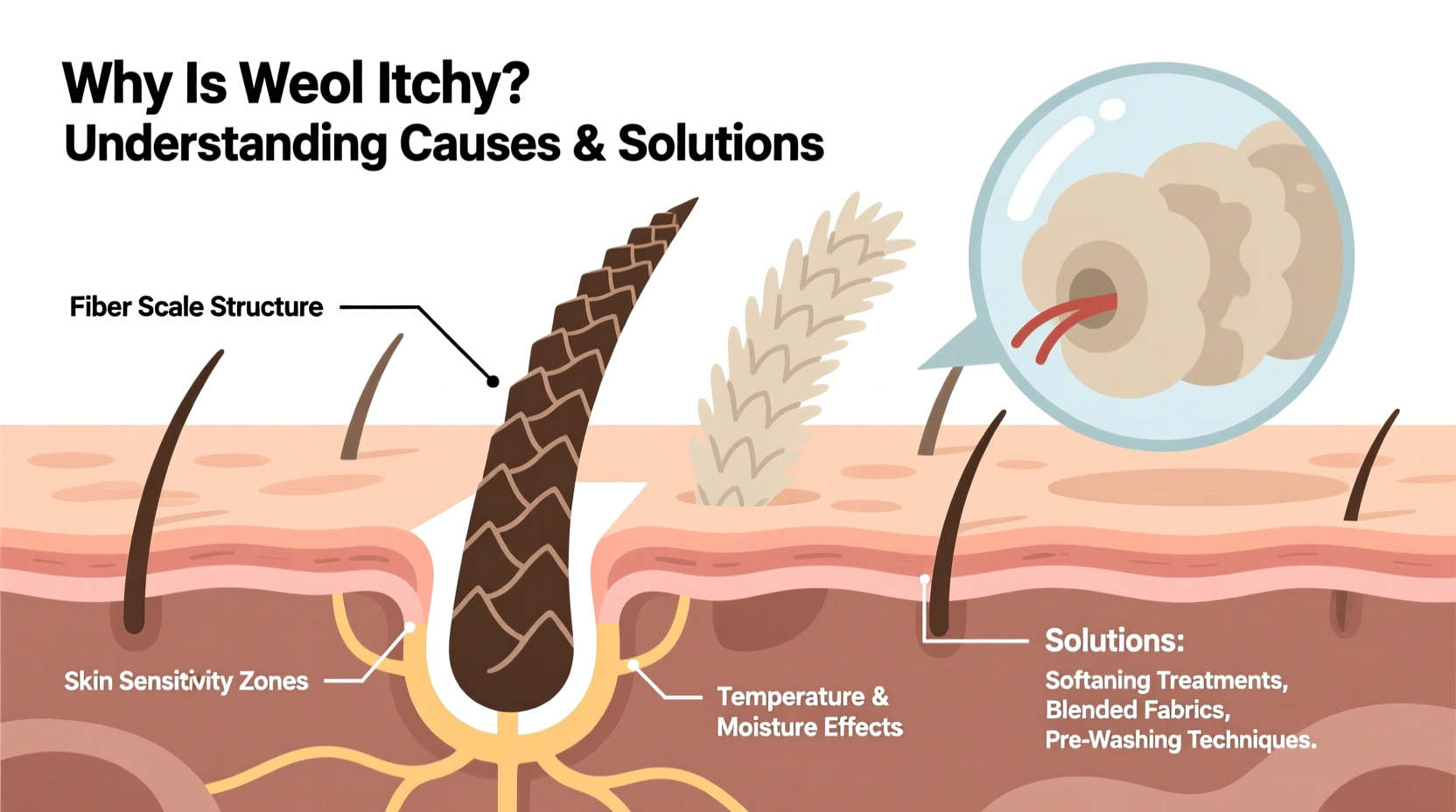
At the microscopic level, wool fibers are scaly and crimped, which contributes to their elasticity and insulation. However, these same physical traits can cause irritation when the fiber tips press against or abrade sensitive skin. The diameter of the fiber, measured in microns (µ), is the primary determinant of softness. Coarser wools—typically above 25–30 microns—have stiffer, more protruding scales that trigger nerve endings in the skin, leading to that familiar prickling sensation.
For context, human hair ranges from 50 to 100 microns in diameter, while high-quality merino wool can be as fine as 17 microns. The finer the fiber, the less likely it is to irritate. This is why luxury wool garments often use ultrafine merino or cashmere, both under 19 microns.
“Fiber diameter is the most critical factor in determining whether wool feels itchy. Below 19 microns, most people won’t perceive any prickle—even against bare skin.” — Dr. Linda Heinrich, Textile Biophysicist, CSIRO
Another contributing factor is the alignment and length of the fiber scales. Longer scales increase surface friction, making the fabric feel rougher. Mechanical processing like carding and spinning can also affect this—over-processing may expose more scale edges, increasing abrasiveness.
Fiber Type and Wool Quality Comparison
| Wool Type | Average Fiber Diameter (microns) | Skin Sensitivity Risk | Best For |
|---|---|---|---|
| Lambswool | 17–22 | Low to moderate | Soft sweaters, base layers |
| Merino (Fine) | 15–18.5 | Very low | Next-to-skin wear, activewear |
| Shetland Wool | 24–30 | Moderate to high | Outerwear, blankets |
| Cashmere | 14–16 | Very low | Luxury garments, scarves |
| Conventional Wool (generic) | 25–40+ | High | Rugs, outer coats |
Processing and Fabric Construction Matters
Even fine wool can become uncomfortable if poorly processed. Chemical treatments used to shrink-proof or felt wool—such as chlorine-hercosett processes—can leave residues that irritate sensitive skin. These treatments harden the fiber surface, reducing natural softness and increasing stiffness.
Weave and knit structure also play a role. Tightly knitted or woven fabrics tend to hold fibers more securely, minimizing movement and reducing skin contact with loose fiber ends. In contrast, loosely spun yarns or brushed finishes (like in some flannel-style wool) expose more fiber tips, increasing the chance of irritation.
Individual Skin Sensitivity and Environmental Factors
No discussion of wool itch would be complete without addressing personal physiology. People with conditions like eczema, atopic dermatitis, or sensitive skin are more prone to tactile discomfort from textiles. Dry winter air exacerbates this, as dehydrated skin becomes more reactive to mechanical stimuli.
In one observational study, participants with diagnosed skin sensitivities reported prickle sensations at lower fiber diameters than those with normal skin—sometimes even with merino. This suggests that while fiber quality is crucial, it's not the sole factor.
Additionally, psychological expectation plays a role. If someone associates wool with childhood sweaters that scratched, they may perceive even soft modern versions as irritating due to conditioned response.
Real Example: A Hiker’s Experience
Mark, an avid backpacker from Colorado, avoided wool for years after a childhood sweater caused a rash. During a winter trek, he reluctantly tried a merino base layer on his guide’s recommendation. To his surprise, he experienced no itching—even during prolonged wear under a heavy pack. He later learned the garment used 17.5-micron merino and a seamless flatlock stitch, minimizing friction points. This experience changed his view: not all wool is created equal.
How to Wear Wool Comfortably: A Step-by-Step Guide
- Assess your skin sensitivity. If you have eczema or reactive skin, start with ultrafine fibers (under 18 microns).
- Choose the right wool type. Opt for merino, lambswool, or cashmere for next-to-skin wear. Avoid coarse weaves unless layered over other clothing.
- Check the micron count. Reputable brands often list fiber fineness. When in doubt, touch the fabric—softness correlates strongly with low micron values.
- Look at construction details. Flat seams, seamless designs, and tight knits reduce irritation points.
- Layer strategically. Wear a lightweight cotton or silk liner beneath wool if direct contact still feels uncomfortable.
- Wash before first use. Some off-gassing or residual processing agents may contribute to initial discomfort. A gentle wash can help.
- Moisturize your skin. Well-hydrated skin is less reactive. Apply unscented lotion before wearing wool in dry conditions.
Checklist: Choosing Non-Itchy Wool Garments
- ✅ Fiber diameter below 20 microns (ideally 17–19)
- ✅ Fabric labeled “merino,” “lambswool,” or “cashmere”
- ✅ Smooth, tightly knit or woven texture
- ✅ Minimal chemical treatment (avoid excessive “shrink-proof” claims)
- ✅ Seamless or flatlock stitching in high-friction areas
- ✅ Positive reviews mentioning comfort against skin
- ✅ Pre-washed or softened finish
FAQ: Common Questions About Wool Itch
Can wool allergies cause itching?
True wool allergies are extremely rare. Most discomfort is mechanical irritation, not immunological. However, some people react to lanolin (a wax in raw wool), though refined wool contains minimal amounts. If redness, swelling, or hives occur, consult a dermatologist.
Is baby alpaca less itchy than wool?
Yes. Baby alpaca fibers average 18–22 microns and have smoother scales than sheep wool, resulting in a softer hand feel. Alpaca also lacks lanolin, making it hypoallergenic for many who react to traditional wool.
Does washing wool make it less itchy?
Not significantly. While washing removes surface impurities, it doesn’t alter fiber stiffness. However, fabric softeners or conditioning rinses (like wool-safe conditioners) may temporarily improve softness. Over time, proper care preserves fiber integrity and comfort.
Conclusion: Rethinking Wool for Modern Comfort
Wool doesn’t have to be itchy. Advances in breeding, fiber selection, and textile engineering have produced wools that are soft, breathable, and entirely wearable next to the skin. The key is understanding what makes certain wools irritating—and knowing how to choose better alternatives.
By paying attention to fiber fineness, processing methods, and fit, anyone can enjoy wool’s exceptional thermal regulation and odor resistance without discomfort. Whether you're layering for a winter commute or gearing up for a mountain hike, the right wool garment can be as cozy as it is functional.




 浙公网安备
33010002000092号
浙公网安备
33010002000092号 浙B2-20120091-4
Comments
No comments yet. Why don't you start the discussion?