
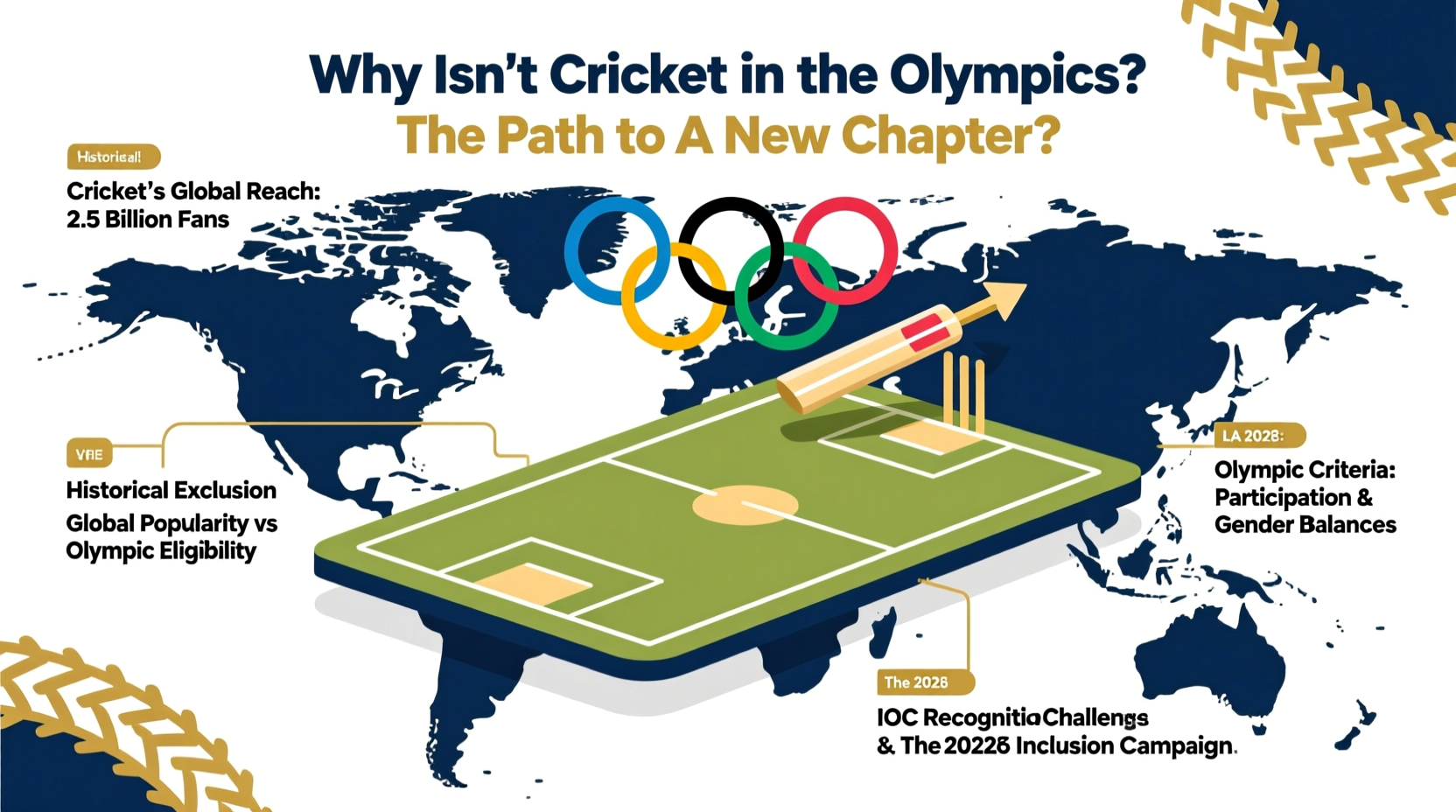
Cricket is one of the most popular sports in the world, with over 2.5 billion fans globally. It dominates headlines across South Asia, the UK, Australia, and parts of Africa and the Caribbean. Yet, despite its massive following, cricket has been absent from the Olympic Games for more than a century. As Los Angeles prepares to host the 2028 Summer Olympics, speculation is growing about whether this beloved bat-and-ball sport might finally make a comeback. So why isn’t cricket in the Olympics — and what’s standing in the way of its return in 2028?
A Brief History: Cricket’s One and Only Olympic Appearance
Believe it or not, cricket has already been part of the Olympic program — once. The sport made its debut at the 1900 Paris Games, where only two teams competed: Great Britain and France. Great Britain won gold by a convincing margin, defeating France by 158 runs. However, the event was poorly attended, under-promoted, and largely forgotten. With no further interest from major cricketing nations and logistical complications, the International Olympic Committee (IOC) dropped cricket after that single appearance.
For over 120 years, cricket remained outside the Olympic fold, even as other team sports like rugby sevens and baseball/softball have cycled in and out of the program. The absence is especially striking given cricket’s global reach and cultural significance in countries that collectively represent nearly half the world’s population.
Key Barriers to Olympic Inclusion
The exclusion of cricket from the modern Olympic movement isn’t due to lack of popularity alone. Several structural, political, and practical hurdles stand in the way.
- Scheduling Conflicts: The International Cricket Council (ICC) governs a packed calendar of bilateral series, World Cups, T20 leagues (like the IPL and Big Bash), and franchise tournaments. These events generate billions in revenue and are tightly scheduled throughout the year, making it difficult to align with the fixed four-year Olympic cycle.
- Format Limitations: Traditional Test matches last five days, while One Day Internationals (ODIs) take up to eight hours. Even T20 games — the shortest international format — require about three hours per match. Fitting a full tournament into the tight Olympic schedule without overlapping with other events is a logistical challenge.
- Governing Body Resistance: The ICC has historically shown lukewarm interest in Olympic inclusion, fearing loss of control over commercial rights and player availability. Unlike FIFA or World Rugby, which actively support Olympic football and rugby sevens, the ICC has not pushed hard for reinstatement.
- Lack of Global Infrastructure: While cricket is huge in certain regions, it lacks widespread competitive structures in non-traditional nations. The Olympics demand broad international participation, but many countries don’t have national teams or domestic leagues capable of fielding competitive squads.
- Perception as a “Colonial Sport”: In some circles, cricket is still seen as a legacy of British imperialism, limiting its appeal in parts of Latin America, Eastern Europe, and North America — regions critical for IOC expansion goals.
The Case for Cricket in LA 2028
Los Angeles 2028 presents a unique opportunity for cricket’s Olympic revival. The Games will be hosted in a city with growing South Asian and Caribbean communities, both of which have strong cricket traditions. Additionally, Major League Cricket (MLC), launched in 2023, has begun establishing professional infrastructure in the U.S., including stadiums and franchises in Dallas and Los Angeles.
With the rise of T20 leagues worldwide and increasing investment in American cricket, momentum is building. The IOC has expressed openness to new sports that attract younger audiences and offer compelling narratives. Cricket, particularly in its shortest formats, fits this profile well — fast, high-scoring, and entertainment-driven.
“Cricket has the fanbase, the stars, and the spectacle. What it needs now is alignment between the ICC and the IOC.” — Sarah Jones, Sports Policy Analyst at Global Sports Governance Institute
Step-by-Step: How Cricket Could Return by 2028
While inclusion isn’t guaranteed, here’s a realistic timeline and action plan for cricket’s potential return:
- Early 2024: Formal proposal submitted by USA Cricket or ICC to the IOC, advocating for T20 cricket at LA 2028.
- Mid-2024: IOC evaluates feasibility, including venue availability (Dignity Health Sports Park in Carson, CA, could host matches), broadcasting potential, and athlete eligibility.
- 2025: If approved in principle, a demonstration event or exhibition match held during an IOC cultural festival or regional multi-sport event to test logistics.
- 2026: Final confirmation from IOC Executive Board; official announcement of cricket as a medal sport.
- 2027–2028: Qualification pathway established, with regional qualifiers and final tournament planned for July–August 2028 alongside other Olympic events.
Mini Case Study: Rugby Sevens’ Olympic Success Story
Rugby provides a compelling blueprint. Once considered too niche for the Olympics, rugby sevens was reintroduced in Rio 2016 after years of lobbying by World Rugby. The shorter format made scheduling easier, and the fast-paced action resonated with global audiences. Within two Games, rugby sevens became one of the most-watched team events, boosting participation in non-traditional markets like the U.S., Brazil, and Japan.
Cricket could follow a similar path. A men’s and women’s T20 tournament featuring 8–12 teams — including powerhouses like India, Australia, and England, plus emerging sides from the U.S., Canada, and Kenya — could generate excitement and media attention, especially if scheduled during prime viewing hours in Asia.
Do’s and Don’ts for Olympic Cricket Advocacy
| Do | Don’t |
|---|---|
| Propose T20 or T10 format for time efficiency | Push for Test or ODI formats |
| Highlight gender parity with equal men’s and women’s events | Ignore development in non-traditional nations |
| Leverage star power (e.g., Virat Kohli, Ellyse Perry) | Overpromise on global competitiveness |
| Partner with MLC and USA Cricket for U.S. legitimacy | Depend solely on ICC approval without grassroots support |
FAQ
Has cricket ever been in the Olympics before?
Yes, but only once — at the 1900 Paris Olympics. Great Britain won gold, defeating France in a match that received little attention at the time.
Could women’s cricket be included in 2028?
Absolutely. Women’s cricket has grown rapidly, with packed stadiums during World Cups and T20 leagues. Including both men’s and women’s T20 tournaments would align with the IOC’s gender equity goals.
What format is most likely for the Olympics?
T20 is the most viable option. Some advocates suggest an even shorter T10 format (10 overs per side) to reduce game time to under 90 minutes, making scheduling easier.
Checklist: Requirements for Cricket’s Olympic Return
- Formal application from ICC or USA Cricket to IOC
- Commitment to a standardized, shortened format (T20/T10)
- Guaranteed participation from top cricketing nations
- Provision of suitable venues in Southern California
- Alignment of player release policies with franchise leagues
- Inclusion of both men’s and women’s competitions
- Demonstration of global growth beyond traditional markets
Conclusion: Time for a New Innings?
The absence of cricket from the Olympics is less about relevance and more about timing, coordination, and institutional will. With LA 2028 on the horizon, the stars may finally be aligning. The U.S. is investing in cricket infrastructure, the T20 format is proven and popular, and the IOC is actively seeking sports that engage diverse audiences.
If the ICC, USA Cricket, and Olympic organizers act decisively, cricket could step onto the grandest stage of all within the next few years. It wouldn’t just reward existing fans — it could inspire a new generation of players in schools and parks across America and beyond.




 浙公网安备
33010002000092号
浙公网安备
33010002000092号 浙B2-20120091-4
Comments
No comments yet. Why don't you start the discussion?