
The Lumbee Tribe, one of the largest Native American communities in the United States, has long sought federal recognition. Centered primarily in Robeson County, North Carolina, the Lumbee people have a rich history stretching back centuries. Yet, despite their size, cultural preservation, and persistent efforts, they remain excluded from full federal acknowledgment. This absence of recognition carries significant consequences—limiting access to healthcare, education funding, tribal sovereignty, and legal protections afforded to other federally recognized tribes. Understanding why the Lumbee are not federally recognized requires examining historical, political, and bureaucratic factors that have shaped their journey.
Historical Background of the Lumbee People
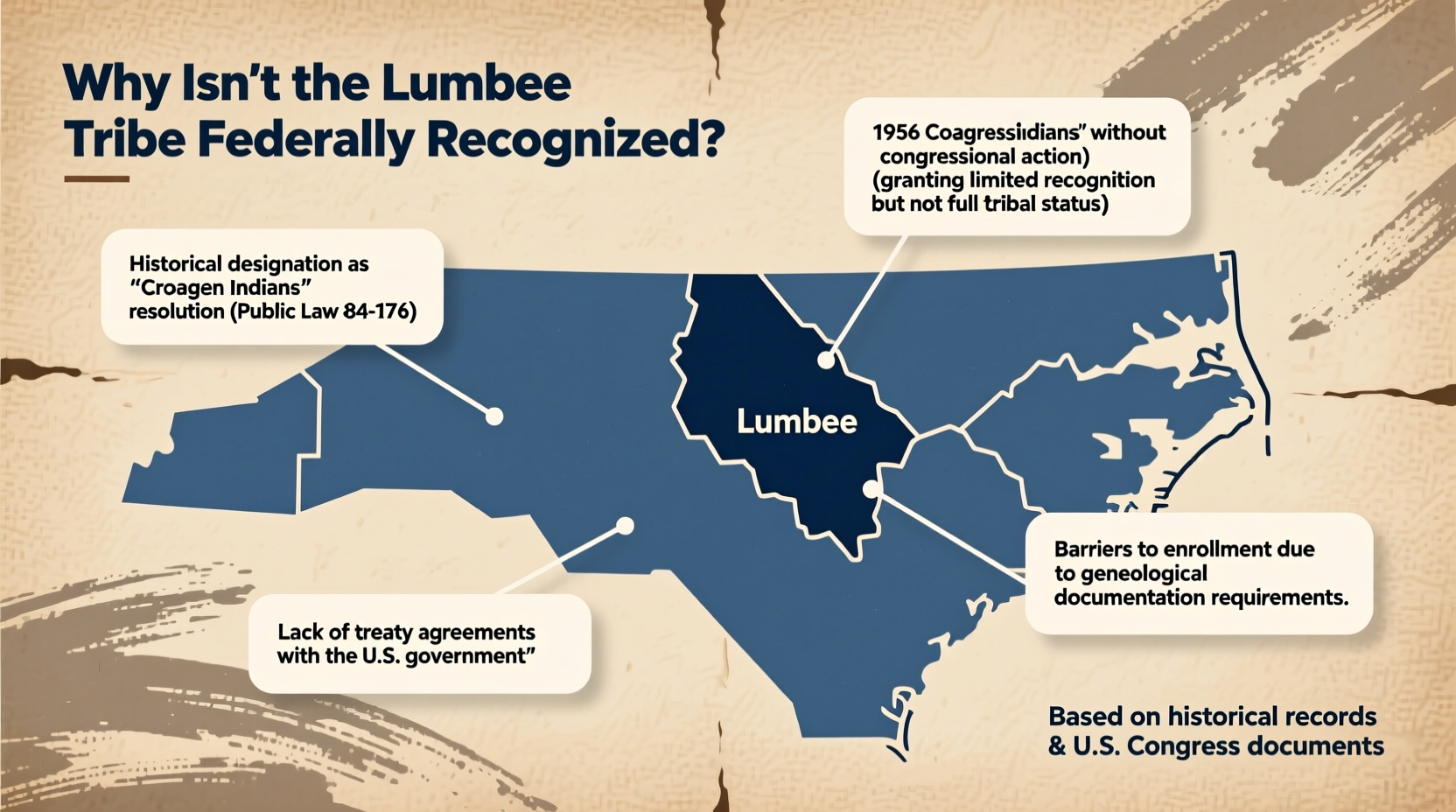
The origins of the Lumbee trace back to several Indigenous groups in the southeastern United States, including the Cheraw, Pee Dee, and other Siouan-speaking peoples. By the 18th century, descendants had settled in what is now Robeson County, forming a distinct community known initially as “Indians of Robeson County.” Over time, they adopted the name \"Lumbee,\" derived from the Lumber River that flows through their ancestral lands.
In 1885, the North Carolina General Assembly officially recognized them as Indians, granting limited state rights such as access to separate schools. However, this recognition came with complications: it was based on racial segregation laws rather than tribal sovereignty. The federal government did not extend similar acknowledgment. Despite participating in U.S. wars, maintaining cultural institutions, and preserving oral histories, the Lumbee were repeatedly excluded from national tribal rolls.
A pivotal moment occurred in 1956 when Congress passed the Lumbee Act, which acknowledged the group’s existence but explicitly denied them federal benefits or services associated with recognized tribes. The law stated: “...such use of the term 'Lumbee' shall not make such persons eligible for any services performed by the United States for Indians because of their status as Indians.” This legislative paradox—recognizing identity while withholding rights—has defined their struggle ever since.
Key Obstacles to Federal Recognition
Federal recognition by the Bureau of Indian Affairs (BIA) requires tribes to meet seven rigorous criteria, including continuous community, political authority, and descent from a historical tribe. While the Lumbee meet many of these standards de facto, their path has been blocked more by politics than evidence.
- Lack of Documentary Continuity: Critics argue that early colonial records do not clearly link the modern Lumbee to a specific historic tribe. However, scholars note that systemic displacement, intermarriage due to survival strategies, and poor recordkeeping during periods of forced assimilation complicate documentation.
- Opposition from Other Tribes: Some federally recognized tribes express concern that recognizing the Lumbee could dilute funding or set precedents for other claims. These concerns, though politically influential, often overlook the Lumbee’s unique circumstances.
- Congressional Hesitation: Because the Lumbee Act already exists, only Congress can reverse its limitations. BIA administrative pathways are closed to them, making legislative action the sole route forward—a process vulnerable to shifting political priorities.
- Racial Misclassification: Historically, Southern states classified mixed-race populations under rigid binary systems. The Lumbee were often labeled “free people of color,” obscuring their Indigenous identity in official documents.
Political and Legislative Challenges
The primary barrier today is not cultural legitimacy but political will. Multiple bills have been introduced in Congress to grant the Lumbee full recognition, most notably the Lumbee Recognition Act, reintroduced in various forms since the 1980s. In 2021, the House passed H.R. 1736, which would extend full federal recognition. Yet, it stalled in the Senate.
Supporters include bipartisan members from North Carolina and national Native advocacy organizations. Opponents, however, cite procedural concerns—such as bypassing the BIA's rigorous review process—and worry about potential impacts on existing tribal compacts, especially regarding gaming rights.
“The Lumbee have served this nation in every major conflict since World War I. They pay taxes, uphold their traditions, and maintain a distinct community. Denying them recognition isn’t about standards—it’s about equity.” — Dr. Malinda Maynor Lowery, historian and member of the Lumbee Tribe
Moreover, some lawmakers hesitate to alter the 1956 Lumbee Act without broader tribal consultation, fearing unintended legal ripple effects. This caution, while framed as prudence, prolongs inequity for over 60,000 enrolled Lumbee citizens.
Comparison: Federally Recognized vs. Non-Recognized Tribal Benefits
| Benefit | Federally Recognized Tribes | Lumbee Tribe (Non-Federally Recognized) |
|---|---|---|
| Tribal Sovereignty | Yes – Can govern themselves, operate courts | No – Subject to state and local jurisdiction |
| Access to IHS Healthcare | Yes – Indian Health Service funding | No – Limited to public clinics and programs |
| Educational Grants | Yes – Tribal-specific scholarships and support | No – Must rely on general aid |
| Housing Assistance | Yes – HUD and DOI tribal housing programs | No – Eligible only for standard public housing |
| Cultural Preservation Funding | Yes – Grants for language, heritage, museums | Minimal – Reliant on private donations |
Real-World Impact: A Community Without Full Rights
Consider the case of Sarah Oxendine, a Lumbee elder living in Pembroke, NC. She runs a small cultural center teaching traditional beadwork and storytelling to youth. Without federal recognition, her organization cannot apply for tribal heritage grants available to other Indigenous groups. She relies on crowdfunding and church donations to keep the program alive.
Her grandson, a college student, qualifies for no tribal scholarships despite being an enrolled Lumbee citizen. Meanwhile, neighboring federally recognized tribes in North Carolina operate health clinics, housing authorities, and economic development zones—resources the Lumbee are legally barred from accessing.
This disparity extends to infrastructure. Robeson County suffers from high poverty and low healthcare access. Federal recognition could unlock millions in targeted funding for wellness centers, job training, and language revitalization—all tools proven to strengthen Indigenous communities nationwide.
Path Forward: Steps Toward Recognition
While the situation remains unresolved, there are concrete actions that could lead to change:
- Pass Federal Legislation: Congress must pass a bill repealing the restrictive clauses of the 1956 Lumbee Act and affirming full recognition.
- Strengthen Advocacy Coalitions: Building alliances with other tribes, civil rights groups, and veterans’ organizations amplifies pressure on lawmakers.
- Public Awareness Campaigns: Educating Americans about the Lumbee’s contributions and current exclusion fosters empathy and political momentum.
- Document Historical Continuity: Continued academic research into genealogical, linguistic, and archaeological evidence supports their claim.
- Engage Tribal Members: Grassroots organizing ensures that the Lumbee voice leads the movement, not outside intermediaries.
Frequently Asked Questions
Does the Lumbee Tribe have any form of recognition?
Yes. The Lumbee Tribe is recognized by the state of North Carolina and operates as a sovereign entity within state law. They maintain a tribal government, issue identification cards, and run social programs. However, they lack federal recognition and its accompanying rights and resources.
Why doesn’t the Bureau of Indian Affairs grant recognition directly?
The 1956 Lumbee Act specifically prohibits the BIA from extending federal services to the Lumbee. This means the administrative recognition process is legally blocked. Only an act of Congress can remove this restriction.
Have the Lumbee received any recent progress toward recognition?
Yes. In 2021, the U.S. House of Representatives passed the Lumbee Recognition Act. Though it did not become law, it marked the strongest congressional support to date. Similar legislation continues to be introduced, keeping the issue active in national discourse.
Conclusion: Recognition Is Long Overdue
The Lumbee people have endured generations of marginalization, yet their culture remains vibrant and their community tightly knit. Their lack of federal recognition is not due to insufficient proof of identity, but to outdated legislation and political inertia. Other tribes have overcome similar hurdles through persistence and public support. The Lumbee deserve no less.
Recognition would not rewrite history—it would correct an ongoing injustice. It would allow the Lumbee to fully participate in the network of sovereign tribal nations that contribute uniquely to American society. As citizens, allies, and advocates, we can amplify this cause, demand accountability, and honor the promise of equal treatment under federal policy.




 浙公网安备
33010002000092号
浙公网安备
33010002000092号 浙B2-20120091-4
Comments
No comments yet. Why don't you start the discussion?