
Generational labels—Baby Boomers, Gen X, Millennials, Gen Z—are more than just convenient categories. They carry cultural weight, influence marketing strategies, and shape how people understand their place in history. Yet one generation stands out for its confusing identity: Generation Y. Despite being one of the most studied demographics in recent decades, \"Gen Y\" has largely been replaced by another term, leaving many to wonder—why isn’t there a consistent, lasting identity for this cohort? The answer lies not in oversight, but in the evolving nature of generational labeling, media influence, and the desire for meaningful self-identification.
The Origins of Generational Naming
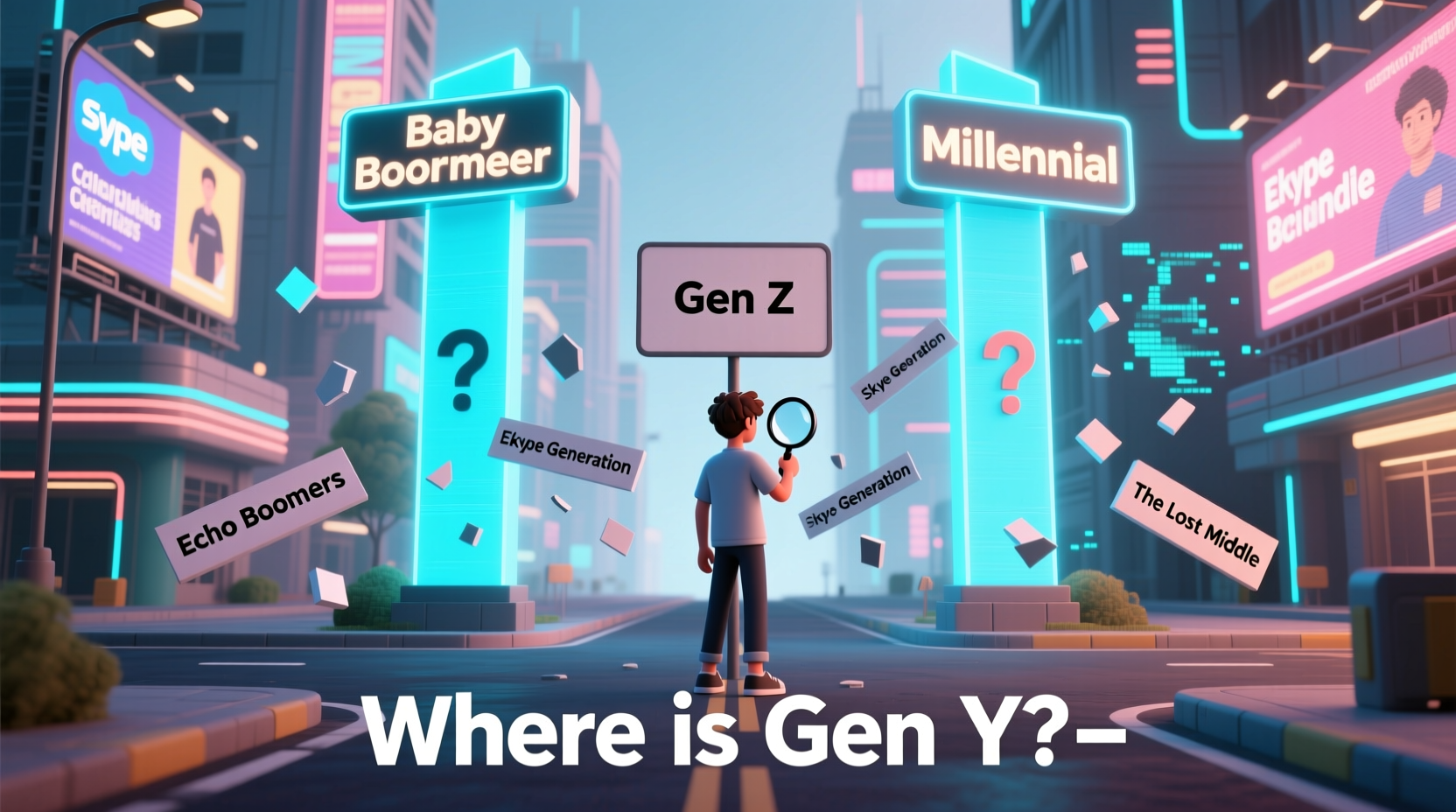
Generational labels emerged as sociologists and demographers sought ways to categorize large groups based on shared historical experiences, technological shifts, and economic conditions. The concept gained traction with the identification of the Baby Boomers—those born after World War II during a surge in birth rates. This was followed by Generation X, a label popularized by Douglas Coupland’s 1991 novel of the same name, which captured the disillusionment and independence of those born between the mid-1960s and early 1980s.
When researchers began examining the cohort following Gen X, they initially referred to them as “Generation Y”—a placeholder suggesting they were simply the next letter in line. Unlike previous generations, Gen Y did not emerge with a strong cultural label from the start. This temporary designation stuck in academic circles but failed to resonate emotionally or socially with the people it described.
“Generational names aren’t just assigned—they’re earned through cultural visibility, shared struggles, and collective identity.” — Dr. Lena Peterson, Sociologist at Columbia University
Why “Gen Y” Never Stuck
The term “Generation Y” was always seen as transitional. It lacked the evocative power of “Boomers” or the rebellious edge of “Gen X.” More importantly, it didn’t reflect the values or experiences of the people it labeled. As this cohort came of age during the dot-com boom, the rise of social media, and the 2008 financial crisis, a new identity began to form—one that demanded a more fitting name.
Enter “Millennials.” Coined by authors William Strauss and Neil Howe in their 1991 book Generations, the term originally referred to those who reached adulthood around the year 2000. It wasn’t widely adopted until the early 2000s, when media outlets and marketers latched onto it as a more dynamic alternative to “Gen Y.” The name resonated because it tied directly to a pivotal moment in time—the turn of the millennium—and reflected the digital fluency and optimism associated with the era.
The Role of Media and Marketing
Media and advertising played a crucial role in retiring “Gen Y.” Marketers needed a relatable, marketable identity to target the largest demographic group since the Baby Boomers. “Millennials” offered a narrative: tech-savvy, idealistic, connected, and eager to change the world. Campaigns from brands like Apple, Nike, and later Airbnb leaned into this image, reinforcing the term across platforms.
In contrast, “Gen Y” sounded clinical and impersonal—more suited to a research paper than a viral ad campaign. As media coverage expanded, “Millennial” became the default label, appearing in headlines, policy debates, and workplace discussions. By the 2010s, “Gen Y” had all but disappeared from mainstream usage, surviving only in outdated reports or confused conversations.
A Timeline of Generational Label Adoption
- 1960s–1970s: “Baby Boomers” enters public lexicon following post-war birth surge.
- 1991: “Generation X” popularized by Douglas Coupland; “Generation Y” introduced by Strauss and Howe.
- Early 2000s: “Millennials” begins gaining traction in media and academia.
- 2008–2012: Financial crisis cements Millennial identity around student debt, job scarcity, and delayed milestones.
- 2015–Present: “Gen Y” fades; “Millennials” becomes dominant, though some pushback emerges over negative stereotypes.
The Identity Crisis Within the Generation
While “Millennials” won the naming race, not everyone in the cohort embraces the label. Some feel it carries too much baggage—accusations of entitlement, avocado toast jokes, and portrayals of perpetual immaturity. Others argue that the generation is too broad (typically defined as born between 1981 and 1996) to be meaningfully grouped under one name.
This internal tension highlights a deeper issue: generational labels often oversimplify complex realities. Early Millennials experienced dial-up internet and flip phones, while younger ones grew up with smartphones and social media. Economic conditions varied drastically depending on birth year, especially given the 2008 recession’s impact on job markets.
Still, the absence of “Gen Y” as a lasting identity underscores a key point: generations don’t just get named—they help shape their own labels through cultural output, activism, and shared experience. Millennials did this through movements like Occupy Wall Street, the rise of digital entrepreneurship, and shifting attitudes toward work-life balance.
Do’s and Don’ts of Using Generational Labels
| Do | Don’t |
|---|---|
| Use “Millennials” when referring to those born ~1981–1996 | Assume all Millennials share the same values or experiences |
| Recognize the diversity within generations | Use “Gen Y” interchangeably without context—it’s outdated |
| Cite socioeconomic factors when discussing generational trends | Stereotype entire groups based on birth year |
| Be aware of regional differences in naming (e.g., UK vs. US) | Ignore intersectionality—race, class, and geography matter |
Mini Case Study: The Rebranding of a Generation
Consider Sarah Kim, born in 1987. In college, she was labeled “Gen Y” in a sociology class. A decade later, she heard herself called a “Millennial” in a corporate diversity training session. At first, she resisted. “I didn’t feel like I fit the stereotype,” she said. “I didn’t move back in with my parents, I didn’t hate work.” But over time, she began to see the label differently—not as a caricature, but as a reflection of broader structural challenges: rising housing costs, stagnant wages, and the pressure to be constantly “on” due to technology.
Her story illustrates how generational labels evolve from external impositions to tools of understanding. While “Gen Y” never gave her a sense of identity, “Millennial” eventually helped her contextualize her experiences within a larger societal shift.
Frequently Asked Questions
Is Gen Y the same as Millennials?
Yes. “Gen Y” and “Millennials” refer to the same generational cohort, typically defined as people born between 1981 and 1996. “Millennials” is the preferred and widely accepted term today.
Why did Millennials replace Gen Y?
“Millennials” offered a more meaningful and timely identity, linking the generation to the turn of the millennium and the digital revolution. “Gen Y” was seen as a placeholder with no cultural resonance.
Are there any efforts to revive the term Gen Y?
Not significantly. While some researchers may use “Gen Y” in technical contexts, public and media usage overwhelmingly favors “Millennials.” Attempts to reintroduce the term have failed due to lack of cultural buy-in.
Looking Ahead: What’s Next for Generational Labels?
The retirement of “Gen Y” offers lessons for how future generations may be named. Gen Z (born ~1997–2012) has already established a strong identity rooted in climate activism, digital nativity, and mental health awareness. Gen Alpha (post-2012) may follow a similar path, though their label is still largely marketer-driven rather than culturally owned.
As society becomes more aware of the limitations of generational thinking, there may be a shift toward more nuanced frameworks—ones that consider sub-cohorts, global differences, and individual agency. The disappearance of “Gen Y” reminds us that names matter, but so does meaning.
Final Thoughts: Names Shape How We See Ourselves
The reason there isn’t a “Gen Y” in common use today isn’t an accident—it’s the result of a natural linguistic and cultural evolution. People don’t connect with arbitrary labels. They respond to names that reflect their lived reality, their hopes, and their challenges. “Millennials” succeeded where “Gen Y” failed because it offered a story, not just a sequence.




 浙公网安备
33010002000092号
浙公网安备
33010002000092号 浙B2-20120091-4
Comments
No comments yet. Why don't you start the discussion?