
Video editing is often sold as a creative superpower—transforming raw footage into compelling stories with music, effects, and emotion. Yet for many creators, editors, and even seasoned professionals, the reality feels far from inspiring. Instead of excitement, they face burnout, frustration, and a growing sense that editing has become a tedious obligation rather than a fulfilling craft. Why does something so inherently creative often drain the joy out of making videos?
The answer lies in the gap between expectation and experience. Editing is romanticized as the final act of storytelling, but in practice, it's where time stretches, decisions pile up, and perfectionism takes over. Understanding the real reasons behind this disconnect is the first step toward restoring meaning—and even enjoyment—to the process.
The Myth of Instant Creativity
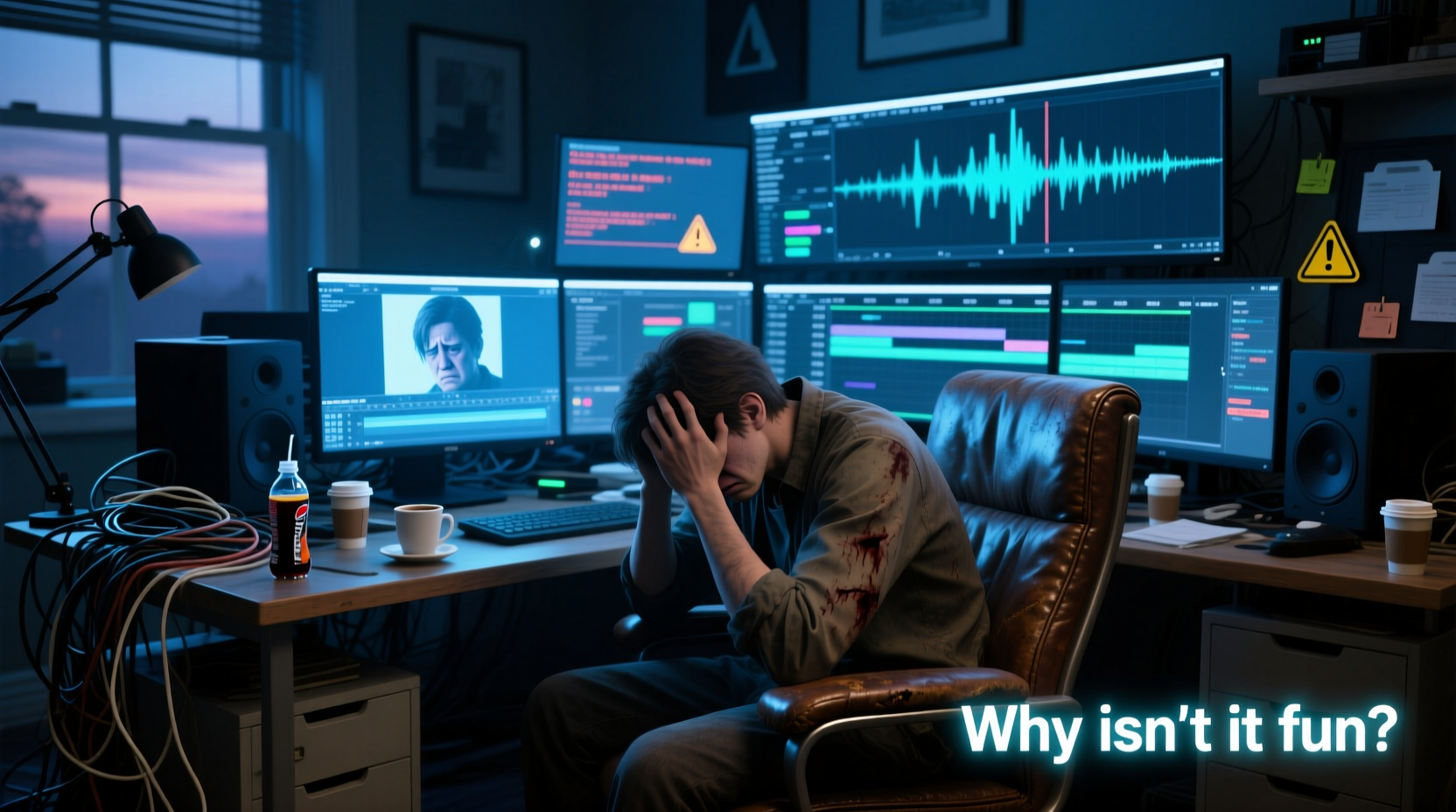
Many people enter video editing expecting a flow state: ideas pouring out, clips snapping into place, music syncing perfectly on the first try. But creativity doesn’t operate on demand. The initial rush of inspiration fades quickly when faced with hours of unsorted footage, mismatched audio levels, or render failures at 98%.
Editing is less about sudden bursts of genius and more about incremental refinement. It’s not painting a masterpiece in one sitting; it’s sanding wood grain by grain until the surface is smooth. This slow, meticulous work clashes with our cultural narrative that equates creativity with spontaneity. When the magic doesn’t appear immediately, discouragement sets in.
“Editing is not where you find the story—it’s where you fight for it.” — Walter Murch, Academy Award-winning film editor
Murch’s insight reveals a truth many new editors overlook: storytelling through editing is an act of discovery, not execution. You don’t just assemble clips—you shape meaning, rhythm, and emotion through repetition, deletion, and reordering. That process is rarely fun in the moment, but its payoff is immense.
The Hidden Labor Behind the Timeline
Beneath every polished video lies invisible labor: organizing files, syncing audio, color correcting, rendering previews, troubleshooting software crashes. These tasks don’t appear in tutorials or reels showcasing “epic edits,” yet they consume the majority of an editor’s time.
Consider a typical workflow:
- Importing and renaming hundreds of clips
- Transcribing interviews for accuracy
- Fixing audio peaks and background noise
- Adjusting color balance across multiple cameras
- Rendering multiple versions for feedback
- Re-editing based on client notes (often contradictory)
This is not creativity—it’s digital janitorial work. And while necessary, it drains mental energy before the actual artistic decisions even begin.
Decision Fatigue and Perfectionism
Every edit presents endless choices: cut here or there? Use this transition or none? Should the music swell now or later? While options seem empowering, too many decisions lead to paralysis. Psychologists call this “decision fatigue”—the mental exhaustion that comes from constant micro-choices.
In long-form projects, editors can spend days tweaking a single sequence. Is the pacing right? Does the emotion land? Will the audience get it? These questions loop endlessly, especially when working alone without immediate feedback.
Perfectionism amplifies the problem. Many editors believe their work must be flawless before sharing, leading to endless revisions. The pursuit of “good enough” becomes impossible because “good” keeps moving. As filmmaker David Lynch said, “Ideas are like fish. If you want a certain kind of fish, you have to lower your line deep enough.” But in editing, the line often gets tangled in weeds of self-doubt.
Common Editing Frustrations (And Their Real Causes)
| Frustration | Likely Cause | Potential Fix |
|---|---|---|
| “I lose hours and nothing feels finished.” | Unclear project goals or scope creep | Define deliverables and timelines upfront |
| “My software keeps crashing.” | Hardware limitations or bloated project files | Optimize cache settings, upgrade RAM, proxy workflow |
| “I hate watching my own footage.” | Overexposure + emotional attachment | Take breaks, get external feedback early |
| “Nothing I do looks professional.” | Unrealistic comparisons to high-budget content | Focus on progress, not perfection; study fundamentals |
A Real Editor’s Breakdown: From Passion to Burnout
Meet Alex, a freelance video editor who started creating YouTube videos as a hobby. After gaining traction, he began offering editing services to small creators. Within a year, he was working 50+ hours a week, juggling eight clients, and feeling increasingly detached from his work.
At first, editing felt rewarding—he helped others tell their stories. But soon, deadlines piled up, clients requested endless revisions, and his personal projects were abandoned. He stopped watching films for pleasure because he couldn’t “turn off” the editor brain. One night, after rendering a 10-minute video for the third time due to a last-minute script change, he deleted the project folder in frustration.
It wasn’t the software or the hardware that broke him—it was the lack of boundaries, unclear expectations, and absence of creative autonomy. His story isn’t rare. It reflects a broader issue: editing is often treated as a service task rather than an art form, stripping it of intrinsic motivation.
Reclaiming Joy: A Practical Path Forward
Video editing doesn’t have to be miserable. With intentional changes, it’s possible to shift from endurance mode back to engagement. Here’s how:
- Set clear creative boundaries. Define project scope, revision limits, and delivery formats before starting. Say no to open-ended requests.
- Work in focused sprints. Use the Pomodoro technique: 25 minutes of editing, 5-minute break. Prevents fatigue and maintains momentum.
- Edit for yourself sometimes. Dedicate time to personal projects with no audience or deadline. Reconnect with why you started.
- Outsource or template the grind. Create title presets, color grades, and audio filters to minimize repetitive work.
- Collaborate earlier. Share rough cuts within 48 hours of starting. Feedback early prevents wasted effort on wrong directions.
Checklist: Regain Control of Your Editing Workflow
- ☑ Define project goals and deliverables before importing footage
- ☑ Organize media with consistent naming and folder structure
- ☑ Use proxy files for 4K+ footage to improve playback performance
- ☑ Limit revisions to 2–3 rounds per client
- ☑ Schedule weekly “no-edit” days to reset mentally
- ☑ Backup projects daily using cloud or external drives
- ☑ Watch completed edits without headphones once—listen like a viewer
Frequently Asked Questions
Is it normal to dread video editing?
Yes, especially if you're overwhelmed, under-supported, or working on projects that don’t align with your interests. Dreading editing often signals burnout or misaligned expectations, not a lack of talent.
How can I make editing faster without sacrificing quality?
Speed comes from systems, not shortcuts. Use keyboard shortcuts, create reusable templates, and adopt a “good enough” mindset for drafts. Save polish for final passes.
Should I keep editing if I don’t enjoy it anymore?
Not necessarily. Ask yourself: Is it the project, the process, or the pressure that’s draining you? Sometimes changing workflow or stepping away temporarily restores passion. Other times, it’s a sign to pivot creatively.
Conclusion: Editing Doesn’t Have to Be Suffering
Video editing isn’t fun because it’s designed to be easy—it’s challenging because it demands patience, precision, and emotional resilience. The tedium isn’t a flaw in the process; it’s part of what gives editing its power. Great edits are earned through iteration, not stumbled upon by inspiration.
But that doesn’t mean suffering is mandatory. By recognizing the sources of frustration—perfectionism, poor workflows, unclear goals—we can redesign our relationship with editing. Structure supports creativity. Boundaries protect energy. And sometimes, the most creative decision is knowing when to stop.




 浙公网安备
33010002000092号
浙公网安备
33010002000092号 浙B2-20120091-4
Comments
No comments yet. Why don't you start the discussion?