
The phrase “king of the jungle” is universally associated with the lion, yet a curious contradiction exists: lions don’t actually live in jungles. They thrive in savannas, grasslands, and open woodlands—ecosystems far removed from dense tropical forests. Meanwhile, tigers, which do inhabit jungles across Asia, rarely receive the same royal designation. This raises a compelling question: Why are lions crowned the king of a habitat they don’t occupy, while tigers—true jungle dwellers—remain outside the title?
The answer lies not in geography, but in symbolism, history, and social behavior. The lion’s reputation as the apex of animal royalty stems from centuries of cultural influence, observable dominance, and unique traits that have cemented its status across civilizations.
Historical and Cultural Symbolism of the Lion
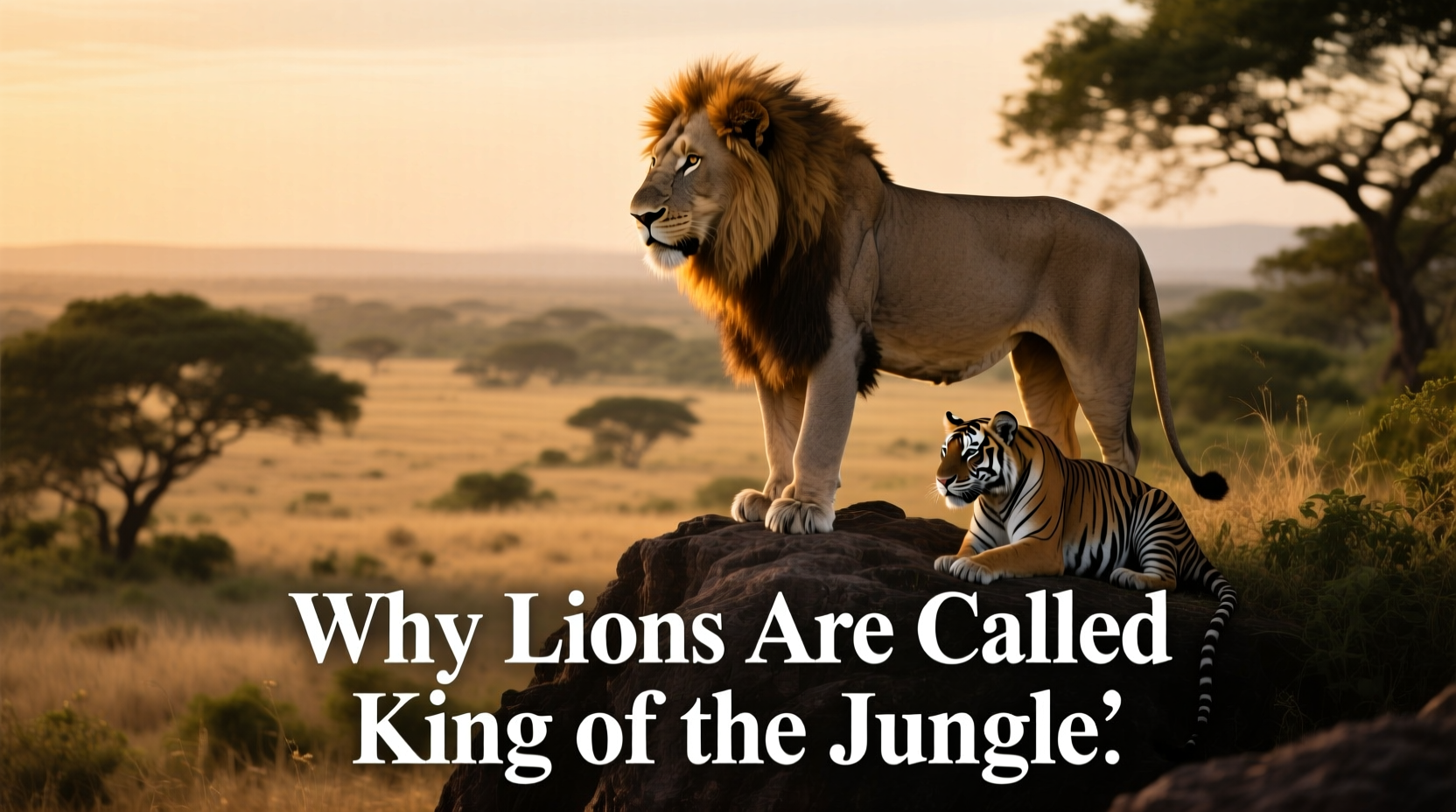
Long before modern zoology, ancient societies used animals to represent power, courage, and divine authority. The lion emerged early as a symbol of sovereignty. In Ancient Egypt, lions were linked to deities like Sekhmet, the lion-headed goddess of war and healing. Pharaohs adorned thrones and temples with lion motifs to project invincibility.
In Mesopotamia and Persia, rulers incorporated lions into royal iconography. The Ishtar Gate of Babylon featured striding lions, symbolizing protection and imperial strength. Similarly, in Hindu and Buddhist traditions, lions represent wisdom and spiritual authority—seen in the Lion Capital of Ashoka, India’s national emblem.
Western literature amplified this image. Aesop’s fables portrayed the lion as noble and just, while Shakespeare referred to England as “the realm of the lion.” These narratives weren’t based on ecological accuracy but on perceived majesty. The lion’s flowing mane, imposing stature, and commanding presence made it an ideal metaphor for leadership—even if it never set paw in a jungle.
Social Structure and Dominance Behavior
One of the most significant biological distinctions between lions and tigers is their social organization. Lions are the only truly social big cats, living in prides that can include up to 30 members. Within these groups, male lions act as protectors and enforcers, defending territory and offspring from rival males.
This visible role as a group leader reinforces the perception of kingship. A dominant male lion patrols boundaries, roars to assert control, and commands respect through physical presence. His roar—audible up to five miles away—functions as both a territorial marker and a demonstration of power.
In contrast, tigers are solitary by nature. While equally powerful and capable hunters, they operate alone. A tiger may control a large territory, but it does so without followers or visible hierarchy. There is no pride to rule, no court to preside over. This independence, though admirable, doesn’t align with traditional notions of monarchy, which emphasize governance over subjects.
“Lions project leadership through visibility. Their social structure makes them appear more ‘regal’ than solitary predators.” — Dr. Anita Rao, Wildlife Ethologist, University of Cape Town
Lion vs. Tiger: A Comparative Overview
| Feature | Lion | Tiger |
|---|---|---|
| Habitat | Savannas, grasslands, open woodlands | Forests, mangroves, swamps (including jungles) |
| Social Behavior | Highly social; lives in prides | Solitary; avoids other adults |
| Mane (males) | Prominent; signals health and dominance | None |
| Vocalization Range | Roar carries up to 5 miles | Roar audible up to 2 miles |
| Cultural Representation | King, ruler, national symbol (e.g., UK, Singapore) | Power, stealth, mysticism (e.g., Chinese zodiac) |
| Human Perception | Symbol of leadership and nobility | Symbol of strength and individuality |
The table illustrates how behavioral and physical traits contribute to public perception. Though tigers are larger and often stronger in one-on-one combat, the lion’s social dominance and ceremonial appearance give it an edge in symbolic rank.
Why Not “King of the Grasslands”?
If lions don’t live in jungles, why hasn’t the phrase evolved to reflect their actual habitat? Linguistic inertia plays a key role. Once a metaphor gains widespread acceptance, it tends to persist regardless of factual accuracy. “King of the jungle” likely entered English through colonial-era encounters with Indian wildlife, where British observers may have loosely applied the term to any wild, forested region.
Additionally, “jungle” has become synonymous with untamed wilderness in popular language. Calling the lion the “king of the savanna” lacks the dramatic flair of “king of the jungle.” The latter evokes mystery, danger, and primal rule—qualities more aligned with myth than ecology.
Real-World Example: The Lion King Phenomenon
No modern example better illustrates the lion’s regal image than Disney’s *The Lion King*. Released in 1994, the film centers on Simba, a young lion prince destined to rule the Pride Lands—a fictional savanna ecosystem. Despite the setting clearly resembling East African plains, promotional material and public discourse frequently refer to the story as taking place in a “jungle.”
The film’s narrative reinforces monarchical themes: hereditary rule, exile, redemption, and rightful succession. Scar, the villainous uncle, usurps the throne, echoing Shakespearean tragedy. Mufasa’s majestic presence and authoritative voice solidify the lion as a natural sovereign.
This cultural touchstone has influenced generations, embedding the idea of lion-as-king deeper into global consciousness. Children around the world grow up associating lions with crowns, thrones, and dominion—regardless of biome accuracy.
Frequently Asked Questions
Do lions ever live in jungles?
Generally, no. Most lion populations inhabit open grasslands and semi-arid regions of sub-Saharan Africa. However, a small population of Asiatic lions exists in the Gir Forest of India, which includes dense woodland areas. While not true tropical jungles, these forests blur the line between woodland and jungle, possibly contributing to the confusion.
Are tigers weaker than lions?
Not at all. Tigers are typically larger, faster, and more muscular than lions. In controlled encounters, tigers often outperform lions due to superior agility and hunting technique. However, strength isn’t the sole factor in symbolic ranking. Social visibility and cultural legacy play bigger roles in titles like “king.”
Could a tiger be called the king of the jungle?
In ecological terms, yes—tigers are the apex predators of many jungle ecosystems. Some conservationists advocate for rebranding the tiger as “king of the jungle” to highlight its role in forest biodiversity. However, overcoming centuries of cultural association with the lion remains a challenge.
Conclusion: Reclaiming the Narrative
The title “king of the jungle” endures not because it’s scientifically precise, but because it captures something deeper: humanity’s need for symbols of order, courage, and leadership. The lion, with its proud mane and social dominance, fits that archetype perfectly—even if the jungle part is a misnomer.
That said, recognizing the truth behind the myth empowers us to appreciate both species more fully. Lions reign through unity and presence; tigers rule through solitude and precision. Both are masters of their domains, each deserving admiration in their own right.
Understanding why lions bear the crown—despite the habitat mismatch—invites us to reflect on how culture shapes perception. It also opens space to celebrate tigers not just as silent shadows in the foliage, but as sovereigns of the deep forest in their own magnificent way.




 浙公网安备
33010002000092号
浙公网安备
33010002000092号 浙B2-20120091-4
Comments
No comments yet. Why don't you start the discussion?