
Major League Baseball (MLB) stands apart from the NFL, NBA, and NHL in one fundamental way: it operates without a hard salary cap. While fans of other leagues are accustomed to strict spending limits designed to ensure competitive balance, baseball’s financial model is built on flexibility, historical precedent, and a deeply entrenched labor framework. Understanding why MLB lacks a salary cap requires examining its labor agreements, revenue-sharing dynamics, and long-standing structural norms that differentiate it from other professional sports.
The Origins of MLB’s Payroll Freedom
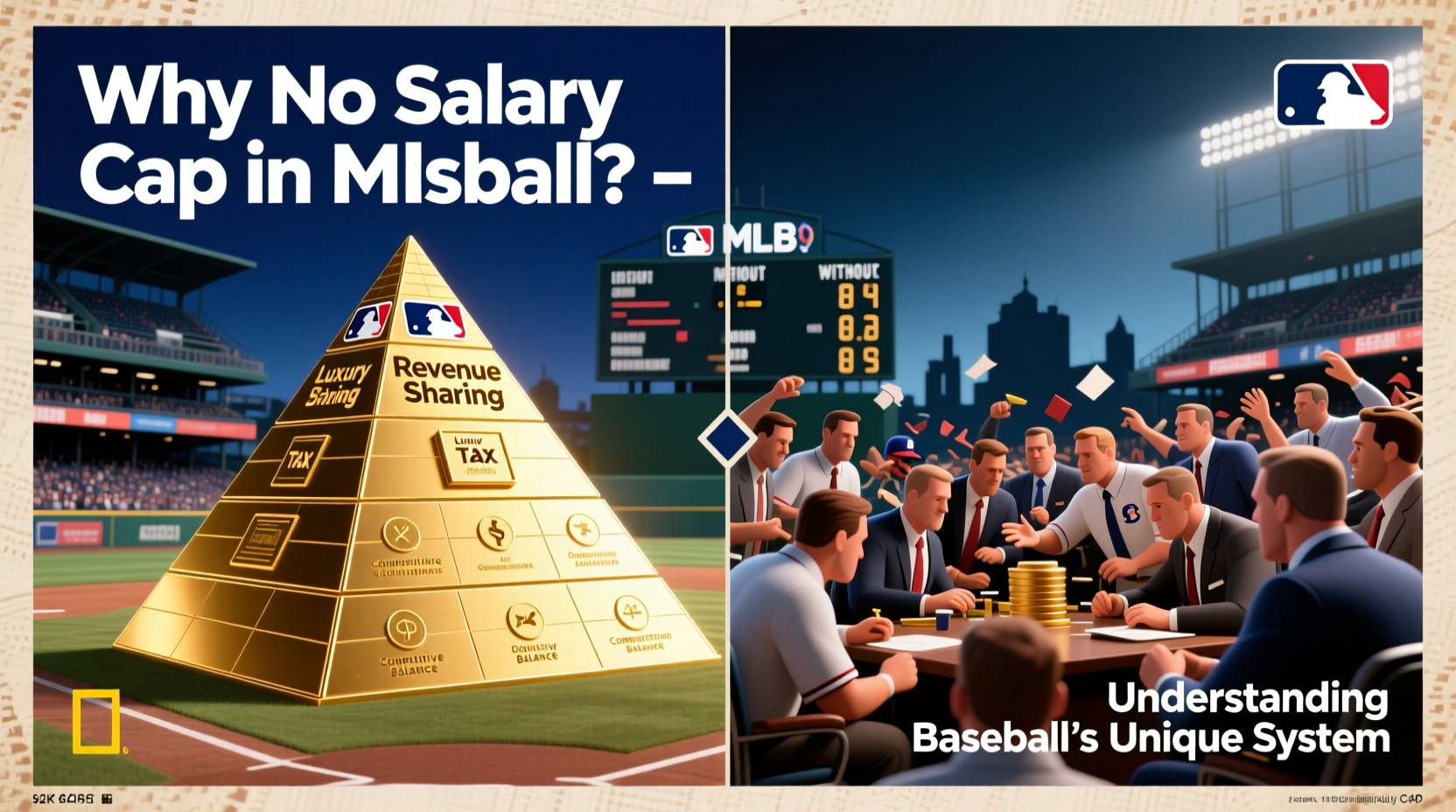
The absence of a salary cap in MLB traces back to the sport’s early labor struggles and the eventual rise of free agency. Unlike the NFL or NBA, which established salary caps during periods of rapid expansion and collective bargaining stability, MLB’s path was shaped by landmark legal decisions and union strength. The 1975 Seitz decision, which effectively ended the reserve clause, gave players the right to negotiate with multiple teams after their contracts expired. This shift empowered the Major League Baseball Players Association (MLBPA), making any future attempts at imposing a hard cap politically and legally difficult.
In contrast to other leagues where owners successfully negotiated caps as part of broader labor peace, MLB owners have historically struggled to present a united front. The decentralized nature of team ownership—where clubs operate independently with varying revenue streams—has made consensus on a hard cap nearly impossible.
“Baseball’s lack of a salary cap isn’t an oversight—it’s a reflection of decades of labor victories and economic independence among franchises.” — Dr. Richard Crepeau, Sports Historian, University of Central Florida
How MLB Manages Spending Without a Cap
While there is no hard salary cap, MLB does employ mechanisms to discourage excessive spending and promote competitive balance. The primary tool is the Competitive Balance Tax (CBT), often referred to as the \"luxury tax.\" Teams whose total payroll exceeds a predetermined threshold are subject to escalating tax rates based on how far over the limit they go and how many consecutive years they’ve been over.
Rather than preventing high payrolls outright, the CBT allows big-market teams like the New York Yankees and Los Angeles Dodgers to spend freely—but at a cost. This soft-cap system maintains financial flexibility while discouraging unchecked spending.
Comparison With Other Major Leagues
| League | Salary Cap Type | Purpose | Enforcement |
|---|---|---|---|
| NFL | Hard Cap | Ensure parity; prevent rich teams from dominating | Strict penalties for violations |
| NBA | Soft Cap + Luxury Tax | Balanced spending with exceptions for retaining players | Tax penalties; draft restrictions possible |
| NHL | Hard Cap (with floor) | Maintain financial viability across markets | Fines, voided contracts |
| MLB | No Cap / Luxury Tax Only | Discourage overspending without restricting mobility | Progressive tax payments |
This comparison highlights MLB’s outlier status. The league prioritizes player mobility and team autonomy over enforced parity. As a result, small-market teams must rely more heavily on smart drafting, player development, and strategic trades rather than artificial leveling mechanisms.
A Real Example: The Oakland Athletics’ Strategy
The Oakland A’s provide a compelling case study in how teams adapt to MLB’s uncapped environment. Facing limited revenue compared to powerhouses like the Yankees, the A’s embraced data-driven decision-making under General Manager Billy Beane—a strategy popularized in *Moneyball*. Instead of competing financially, they focused on undervalued player attributes, maximizing return on investment through analytics.
Despite frequent roster turnover due to budget constraints, the A’s consistently punched above their weight in the standings throughout the early 2000s. Their success demonstrated that competitiveness in MLB doesn’t require massive payrolls—just smarter management. However, even this model has limits; sustained playoff contention remains elusive without deeper financial resources or revenue-sharing improvements.
Labor Relations and the Role of the MLBPA
The MLB Players Association remains one of the strongest unions in professional sports. It has fiercely opposed any form of hard salary cap since the 1980s, viewing it as a direct threat to player earnings and free agency. Past attempts by owners to introduce a cap led to work stoppages, including the infamous 1994–95 strike that canceled the World Series.
To this day, the MLBPA resists structural changes that would limit earning potential, especially for elite performers. With top stars now commanding contracts exceeding $300 million, the union sees the current system as beneficial to player empowerment. Any proposal for a hard cap would likely trigger intense negotiation—and possibly another lockout.
Revenue Sharing and Its Impact
One argument for maintaining no salary cap is MLB’s extensive revenue-sharing program. Approximately 48% of local revenues (including ticket sales, suite leases, and regional broadcast rights) are pooled and redistributed to lower-income teams. This helps level the playing field by giving smaller-market clubs more financial breathing room.
However, critics argue that revenue sharing alone isn’t enough. Some teams reinvest less of that money into payroll, choosing instead to boost profits. For example, the Tampa Bay Rays regularly rank near the bottom in player spending despite receiving substantial shared revenue. This loophole weakens the intended balancing effect and fuels debate about whether stricter spending requirements—or even a minimum payroll—should be introduced.
Actionable Insights for Fans and Analysts
- Follow the CBT thresholds: Knowing when teams approach the luxury tax helps predict trade deadline moves.
- Analyze team reinvestment rates: Check how much shared revenue teams return to payroll—not all clubs prioritize winning equally.
- Monitor CBA negotiations: Future changes to the tax structure could reshape team strategies.
- Evaluate front office philosophy: In an uncapped system, management quality matters more than ever.
Frequently Asked Questions
Does any form of spending limit exist in MLB?
Yes—the Competitive Balance Tax acts as a soft cap. Teams exceeding the annual threshold pay escalating taxes, but they are not prohibited from spending beyond it.
Why don’t small-market teams push for a salary cap?
Some do privately, but publicly advocating for a cap can damage relationships with the MLBPA. Additionally, many small-market owners benefit financially from the status quo, even if their win totals suffer.
Could MLB ever adopt a hard salary cap?
It’s unlikely without a major shift in labor relations. The MLBPA has consistently rejected hard caps, and any attempt would likely lead to a work stoppage unless accompanied by significant player concessions.
Conclusion: Embracing Baseball’s Economic Identity
MLB’s lack of a salary cap is not a flaw—it’s a feature of its historical evolution, labor strength, and market diversity. While it creates disparities in spending, it also preserves the strategic depth of team building, rewards innovation, and reflects the entrepreneurial spirit embedded in the game’s fabric. Rather than forcing baseball into the mold of other leagues, fans and stakeholders are better served by understanding and working within its unique economic ecosystem.




 浙公网安备
33010002000092号
浙公网安备
33010002000092号 浙B2-20120091-4
Comments
No comments yet. Why don't you start the discussion?