
In an era where flexibility and access often outweigh outright ownership, lease-to-own arrangements have gained traction across industries—from automobiles and electronics to furniture and real estate. These agreements offer a middle ground between renting and purchasing, allowing consumers to use an item while gradually building equity toward full ownership. But is this model truly beneficial? For many, the appeal lies in lower upfront costs and the ability to test a product before committing. However, hidden fees, inflated prices, and long-term financial implications can turn a seemingly smart decision into a costly mistake. Understanding the mechanics, advantages, and pitfalls of lease-to-own is essential before signing on the dotted line.
How Lease-to-Own Works: The Basic Structure
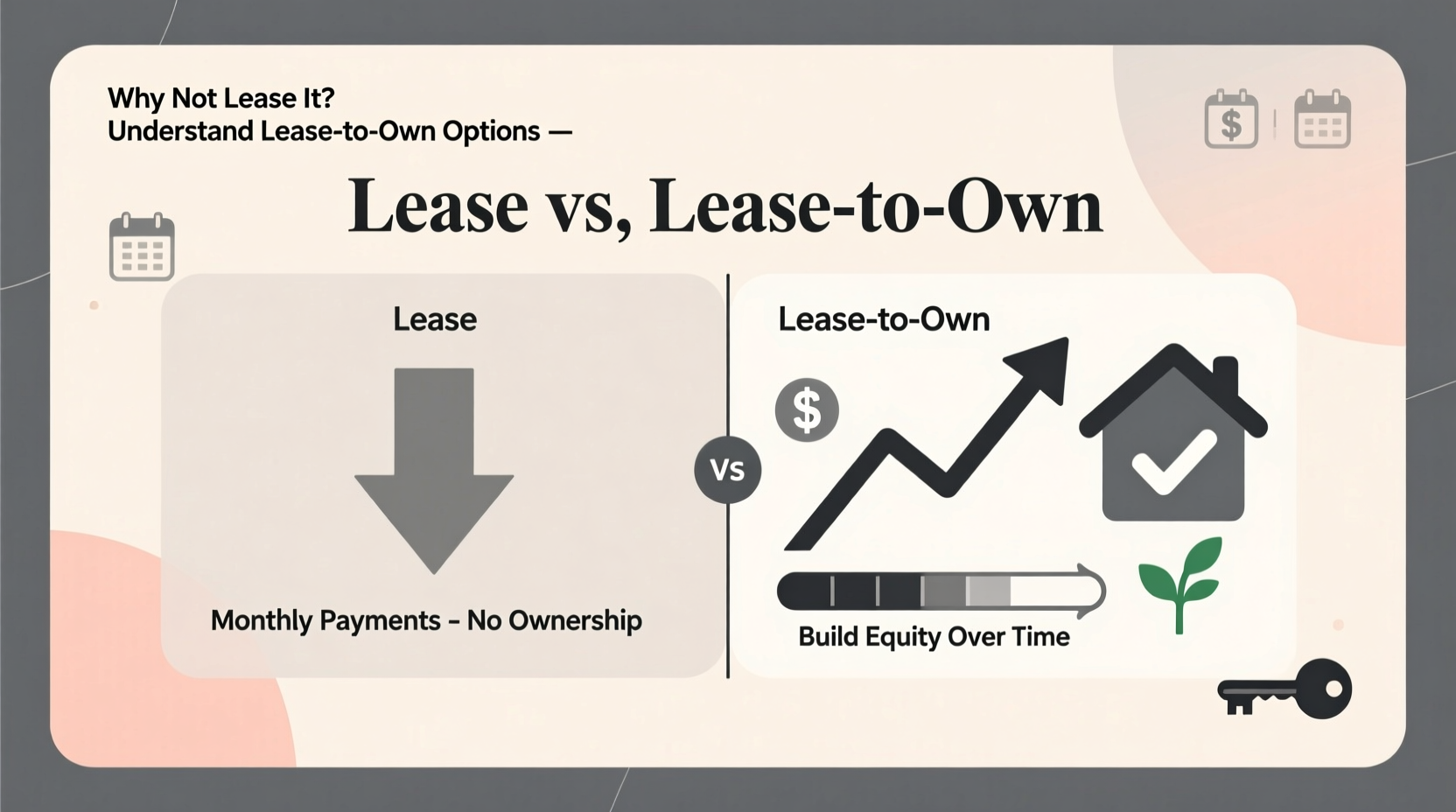
At its core, a lease-to-own agreement allows a consumer to rent an item with the option—or sometimes obligation—to purchase it at the end of the lease term. These contracts typically involve three key components: a lease period, regular payments, and a predetermined buyout price. Unlike traditional financing, no large down payment is usually required, making these deals accessible to individuals with limited savings or poor credit.
The process generally unfolds as follows:
- A customer selects an item—such as a sofa, laptop, or car.
- They sign a lease agreement outlining payment terms, duration (often 12–24 months), and the final purchase price.
- Monthly or weekly payments are made throughout the lease term.
- At the end, the customer can either pay the remaining balance to own the item or return it.
Some agreements include \"equity build-up,\" where a portion of each payment contributes toward the purchase price. Others offer no such benefit—meaning all payments are essentially rental fees unless the final balloon payment is made.
Pros and Cons of Lease-to-Own Agreements
Like any financial arrangement, lease-to-own comes with trade-offs. While it can be a lifeline for those excluded from traditional credit markets, it also carries significant risks if misunderstood.
| Advantages | Disadvantages |
|---|---|
| No credit check required: Ideal for people with low or no credit history. | Higher total cost: You may end up paying double or more than retail price. |
| Immediate access: Get the product now without saving up. | Long-term commitment: Early termination often means forfeiting all payments. |
| Builds responsibility: Timely payments can help establish financial discipline. | Limited legal protections: Consumer rights vary by jurisdiction and provider. |
| Try before you buy: Test durability and functionality over time. | Risk of repossession: Missed payments can result in immediate pickup of the item. |
One of the most overlooked downsides is the effective interest rate embedded in these contracts. A $1,200 sofa paid off over two years at $75 per month totals $1,800—an effective markup of 50%. That equates to an annual interest rate far exceeding typical personal loans or credit card APRs.
Real-World Example: The Case of Maria’s Living Room Upgrade
Maria, a single mother working part-time, needed new furniture after moving into a small apartment. With damaged credit from a past medical emergency, she couldn’t qualify for store financing. A local furniture outlet offered her a lease-to-own package: a sectional sofa, coffee table, and lamp for $99 per week over 18 months, totaling $7,128. The same set retailed online for $2,300.
She made payments diligently for nearly a year but lost hours at work due to illness. When she missed two consecutive payments, the company repossessed all items. She had paid $4,752 with nothing to show for it. Though she received temporary comfort, the financial toll was steep. Her experience highlights both the accessibility and danger of lease-to-own when safety nets are thin.
“Lease-to-own can bridge gaps for underserved consumers, but transparency is critical. Many don’t realize they’re not building equity until it’s too late.” — Dr. Lena Pruitt, Consumer Finance Researcher, Urban Economic Institute
Key Questions to Ask Before Signing
To avoid costly surprises, approach any lease-to-own agreement with careful scrutiny. Use the following checklist to evaluate your options:
- ✅ Does the contract clearly state the total purchase price?
- ✅ Are payments applied toward ownership, or are they pure rent?
- ✅ What happens if I miss a payment or want to terminate early?
- ✅ Is there a buyout option before the end of the term?
- ✅ Can I return the item without penalty during a grace period?
- ✅ Are maintenance and repair responsibilities defined?
- ✅ Is insurance required on the leased item?
Additionally, research alternative solutions. Could a layaway plan, a small personal loan, or a secondhand purchase achieve the same goal at a fraction of the cost? In many cases, waiting and saving—even slightly longer—can prevent years of overpayment.
When Lease-to-Own Makes Sense
Despite the risks, there are legitimate scenarios where lease-to-own is a strategic choice:
- Urgent need with no alternatives: When you require essential equipment (e.g., a refrigerator or mobility device) and lack funds or credit.
- Credit rebuilding: Some reputable providers report on-time payments to credit bureaus, helping improve your score over time.
- High-value trial period: For expensive items like tools or machinery, leasing allows evaluation before investment.
- Business equipment: Companies often use lease-to-own for vehicles or tech, preserving cash flow while gaining tax benefits.
The key differentiator is intentionality. If you enter the agreement knowing the total cost, confident in your ability to complete payments, and aware of exit strategies, it becomes a tool rather than a trap.
Frequently Asked Questions
Can I negotiate the terms of a lease-to-own agreement?
Yes, though rarely advertised. Some retailers allow negotiation on the buyout price, payment frequency, or early purchase discounts. Always ask—and get any changes in writing.
Does lease-to-own affect my credit score?
It depends on the provider. Most do not report to credit bureaus unless you default. However, some newer fintech platforms partner with credit agencies to help users build credit through consistent payments. Confirm this before signing.
What happens if the item breaks during the lease?
Repairs are typically the lessee’s responsibility unless covered under warranty. Some agreements include maintenance plans for an additional fee. Read the fine print carefully—many assume liability falls on the renter even for manufacturer defects after the first few weeks.
Final Thoughts: Is Leasing Instead of Buying Right for You?
Lease-to-own isn't inherently good or bad—it's a financial instrument that demands informed usage. For those with stable income and clear goals, it can provide access to necessary goods without the burden of upfront cost. But for others, especially those living paycheck to paycheck, it can deepen cycles of debt and erode financial progress.
The real question isn’t just “Can I afford the monthly payment?” but “What is this truly costing me over time?” Transparency, comparison shopping, and honest self-assessment are your best defenses against predatory pricing and emotional spending.




 浙公网安备
33010002000092号
浙公网安备
33010002000092号 浙B2-20120091-4
Comments
No comments yet. Why don't you start the discussion?