
Nursing is one of the most trusted and vital professions in healthcare. Behind every skilled nurse who administers medication, monitors patient vitals, or provides compassionate care stands a rigorous licensing process that ensures competence, safety, and accountability. A nursing license is not just a formality—it's a legal requirement that protects patients and upholds professional standards. Understanding why nurses need a license and what it takes to obtain one is crucial for aspiring nurses, healthcare employers, and the public alike.
The Purpose of Nursing Licensure
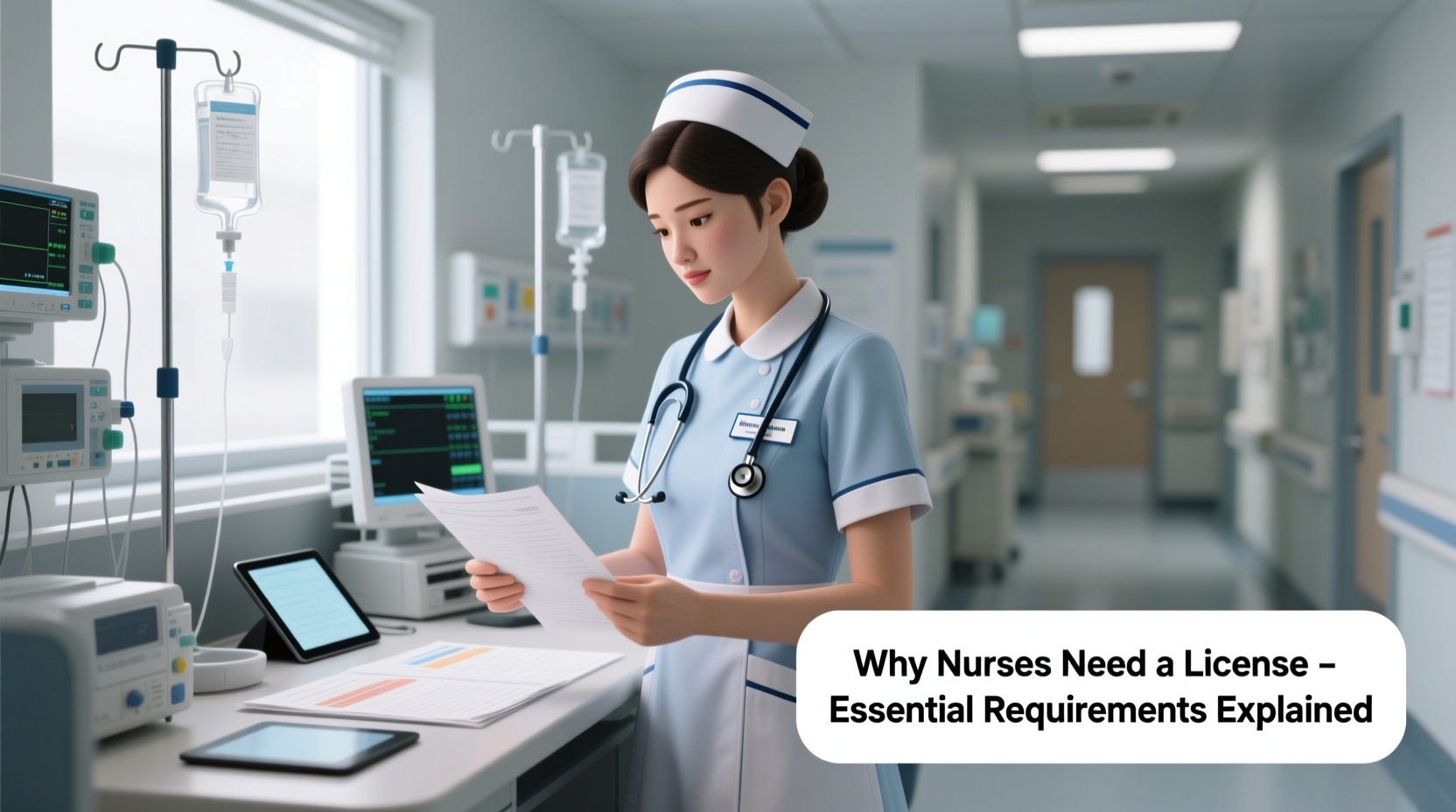
A nursing license serves as official recognition that an individual has met nationally and state-specific standards to practice safely and ethically. It confirms that a nurse has completed approved education, passed standardized competency exams, and adheres to professional regulations. Without a license, no one can legally perform nursing duties in the United States.
Licensing exists primarily to protect public health. Unlike other professions where errors may result in financial loss or inconvenience, mistakes in nursing can lead to serious harm or even death. The licensing system acts as a safeguard—ensuring that only qualified individuals deliver direct patient care.
“Licensure is the cornerstone of patient safety in nursing. It verifies that a nurse has the knowledge, skills, and judgment to provide competent care.” — Dr. Linda Burnes Bolton, Vice President of Nursing Affairs at Cedars-Sinai Medical Center
Core Requirements to Become a Licensed Nurse
Becoming a licensed nurse involves several non-negotiable steps. While specific details vary slightly by state, the core path remains consistent across jurisdictions. Below are the primary components required to earn a nursing license:
- Graduation from an accredited nursing program (either Associate Degree in Nursing [ADN] or Bachelor of Science in Nursing [BSN])
- Passing the National Council Licensure Examination (NCLEX-RN for registered nurses or NCLEX-PN for practical nurses)
- Background check and fingerprinting
- Application submission to the state board of nursing
- Meeting English proficiency and citizenship/residency requirements (if applicable)
Each of these steps plays a critical role in ensuring that nurses entering the workforce meet baseline standards of safety and professionalism.
Accredited Nursing Education Programs
All candidates must complete a state-approved nursing program. These programs are typically offered at community colleges (for ADN) or four-year universities (for BSN). Accreditation by agencies such as the Commission on Collegiate Nursing Education (CCNE) or the Accreditation Commission for Education in Nursing (ACEN) ensures that curricula meet national quality benchmarks.
Courses cover anatomy, pharmacology, patient assessment, ethics, and clinical practice. Students also complete supervised clinical hours in hospitals, long-term care facilities, and outpatient clinics—gaining hands-on experience before ever practicing independently.
The Role of the NCLEX Exam
The NCLEX (National Council Licensure Examination) is the standardized test administered by the National Council of State Boards of Nursing (NCSBN). It assesses whether a candidate possesses the minimum competencies needed to begin practicing as an entry-level nurse.
The exam uses adaptive technology—meaning the difficulty adjusts based on the test-taker’s responses. Questions focus on four key areas:
- Safe and Effective Care Environment
- Health Promotion and Maintenance
- Psychosocial Integrity
- Physiological Integrity
Pass rates vary annually, but first-time U.S.-educated candidates typically achieve pass rates between 80% and 90%. Failing the exam means retaking it after a waiting period, which delays licensure and employment.
State Board of Nursing Approval
Each U.S. state has its own board of nursing responsible for issuing licenses and enforcing regulations. After completing education and passing the NCLEX, applicants must submit their credentials directly to the board in the state where they intend to work.
Some states participate in the Nurse Licensure Compact (NLC), allowing nurses to hold a multistate license and practice in multiple NLC-participating states without obtaining additional licenses. As of 2024, over 40 states have joined the compact, increasing mobility for licensed nurses.
Step-by-Step Guide to Obtaining a Nursing License
Here’s a clear timeline for how to become a licensed registered nurse (RN):
- Enroll in an accredited nursing program – Choose between ADN (2–3 years) or BSN (4 years).
- Complete all coursework and clinical hours – Typically includes 700+ hours of supervised practice.
- Apply for licensure with your state board – Submit transcripts, fees, and background check forms.
- Register for the NCLEX-RN through Pearson VUE – Pay the $200 exam fee and schedule your test date.
- Receive Authorization to Test (ATT) – Usually within 4–6 weeks of application.
- Take the NCLEX-RN exam – Arrive early, bring ID, and manage time carefully during the test.
- Receive results – Official results come from the state board within a few weeks; unofficial results may be available in 48 hours via Pearson’s Quick Results Service.
- Obtain active licensure – Once approved, you’ll receive your license number and can begin job applications.
Common Challenges and Real-World Scenarios
Not everyone passes the NCLEX on the first try. Consider Maria, a recent BSN graduate from Florida. Despite strong grades, she failed her first attempt due to test anxiety and inadequate preparation. She spent the next two months reviewing weak areas using targeted study guides and took a prep course. On her second try, she passed and now works in a pediatric ICU.
Maria’s story highlights a common reality: academic success doesn’t always translate directly to exam success. Many graduates benefit from structured review courses, practice tests, and mental health support during this high-pressure phase.
Do’s and Don’ts When Pursuing Licensure
| Do’s | Don’ts |
|---|---|
| Verify your program’s accreditation status | Assume all nursing programs qualify you for the NCLEX |
| Apply early to your state board to avoid delays | Wait until graduation to start the application process |
| Use official NCLEX prep materials from NCSBN | Rely solely on outdated or unofficial study apps |
| Disclose any past criminal history honestly | Omit information hoping it won’t be discovered |
| Prepare mentally and physically for exam day | Cram the night before or skip sleep |
Frequently Asked Questions
Can I work as a nurse without a license?
No. Performing nursing duties without a valid license is illegal and considered unlicensed practice. Some states allow recent graduates to work under a temporary permit (e.g., Graduate Nurse Permit), but full responsibilities require a license.
How long does it take to get a nursing license?
After completing an approved program, the entire process—from application to receiving results—typically takes 6 to 12 weeks. Delays often occur due to incomplete paperwork, slow transcript delivery, or background check issues.
What happens if my license expires?
An expired license prevents you from practicing legally. Most states offer a grace period for renewal, but prolonged lapses may require reapplication, continuing education, or even retaking the NCLEX.
Continuing Competence and License Renewal
Licensure isn’t a one-time achievement. Nurses must renew their licenses every 1–2 years, depending on the state. Renewal usually requires:
- Paying a renewal fee
- Completing continuing education (CE) hours (typically 15–30 hours per cycle)
- Maintaining good standing with no disciplinary actions
Some specialties, like critical care or oncology, require additional certifications beyond the basic license. These demonstrate advanced expertise and are often tied to career advancement.
Conclusion: Why Licensing Matters Beyond Legality
A nursing license is far more than a piece of paper—it represents a commitment to excellence, ethics, and lifelong learning. It ensures that every nurse entering a hospital room, clinic, or home care setting has been vetted for knowledge, skill, and integrity. For patients, it offers peace of mind. For nurses, it opens doors to meaningful careers and professional growth.




 浙公网安备
33010002000092号
浙公网安备
33010002000092号 浙B2-20120091-4
Comments
No comments yet. Why don't you start the discussion?