
Private equity (PE) remains one of the most competitive and sought-after career paths in finance. Professionals from investment banking, consulting, and even corporate strategy roles often set their sights on transitioning into PE firms. The allure is strong: high compensation, direct impact on business transformation, and exposure to strategic decision-making at the executive level. But breaking into the industry requires more than ambition—it demands rigorous preparation, deep technical knowledge, and a compelling narrative. Understanding why private equity attracts top talent and how to effectively prepare for interviews can make the difference between an offer and rejection.
The Appeal of Private Equity: Top 5 Reasons Professionals Make the Move
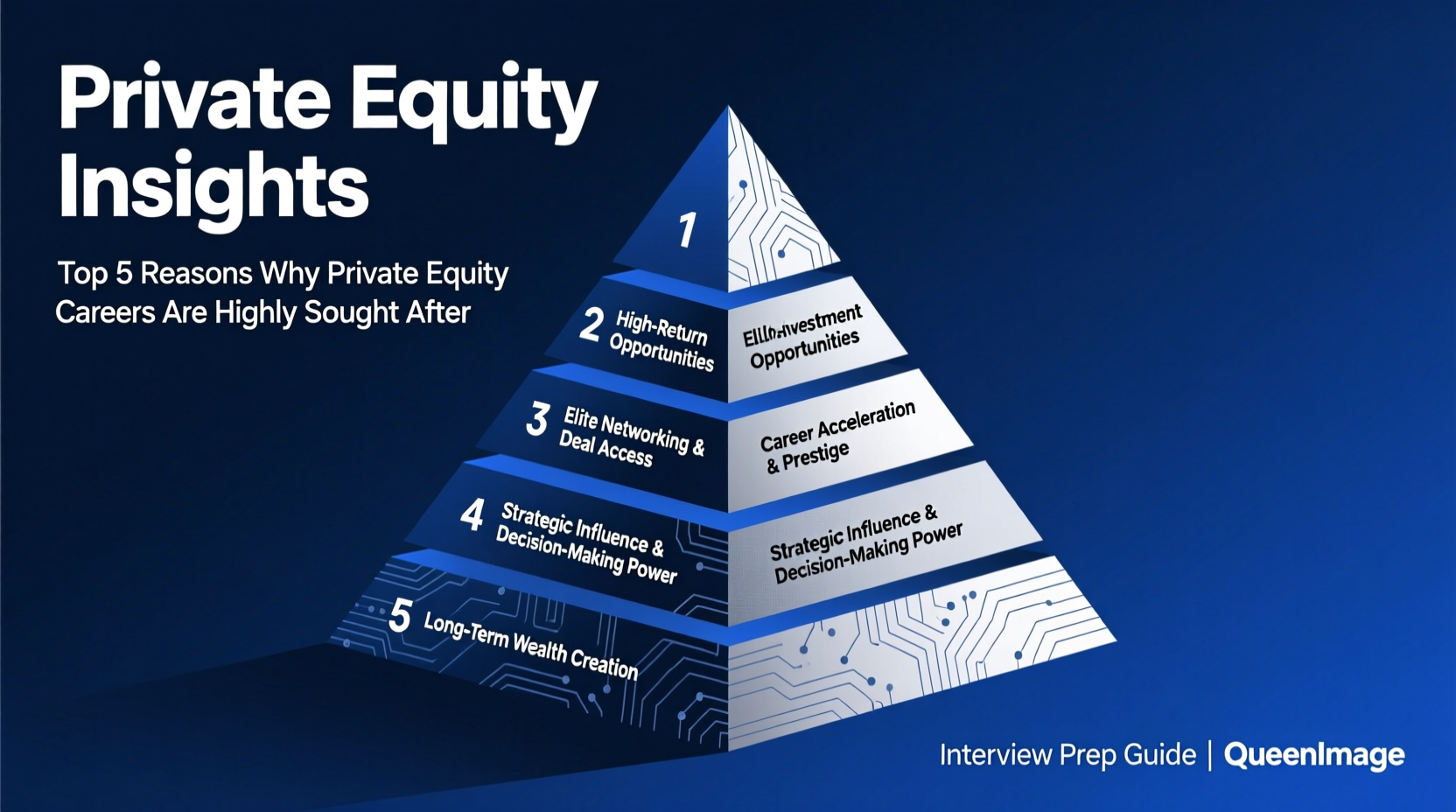
While the work is intense and the hours demanding, private equity offers unique advantages that draw ambitious professionals. These aren’t just perks—they represent fundamental shifts in responsibility, influence, and long-term career trajectory.
- Ownership Mentality: Unlike public market investing, where analysts recommend trades, PE professionals directly acquire, manage, and improve companies. This hands-on involvement fosters a true ownership mindset.
- Strategic Impact: PE investors sit on boards, drive operational improvements, and guide leadership teams. You’re not just modeling outcomes—you're shaping them.
- Higher Compensation Potential: While base salaries are competitive, the real upside comes from carried interest—profit sharing from successful exits. Top performers can earn multiples of what they made in banking or consulting.
- Exposure to Diverse Industries: PE firms often specialize by sector—healthcare, tech, industrials—but within those domains, you gain deep operational insights across multiple portfolio companies.
- Career Acceleration: Junior team members frequently interact with C-suite executives and fund partners. The steep learning curve accelerates professional growth faster than most corporate environments.
Core Components of the Private Equity Interview Process
PE interviews are notoriously grueling, combining technical rigor with behavioral depth. Firms assess not only your ability to analyze deals but also your cultural fit and long-term potential as a partner. The process typically includes:
- Resume deep dives
- LBO modeling tests (often timed)
- Cases involving operational improvement or due diligence
- Behavioral questions focused on resilience, teamwork, and judgment
- Meetings with senior partners who evaluate leadership potential
Unlike investment banking interviews, which emphasize technical proficiency, PE interviews place greater weight on strategic thinking and real-world application. You’re expected to think like an operator, not just a financier.
Technical Skills You Must Master
Fundamental financial modeling—especially leveraged buyout (LBO) analysis—is non-negotiable. Candidates must be able to build or critique a full LBO model under pressure, adjusting assumptions for debt capacity, EBITDA growth, and exit multiples.
| Skill Area | What’s Tested | How to Prepare |
|---|---|---|
| LBO Modeling | Construction of three-statement model, credit metrics, IRR calculation | Practice with timed templates; focus on circularity and error checks |
| Accounting & Valuation | Goodwill calculation, purchase price allocation, EV/EBITDA nuances | Review M&A accounting standards and common adjustments |
| Market Sizing & Investment Thesis | Ability to assess industry attractiveness quickly | Read equity research reports and pitch books regularly |
“Top candidates don’t just know the numbers—they understand what drives them. We look for people who can walk into a manufacturing plant and spot inefficiencies, not just build clean models.” — Sarah Lin, Partner at Crestview Capital
Step-by-Step Guide to Private Equity Interview Preparation
Success doesn’t come from last-minute cramming. A structured approach over 8–12 weeks gives you time to internalize concepts and refine your delivery.
- Weeks 1–2: Audit Your Background
Revisit every deal and project on your resume. Be ready to explain your role, key challenges, and lessons learned. Quantify results wherever possible. - Weeks 3–4: Master Technical Fundamentals
Focus on LBO mechanics, valuation methodologies (DCF, comparables), and accounting nuances. Use resources like Wall Street Prep or Breaking Into Wall Street for guided practice. - Weeks 5–6: Build Speed and Accuracy
Simulate real interview conditions. Complete a full LBO model in 60–90 minutes. Test yourself on credit stats like total leverage ratio and interest coverage. - Weeks 7–8: Develop Industry Knowledge
Pick 2–3 sectors relevant to target firms. Understand key drivers, regulatory risks, and trends. Prepare concise investment theses. - Weeks 9–10: Mock Interviews
Conduct at least five full mock sessions with peers or mentors. Include both technical and behavioral rounds. - Weeks 11–12: Refine Storytelling
Craft a compelling narrative about why you want to join PE, why this firm, and how your background prepares you for ownership-level responsibilities.
Common Pitfalls—and How to Avoid Them
Even strong candidates falter due to preventable mistakes. Awareness is half the battle.
Here’s a checklist to ensure you stay on track:
- ✅ Rehearse your “Why PE?” answer with specificity
- ✅ Practice speaking aloud while building models (interviewers listen for logic flow)
- ✅ Prepare thoughtful questions about the firm’s portfolio and sourcing strategy
- ❌ Don’t memorize scripts—authenticity matters more than perfection
- ❌ Avoid overly complex jargon unless clearly understood
Mini Case Study: From Banking to PE – One Analyst’s Journey
Jamal worked as a second-year investment banking analyst at a bulge bracket firm. He spent six months preparing for PE interviews: two hours each night after work, weekends dedicated to mock cases and model reviews. He focused on healthcare deals, aligning with his group’s experience.
During an interview with a mid-market PE firm, he was given a case study on a dental services roll-up. Instead of jumping into the model, Jamal asked clarifying questions about same-store sales growth and churn rates among acquired clinics. His ability to blend operational insight with financial analysis stood out. He identified a hidden risk in EBITDA normalization that others missed.
He received an offer. What sealed it wasn’t flawless modeling—it was his curiosity, clarity under pressure, and genuine interest in improving businesses.
FAQ: Common Questions About Private Equity Careers and Interviews
Do I need an MBA to break into private equity?
Not necessarily. While many associate roles go to post-MBA hires, top-tier firms also recruit experienced analysts directly from banking or consulting. Exceptional performance, strong modeling skills, and relevant deal experience can compensate for lack of an MBA.
How important are networking and referrals?
Extremely. Many PE roles are filled through referrals before being publicly advertised. Building relationships with current PE professionals—even through informal coffee chats—can open doors. Always follow up with a thank-you note and express continued interest.
What’s the biggest difference between PE and investment banking interviews?
Banking interviews test whether you can execute tasks correctly. PE interviews assess whether you can think like an owner. Expect deeper questions about operational levers, management quality, and long-term competitive positioning—not just financial engineering.
Final Thoughts: Turning Preparation Into Opportunity
Entering private equity is less about ticking boxes and more about demonstrating readiness for ownership. The best candidates combine technical precision with strategic vision and interpersonal maturity. They don’t just want the title—they want the responsibility.
If you’re serious about making the leap, start today. Revisit your deals. Build your models. Hone your story. Seek feedback. Treat every interaction as part of a longer journey toward becoming a trusted investor and leader.




 浙公网安备
33010002000092号
浙公网安备
33010002000092号 浙B2-20120091-4
Comments
No comments yet. Why don't you start the discussion?