
Economic policy decisions often come with trade-offs, and one of the most debated issues in modern labor economics is the impact of raising the minimum wage. While advocates argue it lifts workers out of poverty and promotes fairness, a growing body of economic research highlights potential downsides. Raising the minimum wage may seem like an intuitive solution to income inequality, but its unintended consequences can affect employment levels, business sustainability, consumer prices, and overall economic efficiency. Understanding these counterarguments is essential for crafting balanced labor policies that support both workers and the broader economy.
The Employment Effect: Job Loss and Reduced Hiring
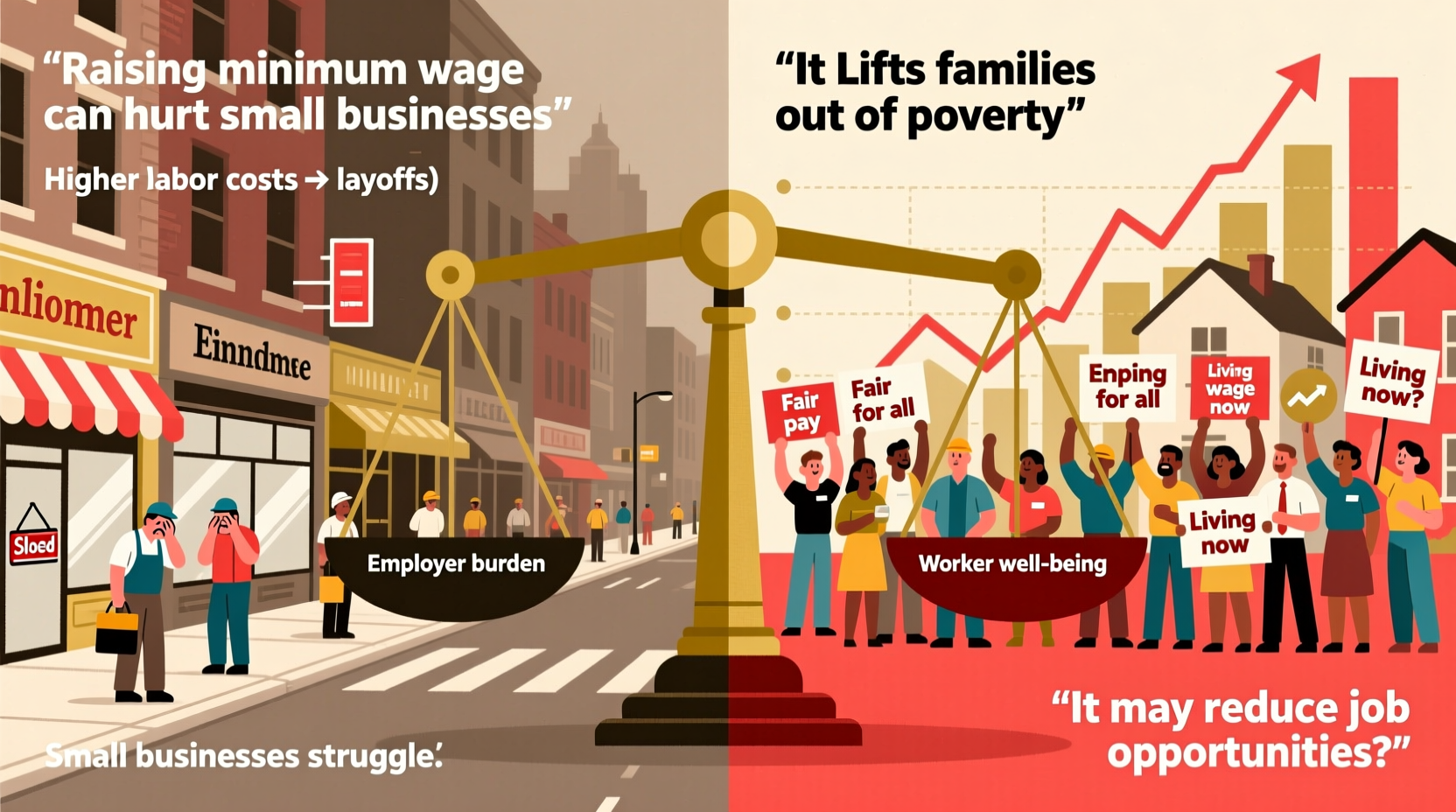
One of the most consistent arguments against increasing the minimum wage is its potential to reduce employment, particularly among low-skilled and entry-level workers. When labor costs rise, businesses—especially those operating on thin margins—may respond by cutting staff, reducing hours, or automating tasks previously performed by humans.
According to a 2019 study by the Congressional Budget Office (CBO), raising the federal minimum wage to $15 per hour could result in the loss of 1.3 million jobs. The logic follows basic supply-and-demand principles: when the price of labor increases, demand for it tends to decrease. This effect is most pronounced in industries such as retail, hospitality, and food service, where labor represents a significant portion of operating costs.
“While higher wages benefit those who keep their jobs, they often come at the expense of reduced hiring or layoffs for others.” — Dr. David Neumark, Economist, University of California, Irvine
Teenagers, part-time workers, and individuals re-entering the workforce are typically the most affected. These groups often lack extensive experience or specialized skills, making them less competitive when employers must pay higher wages. As a result, they may find fewer job opportunities available, undermining long-term career development and skill acquisition.
Inflation and Rising Consumer Prices
When businesses face higher labor costs, many pass those expenses directly to consumers through increased prices. A restaurant that must pay servers $15 instead of $10 per hour may raise menu prices to maintain profitability. While this shift may seem minor on an individual level, widespread across sectors, it contributes to broader inflationary pressures.
A 2021 paper published in the Journal of Monetary Economics found that a 10% increase in the minimum wage led to a 0.4% rise in overall consumer prices. For low-income households—who spend a larger share of their income on essentials like food, transportation, and utilities—this inflation can erode the real value of wage gains. In effect, the purchasing power of the higher wage may be partially or fully offset by rising living costs.
Impact on Small Businesses and Marginal Firms
Large corporations with diversified revenue streams may absorb higher wage costs more easily than small, independent businesses. Family-owned restaurants, corner stores, and local service providers often operate with limited financial buffers. A sudden increase in payroll expenses can push already-strained businesses toward closure or force them to scale back operations.
A survey conducted by the National Federation of Independent Business (NFIB) in 2022 revealed that 62% of small business owners would consider reducing staff if mandated to pay a $15 minimum wage. Others reported plans to limit expansion, delay investments, or increase automation—trends that could reduce community-level employment and diminish local economic diversity.
| Business Type | Labor Cost as % of Revenue | Vulnerability to Wage Hikes |
|---|---|---|
| Fast Food Restaurant | 30–35% | High |
| Retail Store (Small) | 25–30% | High |
| Software Company | 10–15% | Low |
| Construction (Contractor) | 20–25% | Moderate |
The uneven impact across firm sizes raises concerns about market consolidation. As smaller players struggle, larger chains with economies of scale may dominate, potentially reducing competition and consumer choice in the long run.
Automation and Technological Substitution
Higher minimum wages accelerate the adoption of labor-saving technologies. Self-checkout kiosks, automated ordering systems, and robotic warehouse assistants become more economically viable when human labor becomes expensive. While technological progress is inevitable, artificially inflating labor costs can speed up displacement before workers have time to adapt.
For example, after Seattle implemented a phased increase to a $15 minimum wage, several fast-casual restaurants introduced tablet-based ordering and reduced front-line staffing. A 2020 study from the University of Washington found that while hourly wages rose, total earnings for low-wage workers actually declined due to reduced hours and employment.
This phenomenon disproportionately affects workers without access to retraining or education. Without parallel investments in workforce development, automation driven by wage mandates may deepen structural unemployment rather than alleviate poverty.
Distortion of Labor Market Signals
Wages serve as critical signals in a market economy, reflecting the relative productivity and scarcity of different types of labor. When governments set wage floors above market-clearing levels, they interfere with this signaling mechanism. Employers may no longer be able to hire based on merit or willingness to learn; instead, they prioritize experience or multitasking ability to justify higher pay.
This can create barriers for young or disadvantaged workers trying to enter the job market. Historically, entry-level positions paid below premium rates, allowing individuals to gain experience, build references, and move up the career ladder. With a high minimum wage, employers lose the flexibility to offer \"trial\" positions, effectively closing off on-ramps to employment for many.
Mini Case Study: The Seattle Experiment
In 2015, Seattle began phasing in a $15 minimum wage—the highest in the U.S. at the time. Initial reports showed wage gains for some workers, but a comprehensive study by researchers at the University of Washington told a more complex story. They found that while hourly pay increased by an average of $2.75, employers responded by cutting hours and reducing employment. The net effect? Total monthly earnings for low-wage workers fell by $125 on average.
Additionally, many small businesses reported switching to tip-based models or restructuring roles to avoid compliance. Some cafes eliminated dishwashing staff by requiring customers to bus their own tables. While creative, these adaptations highlight how rigid wage mandates can lead to indirect costs borne by workers and consumers alike.
Frequently Asked Questions
Does raising the minimum wage always lead to job losses?
Not universally, but the risk increases significantly when the mandated wage exceeds the productivity level of workers. In high-cost urban areas, moderate increases may be absorbed, but in rural or lower-productivity regions, even small hikes can trigger cutbacks.
Can businesses simply become more efficient instead of cutting jobs?
To some extent, yes. Firms may improve scheduling, reduce waste, or boost sales. However, there are limits to efficiency gains. When labor costs rise sharply, especially in service industries with fixed pricing power, job reductions or price increases often follow.
Isn’t a higher minimum wage necessary to keep up with inflation?
Inflation-adjusted wages are important, but indexing wages to inflation automatically can compound problems if productivity does not keep pace. Sustainable wage growth is best driven by increased worker productivity, supported by education and innovation, rather than legislative mandates alone.
Actionable Checklist: Evaluating Minimum Wage Policies
- Assess local labor market conditions before supporting broad wage mandates.
- Consider regional differences in cost of living and productivity levels.
- Promote targeted anti-poverty programs (e.g., EITC expansions) over blanket wage hikes.
- Support workforce training initiatives to increase earning potential organically.
- Monitor employment trends and small business health after wage increases.
Conclusion: Balancing Compassion with Economic Reality
Raising the minimum wage is often framed as a moral imperative—and rightly so, given the struggles of low-income workers. However, sound policy must balance compassion with economic reality. Well-intentioned mandates can produce unintended harm, particularly when they disrupt labor markets, inflate prices, or disadvantage the very people they aim to help.
Alternative approaches—such as expanding the Earned Income Tax Credit (EITC), investing in vocational training, or supporting wage subsidies—can lift incomes without distorting market mechanisms. By focusing on empowerment rather than enforcement, policymakers can foster inclusive growth that benefits workers, businesses, and the economy as a whole.




 浙公网安备
33010002000092号
浙公网安备
33010002000092号 浙B2-20120091-4
Comments
No comments yet. Why don't you start the discussion?