
Saffron is often referred to as “red gold” for good reason: it’s the most expensive spice in the world by weight. A single gram can cost more than $10, and high-grade varieties exceed even that. At first glance, this seems excessive—how can threads plucked from a flower justify prices rivaling precious metals? The answer lies not in marketing or mystique, but in an unrelenting combination of biology, labor, geography, and quality control. Understanding why saffron commands such a high price reveals far more than economics; it illuminates centuries of agricultural tradition, human precision, and the irreplaceable role of authenticity in global cuisine.
The steep cost isn’t arbitrary. It reflects real-world constraints: each saffron thread must be hand-harvested from delicate crocus blossoms that bloom for only a few weeks a year. No machine can replicate the care required. This article explores the biological, agricultural, and economic forces behind saffron’s premium status, offering clarity for home cooks, chefs, and curious food lovers alike. More than just explaining its price tag, we’ll examine how saffron delivers unmatched sensory impact—and why cutting corners with substitutes rarely works.
Definition & Overview
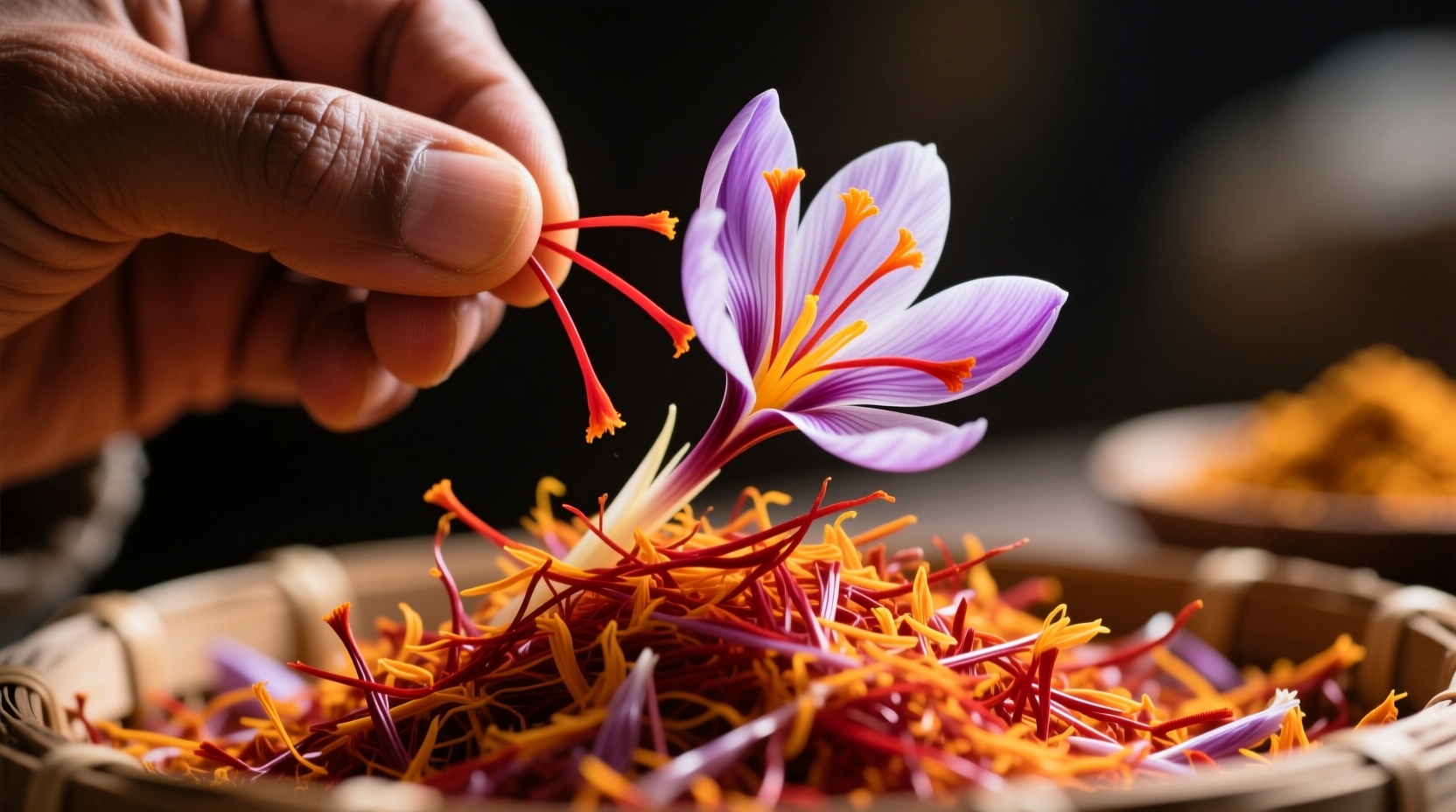
Saffron is the dried stigma (or thread-like tip) of the *Crocus sativus* flower, a sterile autumn-blooming crocus cultivated exclusively for its aromatic and coloring properties. Unlike many spices derived from seeds, bark, or roots, saffron comes from a floral part, making its harvest uniquely fragile and time-sensitive. The plant does not reproduce through seed; instead, it is propagated manually using corms (underground bulb-like structures), which limits scalability.
Native to Southwest Asia, saffron has been used for over 3,500 years in medicine, dyeing, and cooking across Persian, Indian, Mediterranean, and Middle Eastern cultures. Today, Iran produces over 90% of the world’s supply, followed by smaller outputs from Spain, India (particularly Kashmir), Greece, and Morocco. Despite its widespread use, true saffron remains rare because the conditions for optimal growth—dry climates, well-drained soil, and distinct seasonal shifts—are geographically limited.
The flavor profile is complex: simultaneously earthy, honeyed, slightly bitter, and floral, with a distinctive hay-like aroma when crushed. But its most prized attribute may be its ability to transform dishes visually—just a few threads impart a luminous golden-yellow hue to rice, sauces, and baked goods. Because of its potency, saffron is used sparingly, yet its influence on a dish is profound, altering both appearance and taste at a molecular level.
Key Characteristics
| Attribute | Description |
|---|---|
| Botanical Source | Crocus sativus (sterile autumn crocus) |
| Part Used | Dried red stigmas (threads) |
| Flavor Profile | Earthy, floral, mildly bitter, honeyed, with a warm hay-like aroma |
| Aroma | Distinctive, pungent when dry; becomes fragrant and sweet when infused |
| Color Contribution | Imparts intense golden-yellow to deep orange hues in liquids and solids |
| Heat Sensitivity | Loses volatile compounds at high heat; best added late in cooking or pre-infused |
| Shelf Life | 2–3 years if stored properly; degrades with exposure to light, moisture, air |
| Culinary Function | Flavor enhancer, natural colorant, aromatic accent |
Practical Usage: How to Use Saffron in Cooking
Saffron’s power lies in its concentration. A pinch—about 10 to 20 threads—is often sufficient to season four servings of rice or soup. However, improper use can waste its potential. To maximize flavor and color extraction, professional chefs universally recommend **infusing** saffron before adding it to dishes.
To do this correctly:
- Take 10–20 threads and crush them gently with a mortar and pestle (or between fingers).
- Place the crushed threads in a small bowl.
- Add 2–3 tablespoons of warm (not boiling) liquid—water, milk, broth, or even alcohol like white wine or vermouth.
- Let steep for 10–20 minutes. The liquid will turn deep yellow-orange.
- Add both threads and liquid to your dish during the final stages of cooking.
This method ensures even distribution and prevents clumping. Direct addition of dry threads into large volumes of food results in uneven coloring and wasted spice.
Pro Tip: Never add saffron directly to a dry pan or expose it to prolonged high heat. The delicate compounds responsible for aroma and color—especially safranal and crocin—break down rapidly above 180°F (82°C). Infusion preserves these volatiles and enhances their release into the dish.
In home kitchens, saffron elevates everyday recipes: risotto Milanese, paella, biryani, bouillabaisse, and even custards or bread doughs. For example, in Spanish paella, saffron provides the signature golden hue and subtle depth that distinguishes it from generic rice dishes. In Persian cuisine, it’s used in *tahdig* (crispy rice) and desserts like saffron ice cream. Even small amounts lend sophistication to vinaigrettes, seafood sauces, and compound butters.
Professional kitchens treat saffron as a finishing agent. In fine dining, it appears in foams, broths, and reductions where its presence is both tasted and seen. Some chefs toast threads lightly before infusion to intensify aroma—but caution is essential, as over-toasting creates bitterness.
Variants & Types of Saffron
Not all saffron is equal. Quality varies significantly based on origin, processing, and purity. The International Organization for Standardization (ISO) classifies saffron into grades based on chemical analysis of crocin (color strength), picrocrocin (bitterness), and safranal (aroma). However, in practice, consumers encounter several named types:
- Negin (Iran): Long, dark-red threads with no yellow style attached. Considered the highest grade, rich in aroma and coloring power. Often labeled “Sargol” when trimmed.
- Sargol (Iran): Top-quality red tips only, deeply colored and potent. Widely available and trusted for cooking.
- Poosha / Pushal (Iran): Contains some yellow styles along with red stigmas. Less concentrated, lower grade, cheaper.
- La Mancha (Spain): Protected designation of origin (PDO) saffron. Grown in Castilla-La Mancha, known for balanced flavor and reliable quality. May be slightly less intense than top Iranian grades but highly consistent.
- Kashmiri (India): Deep maroon threads, shorter than Iranian, with a more floral, delicate aroma. Highly prized but increasingly rare due to regional instability and climate pressures.
- Mongra (Kashmir): A subtype of Kashmiri saffron, considered among the finest globally, with intense fragrance and color yield.
Additionally, saffron appears in different forms:
| Form | Best For | Notes |
|---|---|---|
| Whole Threads | All culinary uses, especially infusions | Most authentic; allows visual verification of quality |
| Ground/Powdered | Quick mixing, industrial applications | High risk of adulteration (mixed with turmeric, paprika); avoid unless from trusted source |
| Pre-Infused Liquid | Commercial kitchens, convenience | Useful for consistency but loses freshness faster |
| Saffron Extracts | Food manufacturing, beverages | Concentrated coloring agents; not ideal for home use |
For discerning users, whole threads are always preferred. They allow inspection for authenticity—real saffron threads are brittle, deep red, and release color slowly in warm water. Fake versions made from corn silk, coconut fibers, or dyed herbs disintegrate quickly or bleed unnaturally fast.
Comparison with Similar Ingredients
Saffron is frequently substituted due to its cost, but no alternative fully replicates its dual function as flavorant and colorant. Below is a comparison with common stand-ins:
| Ingredient | Color Match? | Flavor Match? | Best Use Case |
|---|---|---|---|
| Turmeric | Yes (yellow) | No (earthy, peppery, lacks floral notes) | Budget-friendly coloring in curries or rice |
| Annatto (Achiote) | Moderate (orange-red) | No (nutty, slightly bitter) | Latin American dishes like cochinita pibil |
| Marigold Petals (Calendula) | Fair (golden) | No (mild, grassy) | Herbal teas, rustic soups |
| Safflower | Fair (yellow only) | No (neutral taste) | Coloring rice or butter without altering flavor |
| Real Saffron | Yes (golden-orange) | Yes (complex, aromatic) | All premium applications requiring authenticity |
While turmeric offers similar color at a fraction of the cost, it introduces a completely different flavor profile and lacks saffron’s aromatic lift. Moreover, turmeric cannot mimic saffron’s psychological effect—the sense of luxury and occasion it brings to a meal. In traditional dishes like French bouillabaisse or Persian jeweled rice, substituting anything else fundamentally changes the identity of the dish.
“Saffron isn't just a spice—it’s an experience. You’re paying for the silence of dawn in a field where every worker moves like a surgeon, plucking threads under the chill of early autumn. That moment can’t be replicated.”
— Chef Leila Hassan, Culinary Director, Spice Heritage Institute
Practical Tips & FAQs
Why is saffron so expensive?
Three primary reasons: labor intensity, low yield, and geographic limitation. Each flower produces only three stigmas, which must be harvested by hand within a narrow window—usually one week per year. It takes approximately 150,000 flowers (and 40+ hours of labor) to produce one kilogram of dried saffron.
How much saffron should I use?
A general rule: 10–20 threads for 4–6 servings. Start with fewer threads—you can always add more next time. Overuse leads to bitterness.
How do I store saffron?
Keep whole threads in an airtight container, away from light, heat, and moisture. A dark cupboard or refrigerator drawer works well. Avoid plastic bags; glass or metal tins preserve aroma longer.
Is powdered saffron safe to buy?
Only if sourced from reputable suppliers with third-party testing. Most commercial powders are adulterated. When in doubt, stick to whole threads.
Can I grow my own saffron?
Possibly, but not practically at scale. You’d need hundreds of corms to yield even a gram. However, growing a few plants for educational or ornamental purposes is feasible in temperate zones.
What dishes absolutely require real saffron?
Authentic versions of:
- Paella Valenciana (Spain)
- Risotto alla Milanese (Italy)
- Bouillabaisse (France)
- Iranian Tahchin or Zereshk Polo
- Kashmiri Pulao
- Swedish Lussekatter (saffron buns)
How can I test saffron purity at home?
Perform two simple tests:
- Water Test: Place a few threads in warm water. Genuine saffron releases color gradually over 10–15 minutes, turning the water golden-yellow. Fake saffron bleeds instantly or leaves residue.
- Smell Test: Crush a thread between fingers. Real saffron emits a honeyed, hay-like fragrance. Artificial versions smell like nothing or have a chemical odor.
Storage Checklist:
- ✔ Store in opaque, airtight container
- ✔ Keep in cool, dark place (≤70°F / 21°C)
- ✔ Label with purchase date
- ✔ Use within 2 years for peak potency
- ❌ Do not refrigerate unless humidity is controlled
Summary & Key Takeaways
Saffron’s high price is not a markup—it’s a reflection of nature’s limitations and human effort. From the fleeting bloom of *Crocus sativus* to the meticulous hand-harvesting and drying processes, every step resists automation and demands expertise. Its cost per gram is justified not by scarcity alone, but by the unmatched sensory contribution it makes to food.
Key points to remember:
- Saffron is the dried stigma of a fall-blooming crocus, harvested entirely by hand.
- It takes ~150,000 flowers to produce 1 kg of saffron, requiring immense labor.
- Iran dominates global production, though Spain, India, and Greece also produce notable varieties.
- Whole threads are superior to powder, which is often adulterated.
- Always infuse saffron in warm liquid before use to unlock full flavor and color.
- No substitute fully replicates saffron’s dual role as flavor enhancer and natural dye.
- Store properly to preserve potency for up to three years.
For cooks who value authenticity, saffron is worth the investment. Used wisely, a single gram can elevate dozens of meals. Rather than viewing it as an extravagance, consider it a tool of precision—one that connects modern kitchens to ancient traditions, artisan skill, and the quiet dignity of human hands working at dawn in a cold field. When you stir infused saffron into a pot of rice and watch it glow gold, you’re not just cooking. You’re participating in a legacy.
Final Thought: Buy less, but buy better. Invest in a small amount of high-quality saffron from a transparent supplier. Use it intentionally. Let it transform not just your dishes, but your understanding of what real craftsmanship tastes like.




 浙公网安备
33010002000092号
浙公网安备
33010002000092号 浙B2-20120091-4
Comments
No comments yet. Why don't you start the discussion?