
School uniforms have long been a topic of debate in educational circles. While some view them as restrictive or outdated, a growing body of research and real-world experience supports their role in fostering safer, more focused, and equitable learning environments. From reducing distractions to promoting school pride, the implementation of school uniforms offers tangible benefits that extend beyond appearance. This article explores the most compelling arguments in favor of school uniforms, backed by evidence, expert insights, and practical outcomes observed in schools across the country.
Improved Focus on Learning
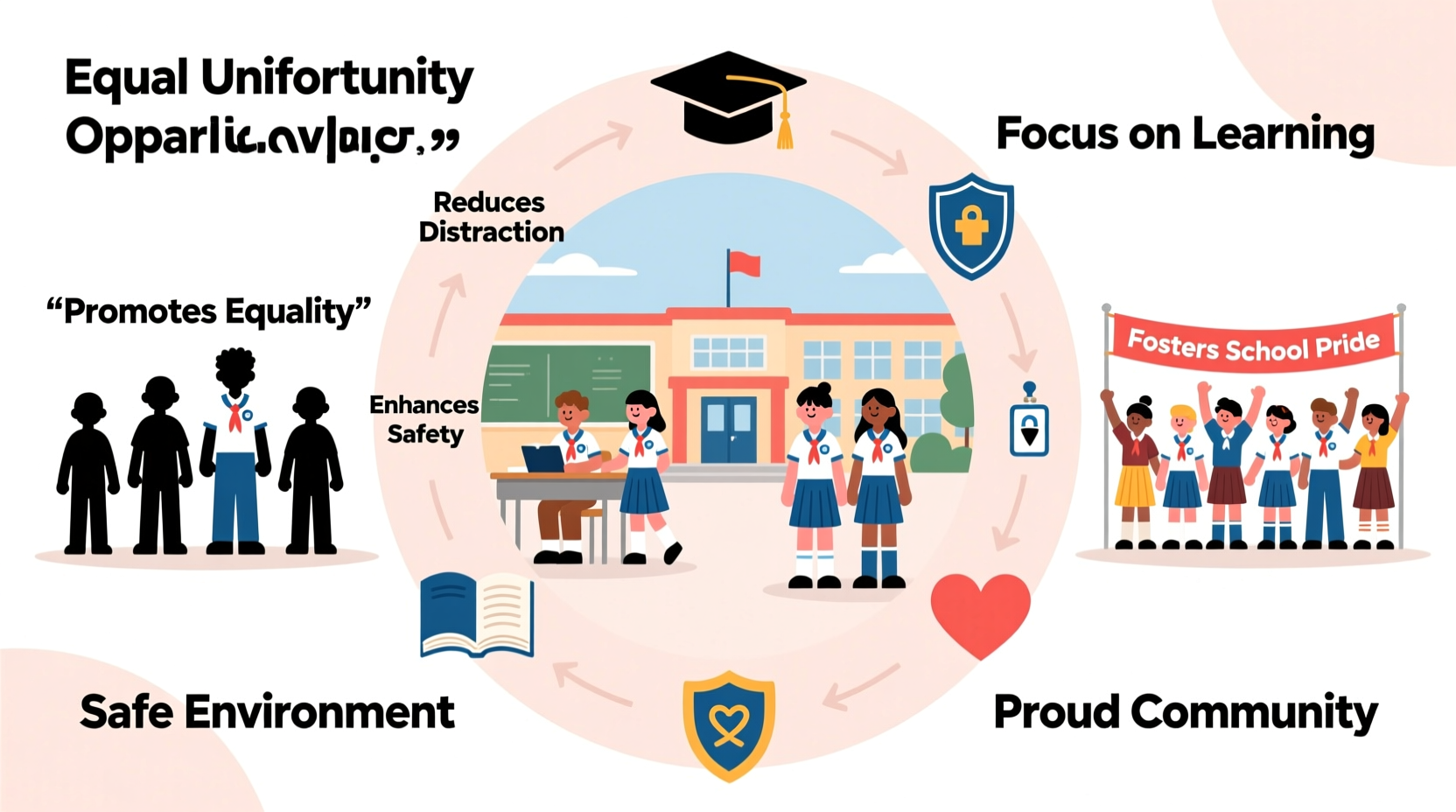
One of the most significant advantages of school uniforms is their ability to minimize distractions in the classroom. When students wear standardized attire, the emphasis shifts from fashion trends and brand competition to academics and personal development. Without the pressure to wear the latest styles, students are less likely to be judged by their clothing, allowing them to concentrate on lessons and interactions rather than appearances.
In many schools that adopted uniforms, teachers reported fewer disruptions related to clothing choices. A study conducted by the National Center for Education Statistics found that 44% of public schools with uniform policies noted improvements in student behavior, while 36% observed better attendance. These changes suggest that uniforms contribute to a more structured and academically oriented atmosphere.
Promoting Equity and Reducing Peer Pressure
Socioeconomic disparities often manifest in what students wear to school. The visible divide between designer clothes and hand-me-downs can lead to embarrassment, bullying, and social stratification. Uniforms help level the playing field by ensuring all students dress alike, regardless of income level.
This sense of equality fosters inclusivity. Students from low-income families no longer feel stigmatized for not wearing trendy brands, while wealthier students are less likely to flaunt material status. In turn, this reduces peer pressure and creates a culture where respect is based on character rather than clothing.
“Uniforms don’t erase poverty, but they do remove one visible marker of inequality that can deeply affect a child’s self-esteem.” — Dr. Linda Miller, Educational Psychologist
Enhanced School Safety and Security
School safety is a top priority for administrators, parents, and communities. Uniforms play a practical role in improving campus security. When all students wear the same attire, it becomes easier to identify intruders or unauthorized individuals on school grounds. This simple visual cue allows staff and security personnel to act quickly if someone doesn’t belong.
Additionally, uniforms reduce the likelihood of students bringing prohibited items to school disguised in flashy or oversized clothing. Gang-related apparel, which often includes specific colors or symbols, is also less likely to appear when dress codes are strictly enforced through uniform policies.
A case study from Long Beach Unified School District in California demonstrated a 36% decrease in school crimes and a 29% reduction in disciplinary referrals after implementing a district-wide uniform policy in the mid-1990s. While correlation does not equal causation, educators attributed part of the improvement to the increased sense of order and accountability fostered by uniforms.
Mini Case Study: Jefferson Middle School Transformation
Jefferson Middle School in Dallas, Texas, struggled with high rates of bullying and absenteeism. After introducing a mandatory uniform policy in 2018, the school saw measurable changes within two years. Discipline incidents dropped by 41%, and average daily attendance rose from 87% to 93%. Teachers reported that students seemed more engaged, and parents expressed appreciation for the reduced financial burden of buying school clothes.
“Before uniforms, my son was teased for wearing the same jeans twice a week,” said Maria Gonzalez, a parent. “Now, he walks in confidently every day. He feels like he belongs.”
Strengthening School Identity and Pride
Uniforms contribute to a shared sense of identity and community. When students wear the same colors and insignia, they begin to internalize a collective pride in their school. This unity can boost morale, encourage positive behavior, and strengthen school spirit during events like sports competitions, award ceremonies, and academic fairs.
Branded uniforms—featuring school logos or colors—act as walking ambassadors for the institution. They reinforce institutional values and create a professional atmosphere akin to workplaces or universities. Over time, this can instill discipline and responsibility, preparing students for future environments where dress codes are standard.
Practical and Financial Benefits for Families
Contrary to the belief that uniforms are expensive, they often result in cost savings for families. Instead of purchasing multiple trendy outfits each season, parents buy a few durable uniform sets that last longer. Many schools partner with suppliers to offer affordable packages, and some districts provide subsidies or vouchers for low-income families.
Moreover, uniforms simplify morning routines. With fewer clothing decisions to make, students spend less time choosing outfits and arrive at school with less stress. Parents report improved punctuality and reduced conflict over what to wear.
| Aspect | Without Uniforms | With Uniforms |
|---|---|---|
| Monthly Clothing Cost | $50–$150+ | $10–$30 (after initial purchase) |
| Morning Decision Time | 10–20 minutes | 2–5 minutes |
| Bullying Related to Clothing | Common | Rare |
| Teacher Distractions | Frequent (inappropriate attire) | Minimal |
Step-by-Step Guide to Implementing a School Uniform Policy
For schools considering uniforms, a thoughtful rollout is essential. Here’s a proven approach:
- Form a Stakeholder Committee: Include teachers, parents, students, and administrators to gather diverse perspectives.
- Research Options: Compare styles, suppliers, and costs. Consider climate, comfort, and inclusivity (e.g., gender-neutral designs).
- Conduct a Survey: Gauge support and address concerns before making decisions.
- Pilot the Program: Launch uniforms in one grade or building to assess impact.
- Evaluate and Adjust: Collect feedback and data on attendance, behavior, and satisfaction after six months.
- Expand School-Wide: Roll out the policy across all grades with clear communication and support resources.
FAQ
Don’t uniforms suppress student individuality?
While clothing is one form of self-expression, individuality thrives in creativity, speech, and actions. Schools with uniforms still allow students to express themselves through hairstyles, accessories (within guidelines), extracurricular involvement, and academic projects. Uniforms set a baseline of professionalism while preserving space for deeper forms of identity.
What if families can’t afford uniforms?
Schools can mitigate financial barriers through used uniform exchanges, donation drives, bulk purchasing discounts, and partnerships with nonprofit organizations. Some districts allocate Title I funds to support uniform costs for qualifying families.
Do uniforms really improve academic performance?
Uniforms alone don’t raise test scores, but they contribute to conditions that support learning—such as reduced distractions, improved discipline, and stronger school culture. Studies show modest but consistent gains in attendance and engagement, which are precursors to academic success.
Checklist: Key Factors for a Successful Uniform Policy
- ✅ Gain input from students, parents, and staff
- ✅ Choose comfortable, durable, and inclusive designs
- ✅ Provide financial assistance options
- ✅ Communicate expectations clearly
- ✅ Monitor outcomes and adjust as needed
- ✅ Celebrate school pride through uniform-related events
Conclusion
The decision to adopt school uniforms should be grounded in a school’s unique needs and values. However, the evidence in favor of uniforms—ranging from improved safety and equity to enhanced focus and community—is compelling. When implemented thoughtfully, uniforms are not about conformity for its own sake, but about creating an environment where every student can learn, grow, and feel respected.




 浙公网安备
33010002000092号
浙公网安备
33010002000092号 浙B2-20120091-4
Comments
No comments yet. Why don't you start the discussion?