
In today’s digital-first world, software is the backbone of nearly every industry—finance, healthcare, transportation, education, and more. A single line of flawed code can lead to financial loss, data breaches, or even physical harm. Yet, many organizations still treat software testing as an afterthought rather than a core component of development. The reality is that software testing isn’t just about finding bugs; it’s about ensuring quality, reliability, security, and user satisfaction from the earliest stages of development to post-deployment.
As software systems grow in complexity, the margin for error shrinks. Testing provides a structured way to validate functionality, uncover edge cases, and verify that applications behave as intended under real-world conditions. When done effectively, it reduces risks, lowers long-term costs, and strengthens trust in digital products.
The Role of Software Testing in Quality Assurance
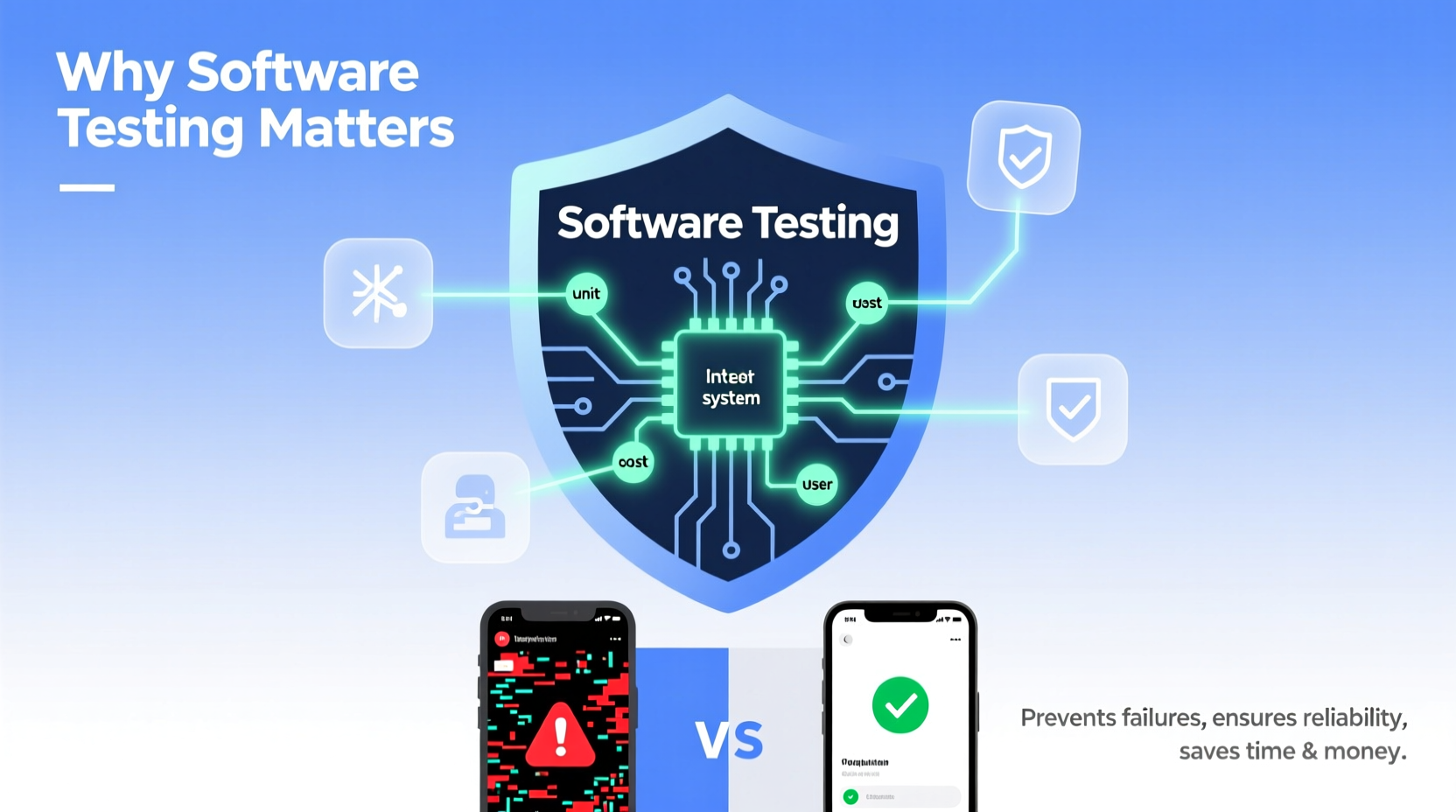
At its core, software testing is a systematic process used to evaluate whether a system meets specified requirements and performs as expected. It involves executing software with the intent of identifying defects before they reach end users. Unlike debugging—which occurs after a problem is found—testing proactively prevents issues by validating behavior across different scenarios, environments, and usage patterns.
Quality assurance (QA) goes beyond mere defect detection. It encompasses processes, standards, and methodologies designed to build confidence in software integrity. Testing is the primary tool QA teams use to measure this integrity. Without rigorous testing, even well-designed software can fail when exposed to unexpected inputs or high loads.
Consider a banking application that incorrectly calculates interest due to a rounding error. While the feature may appear functional during casual use, such a flaw could result in millions of dollars in miscalculated balances over time. Comprehensive testing—including unit, integration, and regression tests—can catch these subtle but critical errors early.
Types of Software Testing and Their Impact
Different types of testing serve distinct purposes throughout the software development lifecycle. Relying on only one form—such as manual functional testing—is insufficient for modern applications. A balanced strategy includes multiple layers:
- Unit Testing: Validates individual components or functions in isolation.
- Integration Testing: Ensures modules work together correctly.
- System Testing: Evaluates the complete, integrated system against requirements.
- Performance Testing: Measures responsiveness, stability, and scalability under load.
- Security Testing: Identifies vulnerabilities like injection flaws or authentication weaknesses.
- User Acceptance Testing (UAT): Confirms the software meets business needs from an end-user perspective.
Each layer adds depth to quality assurance. For example, while unit tests help developers write reliable code, performance testing reveals how the system behaves under stress—critical for e-commerce platforms during peak shopping seasons.
Do’s and Don’ts of Effective Testing
| Do’s | Don’ts |
|---|---|
| Start testing early in the development cycle (shift-left approach) | Leave all testing until the end of development |
| Automate repetitive test cases where possible | Rely solely on manual testing for large-scale projects |
| Test under real-world conditions and diverse environments | Only test in ideal, controlled lab settings |
| Involve stakeholders in acceptance testing | Assume developers know what users truly need |
Real-World Consequences of Inadequate Testing
The cost of skipping or poorly implementing software testing can be staggering. One notable case involved Knight Capital Group in 2012. Due to a deployment error caused by untested legacy code being reactivated, the company lost $440 million in just 45 minutes. The flaw wasn’t detected because proper pre-deployment testing procedures were bypassed.
In another instance, a medical device manufacturer released software controlling radiation therapy machines without sufficient validation. Bugs led to overdoses in patients, resulting in injuries and fatalities. Investigations revealed inadequate testing protocols and poor version control.
“Testing is not a phase—it's a continuous discipline. The absence of structured testing doesn't save time; it mortgages the future.” — Lisa Richardson, Senior QA Architect at TechReliability Labs
These examples underscore that software failures aren't just technical setbacks—they have legal, ethical, and human consequences. Robust testing acts as a safeguard against such disasters.
A Step-by-Step Guide to Building a Strong Testing Culture
Creating a culture where testing is valued requires intentional effort and structural support. Follow this timeline to integrate effective practices across your team:
- Week 1–2: Assess Current Practices – Audit existing testing methods, coverage metrics, and pain points. Identify gaps in automation, documentation, or skill sets.
- Week 3–4: Define Testing Objectives – Align testing goals with business outcomes (e.g., reduce production bugs by 50%, improve release velocity).
- Month 2: Train Teams – Provide training on test frameworks, writing effective test cases, and interpreting results. Encourage cross-functional collaboration between devs and QA.
- Month 3: Implement Automation – Begin automating smoke tests and regression suites using tools like Selenium, JUnit, or Cypress.
- Ongoing: Monitor & Improve – Track key metrics like defect escape rate, test coverage, and mean time to resolution. Adjust strategies based on feedback and incident analysis.
Checklist: Essential Elements of a Healthy Testing Process
- ✅ Requirements are testable and clearly defined before development begins
- ✅ Test plans are created alongside design documents
- ✅ Automated tests run with every build (CI integration)
- ✅ Critical paths are covered by regression test suites
- ✅ Security scans are performed regularly (SAST/DAST)
- ✅ Performance benchmarks are established and monitored
- ✅ Defects are logged, prioritized, and traced to resolution
- ✅ Post-release monitoring includes error tracking and user feedback loops
Frequently Asked Questions
Is manual testing still relevant in the age of automation?
Yes. While automation excels at repetitive, predictable tasks like regression testing, manual testing remains essential for exploratory, usability, and ad-hoc testing. Human intuition helps uncover issues algorithms might miss, especially in complex user workflows or accessibility scenarios.
How much of my code should be tested?
There’s no universal percentage, but aim for high coverage on mission-critical components. Focus on testing business logic, integrations, and error-handling paths. Prioritize quality over quantity—well-written tests that reflect real usage are more valuable than thousands of trivial assertions.
Can testing slow down development?
Poorly implemented testing can create bottlenecks, but when integrated properly, it accelerates delivery. Catching bugs early reduces rework and emergency patches. Teams that practice continuous testing often deploy faster and with greater confidence than those that don’t.
Conclusion: Make Testing a Priority, Not an Afterthought
Software testing is not a luxury or a final checkpoint—it’s a foundational practice that protects users, preserves reputation, and ensures long-term success. Whether you're building a mobile app, enterprise platform, or embedded system, investing in thorough, intelligent testing pays dividends in reliability, security, and customer trust.
The best software isn’t just feature-rich; it’s resilient, predictable, and safe. That level of quality doesn’t happen by accident. It’s achieved through disciplined testing at every stage of development. Start small if needed, but start now. Evaluate your current processes, empower your teams, and embed testing into your development DNA.




 浙公网安备
33010002000092号
浙公网安备
33010002000092号 浙B2-20120091-4
Comments
No comments yet. Why don't you start the discussion?