
Missing or absent eyebrows may seem like a cosmetic concern at first glance, but for many individuals, it's the result of deeper medical, genetic, or environmental factors. While eyebrows play a role in facial expression and protection from sweat and debris, their loss can impact self-esteem and social confidence. Understanding the reasons behind eyebrow loss is essential—not only to address appearance concerns but also to identify potential underlying health issues.
This article explores the full spectrum of causes behind missing eyebrows, from autoimmune disorders to lifestyle habits, and provides practical insights into diagnosis, management, and restoration options.
Medical Conditions That Cause Eyebrow Loss
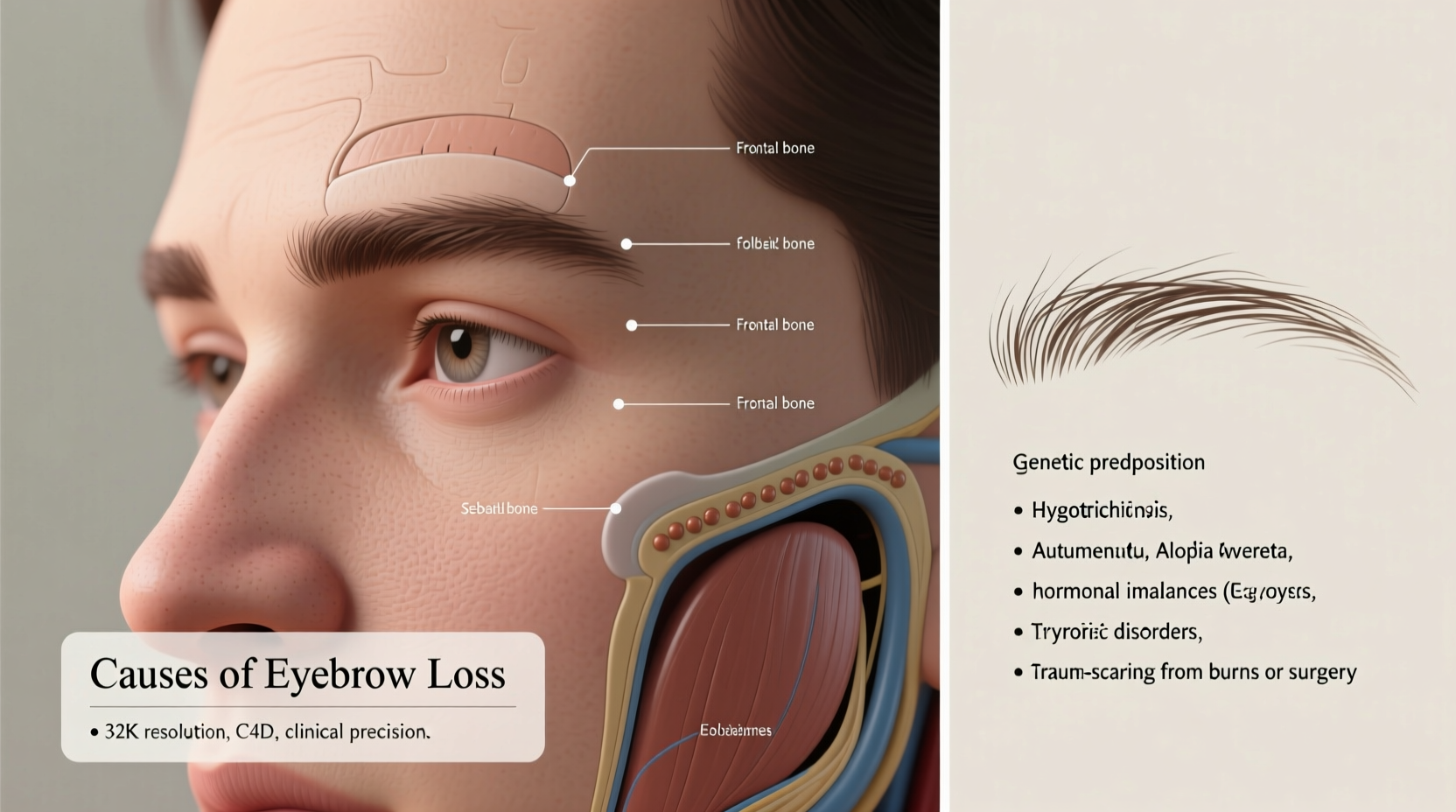
Eyebrow thinning or complete absence often stems from medical conditions affecting hair follicles or hormonal balance. Some of these conditions are temporary; others require long-term management.
- Alopecia Areata: An autoimmune disorder where the immune system attacks hair follicles, leading to patchy hair loss—including eyebrows. In severe cases, such as alopecia universalis, all body hair, including eyebrows, may be lost.
- Hypothyroidism: Underactive thyroid function disrupts hormone levels critical for hair growth. Thinning of the outer third of the eyebrows (known as Hertoghe’s sign) is a classic indicator.
- Trichotillomania: A psychological condition characterized by compulsive hair pulling. Individuals may unconsciously pluck eyebrow hairs, leading to noticeable gaps or total loss.
- Skin Disorders: Conditions like psoriasis, eczema, or seborrheic dermatitis can inflame the skin around the brows, damaging follicles and inhibiting regrowth.
- Infections: Fungal infections such as tinea barbae or bacterial infections can destroy hair follicles if left untreated.
“Eyebrow loss should never be dismissed as purely cosmetic. It can be an early warning sign of systemic disease.” — Dr. Lena Patel, Dermatologist & Hair Specialist
Lifestyle and Environmental Factors
Beyond medical causes, everyday behaviors and external influences contribute significantly to eyebrow thinning or loss.
Common lifestyle-related contributors include:
- Over-Plucking and Waxing: Chronic shaping or removal can lead to traction alopecia, where repeated stress on follicles prevents regrowth.
- Poor Nutrition: Deficiencies in protein, iron, zinc, biotin, and vitamins D and B12 impair keratin production, weakening hair structure.
- Stress: High cortisol levels from chronic stress can push hair follicles into a resting phase (telogen effluvium), resulting in shedding.
- Use of Harsh Cosmetics: Adhesives from false lashes, aggressive makeup removers, or low-quality brow dyes can irritate the skin and damage follicles.
Nutritional Deficiencies Linked to Eyebrow Thinning
| Nutrient | Role in Hair Health | Common Sources |
|---|---|---|
| Iron | Supports oxygen delivery to follicles | Red meat, spinach, lentils |
| Vitamin D | Regulates hair cycle and follicle activity | Sunlight, fatty fish, fortified dairy |
| Biotin (B7) | Essential for keratin synthesis | Eggs, nuts, sweet potatoes |
| Zinc | Maintains oil gland function around follicles | Oysters, pumpkin seeds, chickpeas |
Genetic and Congenital Causes
Some people are born with little or no eyebrow development due to rare genetic syndromes. These conditions are typically diagnosed in infancy or early childhood.
- Ablepharon-Macrostomia Syndrome: A rare disorder involving absent eyelids and eyebrows, along with facial abnormalities.
- Hajdu-Cheney Syndrome: Characterized by bone deformities and sparse or absent eyebrows.
- Bruno Anguiano Syndrome: Features include missing eyebrows, sparse scalp hair, and dental anomalies.
In less severe cases, genetics simply determine naturally sparse brows. Ethnic background plays a role—some populations tend to have finer, lighter, or less dense eyebrow hair than others.
Real Example: A Case of Misdiagnosed Hypothyroidism
Sarah, a 34-year-old teacher, noticed her eyebrows gradually thinning over six months. She initially attributed it to aging and began using brow pencils daily. When fatigue, weight gain, and dry skin followed, she consulted her doctor. Blood tests revealed elevated TSH levels—confirming hypothyroidism. After starting levothyroxine treatment, her energy improved, and within four months, fine eyebrow hairs began regrowing. Her case highlights how eyebrow changes can precede more obvious symptoms of illness.
Treatment and Restoration Options
The approach to restoring eyebrows depends on the root cause. Accurate diagnosis is crucial before beginning any treatment.
Step-by-Step Guide to Addressing Eyebrow Loss
- Assess the Pattern: Is the loss symmetrical? Patchy? Complete? Note any accompanying symptoms like fatigue or skin changes.
- Consult a Dermatologist: Get a scalp and skin examination. Consider a pull test or biopsy if alopecia is suspected.
- Run Blood Tests: Check thyroid function (TSH, T3, T4), iron levels (ferritin), vitamin D, and hormonal panel.
- Review Medications and Habits: Identify any drugs (e.g., chemotherapy, retinoids) or grooming practices contributing to loss.
- Begin Targeted Treatment: Whether it’s hormone replacement, topical minoxidil, or behavioral therapy for trichotillomania, follow a personalized plan.
Non-Medical Restoration Methods
For irreversible loss or cosmetic enhancement:
- Micropigmentation (Cosmetic Tattooing): Semi-permanent pigment inserted into the skin mimics natural brow hairs.
- Microblading: Manual technique creating fine hair-like strokes. Lasts 1–3 years.
- Custom Brow Prosthetics: Realistic silicone or hair-integrated prosthetics for congenital absence.
- Makeup Techniques: Use angled brushes and powder or pomade to fill in gaps realistically.
Frequently Asked Questions
Can stress really make you lose your eyebrows?
Yes. Severe emotional or physical stress can trigger telogen effluvium, a condition where hair prematurely enters the resting phase and sheds. This includes eyebrow hair. Recovery usually occurs within 6–9 months once stress is managed.
Is eyebrow loss permanent?
Not always. If the hair follicles remain intact, regrowth is possible with proper treatment. However, scarring from injury or chronic inflammation can cause permanent loss.
Are there any home remedies that help grow eyebrows?
While evidence is limited, some people report benefits from applying castor oil, coconut oil, or onion juice due to their purported circulation-boosting or antimicrobial properties. However, these should complement—not replace—medical evaluation.
Checklist: What to Do If You’re Losing Your Eyebrows
- ✔️ Monitor the rate and pattern of hair loss
- ✔️ Stop aggressive grooming (plucking, waxing, threading)
- ✔️ Evaluate diet and consider blood work for deficiencies
- ✔️ Schedule a visit with a dermatologist or endocrinologist
- ✔️ Explore gentle topical treatments under professional guidance
- ✔️ Consider cosmetic alternatives if regrowth isn’t possible
Conclusion: Understanding and Embracing the Full Picture
Losing eyebrows is more than a beauty issue—it can signal health imbalances, emotional distress, or genetic traits. Whether the cause is medical, behavioral, or inherited, recognizing the underlying reason empowers better care and informed decisions. With advances in dermatology and cosmetic techniques, options exist to restore both hair and confidence.




 浙公网安备
33010002000092号
浙公网安备
33010002000092号 浙B2-20120091-4
Comments
No comments yet. Why don't you start the discussion?