
In every organization—whether a small startup or a multinational corporation—data drives decisions. But behind every reliable report, audit trail, or financial statement lies a foundation built on source documents. These original records serve as the first evidence of transactions and activities, forming the backbone of accountability, transparency, and operational integrity. Without them, businesses risk errors, compliance failures, and even legal consequences. Understanding their importance is not just essential for accountants and auditors—it's critical for anyone involved in managing information, finances, or regulatory responsibilities.
What Are Source Documents?
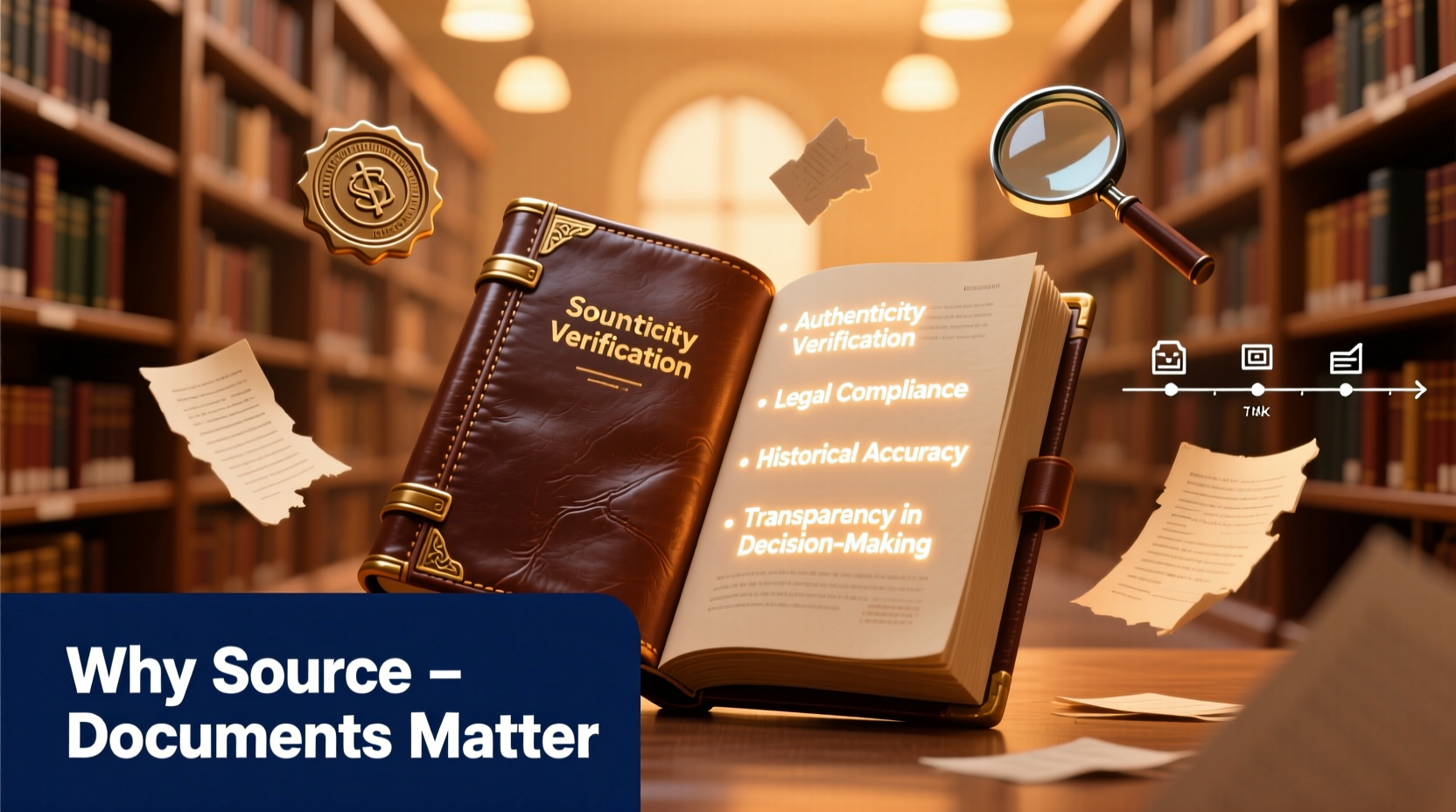
Source documents are the original records created when a transaction occurs. They provide detailed proof of an event and include essential data such as date, parties involved, amounts, descriptions, and authorization. Common examples include invoices, receipts, purchase orders, bank statements, payroll records, contracts, and delivery notes.
These documents can be physical (paper-based) or digital (PDFs, scanned files, e-invoices), but their core function remains unchanged: to authenticate and support any recorded business activity. In accounting systems, they are referenced during journal entries and retained for future verification.
“Source documents are the DNA of financial integrity. Without them, you cannot trace the origin of any transaction.” — Laura Simmons, CPA and Audit Director at Finch & Reed Advisory
Key Benefits of Maintaining Source Documents
The value of source documents extends far beyond simple recordkeeping. When properly managed, they deliver measurable advantages across departments and functions. Below are five major benefits organizations gain by prioritizing these foundational records.
1. Ensures Accuracy in Financial Reporting
Every number entered into an accounting system must have a verifiable origin. Source documents eliminate guesswork by providing concrete evidence for each entry. This reduces the likelihood of misstatements, duplicate entries, or omissions.
For example, when recording a supplier payment, the corresponding invoice and receipt confirm the correct amount, vendor, and date. This level of detail supports precise bookkeeping and helps prevent discrepancies during reconciliation.
2. Supports Regulatory Compliance and Audits
Regulatory bodies like the IRS, SEC, or GDPR authorities require businesses to maintain accurate records for specified periods. Source documents fulfill this obligation by creating an auditable trail that demonstrates adherence to tax laws, industry standards, and financial regulations.
During internal or external audits, examiners rely heavily on source documentation to validate claims, assess risk, and verify the legitimacy of transactions. A well-organized archive of originals can shorten audit cycles, reduce penalties, and strengthen stakeholder trust.
3. Prevents Fraud and Enhances Internal Controls
One of the most powerful roles of source documents is their ability to deter fraud. By requiring authorized signatures, timestamps, and matching counterparties (e.g., purchase order vs. delivery note), companies establish checks and balances within their workflows.
Discrepancies between documents—such as a receipt without a matching invoice—can trigger alerts and prompt investigations. This proactive detection mechanism strengthens internal controls and safeguards assets.
4. Facilitates Dispute Resolution
When disagreements arise—whether over unpaid invoices, incorrect deliveries, or service quality—source documents serve as objective evidence. Having access to signed contracts, shipping logs, or communication records enables swift resolution without escalating to legal action.
In customer disputes, showing a dated delivery confirmation can resolve issues quickly. For vendor conflicts, presenting approved purchase orders clarifies expectations and obligations.
5. Improves Operational Efficiency
Digital source documents integrated into ERP or accounting software streamline processes like accounts payable, inventory tracking, and payroll. Automated systems extract data directly from scanned invoices or e-documents, reducing manual input and minimizing human error.
Moreover, searchable archives allow teams to retrieve information instantly, accelerating decision-making and reducing administrative burden.
Real-World Example: How One Company Avoided a Costly Audit Penalty
A mid-sized manufacturing firm faced a surprise tax audit after filing unusually high expense deductions. The auditor requested documentation for all vehicle-related costs claimed over two years. Fortunately, the company had implemented a strict policy requiring employees to submit fuel receipts, maintenance invoices, and mileage logs for every claim.
Within 48 hours, the finance team compiled over 300 digitized source documents, clearly linking each expense to business use. The auditor verified the claims and closed the case with no adjustments. The CFO later credited their document retention system with saving an estimated $75,000 in potential fines and interest.
Best Practices for Managing Source Documents
To fully realize the benefits of source documents, organizations must adopt structured management practices. Follow this checklist to ensure reliability and accessibility:
✅ Document Management Checklist
- Collect all source documents immediately after transaction completion
- Verify completeness (date, amount, parties, authorization)
- Store originals securely—digitally or physically with backups
- Organize by category and date for easy retrieval
- Apply retention policies based on legal requirements (e.g., 7 years for tax records)
- Restrict access to authorized personnel only
- Use OCR-enabled tools to make digital documents searchable
Common Pitfalls to Avoid
| Pitfall | Impact | Prevention Strategy |
|---|---|---|
| Losing or misfiling receipts | Failed audits, disallowed expenses | Implement cloud storage with automated tagging |
| Relying on memory instead of documentation | Inaccurate reporting, compliance risks | Require documentation for all expenditures |
| Accepting incomplete forms | Processing delays, fraud vulnerability | Enforce mandatory fields and approvals |
| Using unsecured personal devices for scans | Data breaches, loss of sensitive info | Adopt encrypted document management platforms |
Step-by-Step Guide to Building a Reliable Documentation System
- Identify Key Transaction Types: List common activities (sales, purchases, payroll, etc.) and determine which documents are required for each.
- Standardize Templates: Create uniform formats for invoices, timesheets, and orders to ensure consistency.
- Assign Responsibility: Designate staff members to collect and verify documents per department.
- Digitize Where Possible: Scan paper documents and store them in secure, backed-up folders with clear naming conventions.
- Integrate with Accounting Software: Use tools like QuickBooks, Xero, or SAP to link documents directly to entries.
- Conduct Regular Reviews: Schedule monthly checks to ensure no gaps exist in documentation.
- Train Employees: Educate teams on why source documents matter and how to handle them correctly.
Frequently Asked Questions
How long should I keep source documents?
Tax regulations typically require businesses to retain financial records for at least seven years. However, some industries may have longer mandates—for instance, healthcare under HIPAA or government contractors. Always consult local laws and professional advisors to determine appropriate retention periods.
Can digital copies replace original paper documents?
Yes, in most cases. The IRS and many regulatory agencies accept scanned versions if they are complete, legible, and stored securely. Ensure your digital copies capture all details of the original and are protected against tampering.
What happens if I can’t produce a source document during an audit?
A missing document may lead to disallowed deductions, adjusted liabilities, or fines. Repeated failures could trigger deeper scrutiny of your entire financial system. Proactive archiving minimizes this risk significantly.
Conclusion: Make Source Documents a Strategic Priority
Source documents are more than administrative artifacts—they are vital tools for accuracy, compliance, and organizational resilience. From preventing fraud to enabling smooth audits and resolving disputes, their impact spans across finance, operations, and legal domains. Companies that treat documentation as a strategic priority gain greater control over their data, build stronger credibility with stakeholders, and operate with confidence.




 浙公网安备
33010002000092号
浙公网安备
33010002000092号 浙B2-20120091-4
Comments
No comments yet. Why don't you start the discussion?