
In an era where consumers are bombarded with thousands of marketing messages daily, standing out isn’t just about having a great product—it’s about making people care. That’s where storytelling comes in. Unlike traditional advertising that focuses on features and benefits, storytelling connects on an emotional level, transforming passive audiences into engaged advocates. It's not a trendy tactic; it's a foundational strategy that drives real results in content marketing.
When done well, storytelling doesn’t just inform—it resonates. It creates memory, builds trust, and inspires action. Brands that master this art don’t just sell products; they cultivate communities, shape identities, and earn loyalty. The science supports it: stories activate multiple regions of the brain, increasing retention and emotional investment far more than facts alone.
The Psychological Power of Story
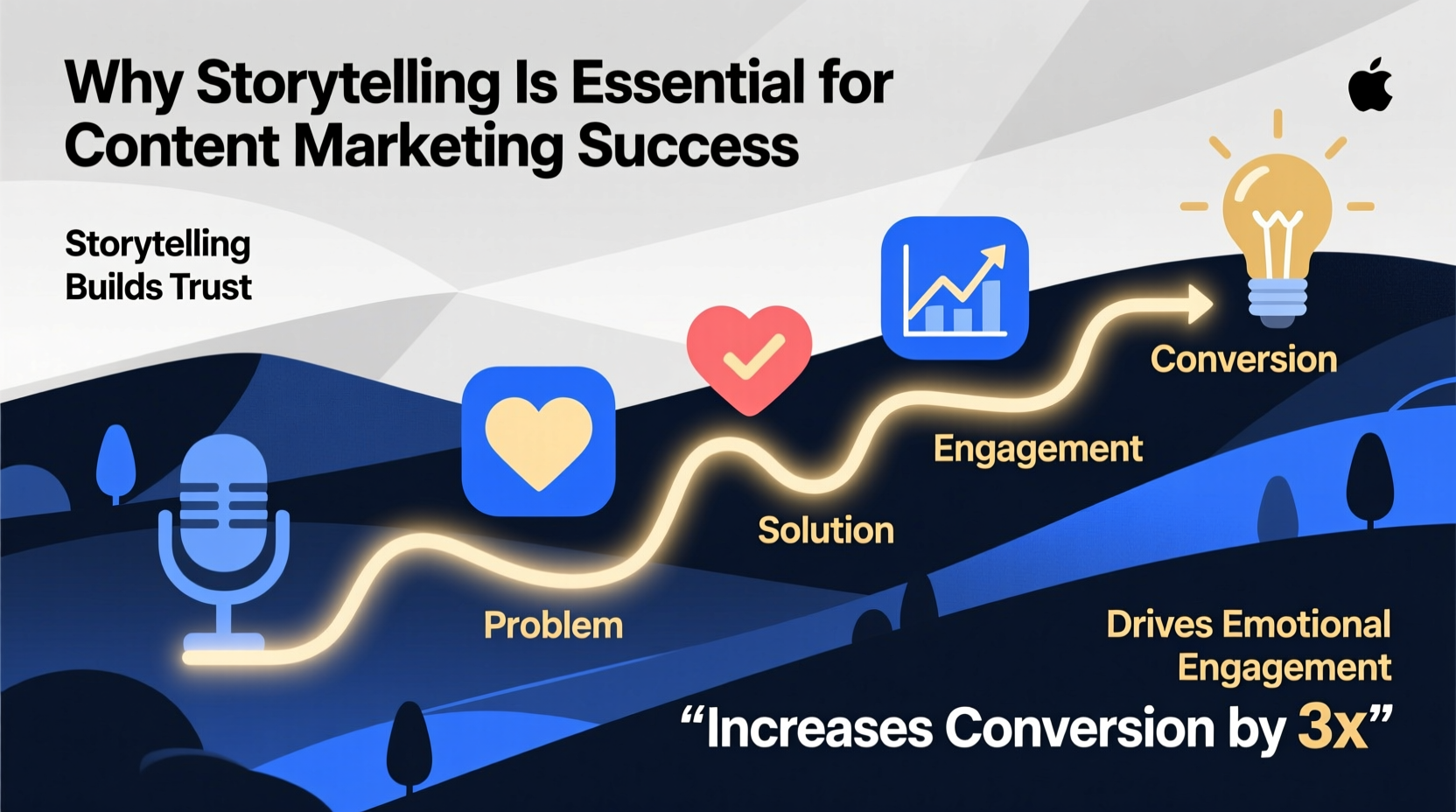
Humans are hardwired for narrative. From ancient cave paintings to modern podcasts, we’ve used stories to share knowledge, pass down values, and make sense of the world. This instinct remains deeply embedded in how we process information today.
Neurological studies show that when people hear a compelling story, their brains release oxytocin—the hormone associated with empathy, trust, and connection. This chemical response makes listeners more likely to engage, remember, and act. In contrast, dry data or promotional copy often triggers cognitive resistance, leading to quick dismissal.
“Facts tell, but stories sell. When you tell a story, you’re not just delivering information—you’re inviting the audience into an experience.” — Donald Miller, author of *Building a StoryBrand*
This experiential quality is what sets storytelling apart. Instead of saying, “Our software saves time,” a story might follow a small business owner who was drowning in admin work until they discovered the tool—suddenly, the benefit becomes personal, tangible, and believable.
How Storytelling Enhances Key Marketing Goals
Effective content marketing aims to achieve several objectives: build brand awareness, nurture leads, establish authority, and convert customers. Storytelling directly contributes to each of these.
- Awareness: A memorable story spreads faster than a slogan. Think of Dove’s “Real Beauty” campaign—by sharing authentic stories about self-image, the brand sparked global conversations and earned massive organic reach.
- Trust: People don’t buy from logos; they buy from people they trust. Sharing behind-the-scenes stories, customer journeys, or founder origins humanizes your brand.
- Engagement: Stories keep readers scrolling. A narrative arc with tension, resolution, and emotion holds attention far longer than bullet points.
- Conversion: Customers are more likely to purchase when they see themselves in a story. Case studies and testimonials are powerful because they mirror the buyer’s own journey.
Elements of a High-Impact Marketing Story
Not all stories work equally well in marketing. To be effective, a story must be relevant, relatable, and purposeful. Here are the core components:
- Character: Your audience should see themselves as the hero. Position your brand as the guide (like Yoda to Luke), offering tools and wisdom.
- Conflict: Every good story has a problem—frustration, fear, inefficiency. Name the pain point your audience feels.
- Journey: Show transformation. How did someone go from struggle to solution? This builds hope and credibility.
- Resolution: Demonstrate the outcome clearly. Use real results, testimonials, or visual metaphors.
- Moral/Call to Action: End with insight or direction. What should the reader do next?
Mini Case Study: How Airbnb Built a Global Brand Through Story
Airbnb didn’t grow by listing apartment features. They grew by telling stories of belonging. Early campaigns like “Belong Anywhere” showcased real hosts and travelers—people opening their homes, forming unexpected friendships, and experiencing cities like locals.
One video featured a host in Tokyo who cooked meals for guests, creating a family-like atmosphere. Viewers didn’t just see a room for rent—they saw connection, culture, and warmth. This emotional appeal helped Airbnb differentiate from sterile hotel chains and fueled viral sharing across social platforms.
The result? A brand synonymous with authentic travel experiences, driven almost entirely by narrative-driven content.
Storytelling vs. Traditional Content: A Strategic Comparison
| Aspect | Traditional Content | Story-Based Content |
|---|---|---|
| Focus | Product features, specifications | Customer experience, transformation |
| Tone | Formal, informational | Relatable, conversational |
| Engagement | Moderate; often skimmable | High; encourages full consumption |
| Shareability | Limited | High—especially if emotionally resonant |
| Memory Retention | Low—facts fade quickly | High—stories are remembered for years |
| Conversion Impact | Indirect | Direct—creates desire through empathy |
Practical Checklist: Building Stories Into Your Content Strategy
Integrating storytelling doesn’t require a Hollywood budget. Start small and scale smartly. Use this checklist to get started:
- ✅ Identify your customer’s core challenges and desires.
- ✅ Map their journey from problem to solution.
- ✅ Collect real customer stories (via reviews, interviews, surveys).
- ✅ Repurpose one testimonial into a mini-narrative for social media.
- ✅ Rewrite a product page using a story structure: character, conflict, guide, plan, success.
- ✅ Train your team to think in narratives, not just specs.
- ✅ Measure engagement metrics (time on page, shares, comments) before and after introducing stories.
Common Pitfalls to Avoid
Even with good intentions, brands often misfire with storytelling. Watch out for these traps:
- Being too self-centered: Focus on the customer’s journey, not your company’s achievements.
- Lacking authenticity: Over-polished or fictionalized stories feel hollow. Real beats perfect.
- No clear message: A story without a takeaway is entertainment, not marketing.
- Forcing emotion: Manipulative or overly dramatic tones can backfire. Keep it genuine.
FAQ: Storytelling in Content Marketing
Can storytelling work for B2B or technical industries?
Absolutely. Even in complex sectors like SaaS or manufacturing, decision-makers are still people. A case study showing how a CFO reduced reporting time by 70% using your software is a story—one with stakes, effort, and payoff. The key is simplifying jargon and focusing on outcomes.
How long should a marketing story be?
It depends on the format. A social media caption might tell a micro-story in two sentences. A blog post can unfold over 800 words. The rule is: as long as necessary, as short as possible. Always serve the audience’s attention span and intent.
Do I need professional writers to create stories?
Not necessarily. Some of the best stories come from frontline employees, customers, or founders. You can start by capturing raw narratives and refining them in-house. As you scale, investing in skilled storytellers pays dividends.
Conclusion: Make Storytelling Your Competitive Advantage
In a digital landscape where attention is scarce and skepticism is high, storytelling isn’t just nice to have—it’s essential. It transforms abstract value propositions into lived experiences. It turns visitors into believers. And it gives your brand a voice that echoes long after the page is closed.
The most successful content marketers aren’t just publishers; they’re narrators of change. They understand that people don’t remember what you said—they remember how you made them feel. By embedding storytelling into every blog, email, video, and ad, you create not just campaigns, but connections.




 浙公网安备
33010002000092号
浙公网安备
33010002000092号 浙B2-20120091-4
Comments
No comments yet. Why don't you start the discussion?