
In an era defined by rapid technological advancement, computer engineering stands at the intersection of hardware and software innovation. It's a discipline that powers everything from smartphones and autonomous vehicles to medical devices and artificial intelligence systems. Choosing to study computer engineering is more than just pursuing a technical degree—it’s stepping into a field that shapes the future. With its blend of electrical engineering and computer science, this major equips students with the tools to design, build, and optimize computing systems that drive modern life.
The demand for skilled computer engineers continues to grow across industries. From tech startups to aerospace firms, organizations rely on professionals who can bridge the gap between physical electronics and digital functionality. But beyond job security and salary potential, what makes this field truly compelling? Let’s explore the tangible benefits, diverse career paths, and long-term value of studying computer engineering.
The Unique Blend of Hardware and Software Expertise
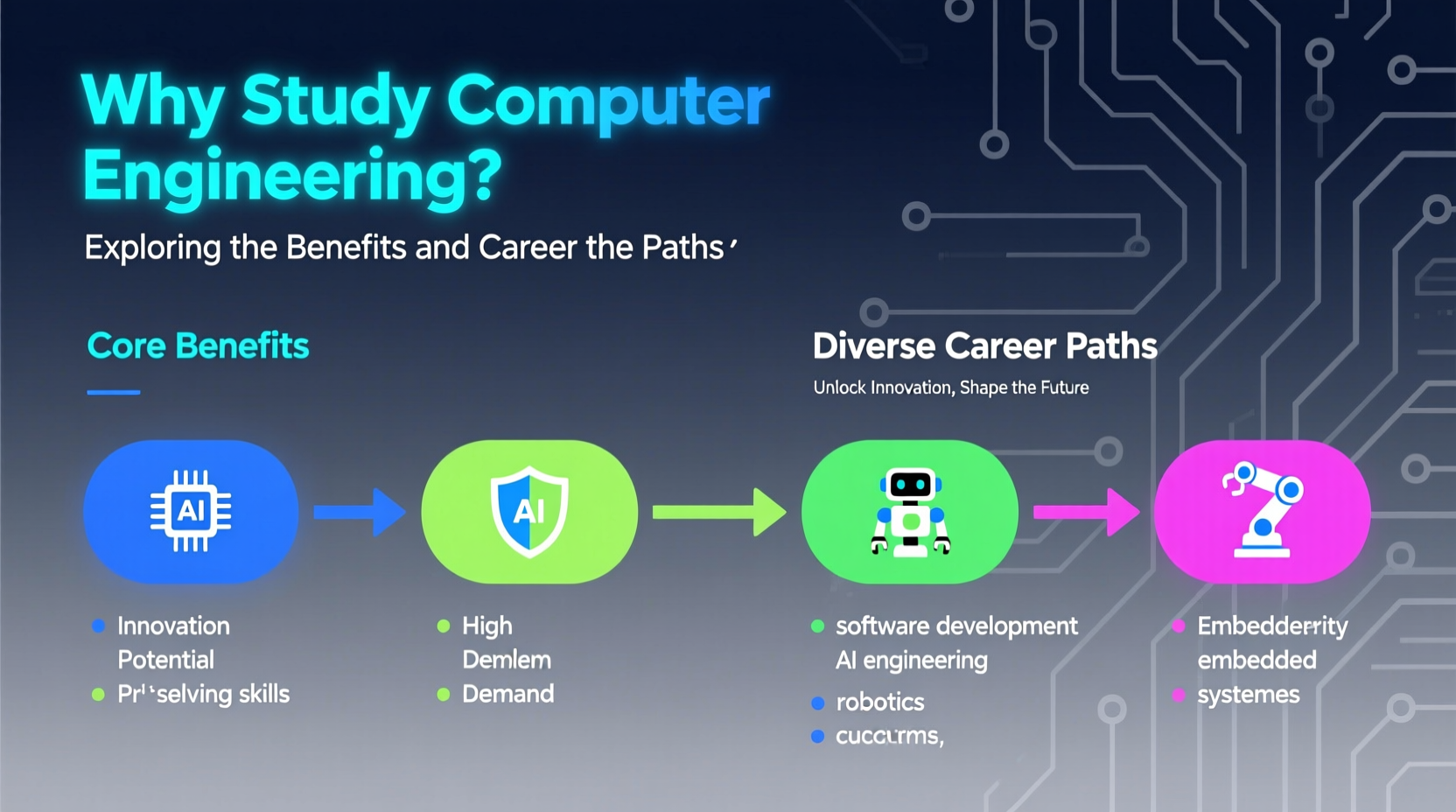
Unlike pure computer science or electrical engineering, computer engineering offers a balanced curriculum that integrates both domains. Students learn how microprocessors function at the circuit level while also mastering programming languages, operating systems, and embedded software development. This dual competency allows graduates to work on full-stack system design—from silicon chips to application interfaces.
This interdisciplinary nature means computer engineers are uniquely positioned to solve complex problems. For example, designing a wearable health monitor requires knowledge of low-power circuit design, sensor integration, wireless communication protocols, and real-time data processing—all areas covered in a typical computer engineering program.
Tangible Career Benefits and Market Demand
One of the most compelling reasons to study computer engineering is the strong employment outlook. According to the U.S. Bureau of Labor Statistics, employment in computer hardware engineering and related fields is projected to grow faster than average over the next decade, driven by innovations in IoT, robotics, and edge computing.
Graduates often command competitive starting salaries. Entry-level positions frequently offer six-figure compensation packages, especially in high-tech hubs like Silicon Valley, Austin, or Seattle. Beyond base pay, many roles come with stock options, signing bonuses, and opportunities for rapid advancement.
Moreover, computer engineering skills are highly transferable. A degree in this field opens doors not only to traditional tech companies but also to sectors such as automotive (self-driving cars), healthcare (medical imaging systems), finance (secure transaction hardware), and defense (cybersecurity infrastructure).
Top Industries Hiring Computer Engineers
| Industry | Key Applications | Example Employers |
|---|---|---|
| Consumer Electronics | Smartphones, wearables, smart home devices | Apple, Samsung, Google |
| Automotive & Transportation | Autonomous driving systems, vehicle networking | Tesla, Ford, NVIDIA Automotive |
| Healthcare Technology | Implantable devices, diagnostic equipment | Medtronic, Philips Healthcare |
| Cybersecurity | Secure hardware design, encryption modules | Palo Alto Networks, Intel Security |
| Aerospace & Defense | Satellite systems, avionics, drones | Lockheed Martin, Northrop Grumman |
Diverse Career Paths After Graduation
Computer engineering is not a one-size-fits-all career path. Graduates pursue varied roles depending on their interests and specializations. Some focus on low-level firmware development, while others transition into systems architecture or product management.
Common job titles include:
- Embedded Systems Engineer
- Firmware Developer
- Hardware Design Engineer
- Systems Integration Specialist
- Robotics Engineer
- IoT Solutions Architect
- Chip Design Verification Engineer
Many professionals also use their technical foundation to pivot into adjacent fields. It’s not uncommon for computer engineers to move into software engineering, data science, or even entrepreneurship. The analytical thinking and project execution skills developed during study translate well across disciplines.
“Computer engineering gives you the rare ability to see the entire stack—from transistors to user interfaces. That holistic view is invaluable when building reliable, efficient systems.” — Dr. Lena Torres, Professor of Computer Engineering, MIT
Real-World Impact Through Innovation
Studying computer engineering isn’t just about personal gain; it’s about contributing to solutions that improve lives. Consider the development of energy-efficient processors that extend battery life in remote medical devices, or fault-tolerant computing systems used in space exploration.
Mini Case Study: Building Smarter Prosthetics
A team of computer engineering graduates from the University of Michigan collaborated with biomedical researchers to develop a next-generation prosthetic limb. By integrating custom microcontrollers, machine learning algorithms, and real-time feedback sensors, they created a device that adapts to user movement patterns. This project combined circuit design, signal processing, and embedded programming—core components of a computer engineering education. Today, prototypes are undergoing clinical trials, demonstrating how technical expertise can lead to meaningful social impact.
How to Prepare for Success in Computer Engineering
Entering this field requires more than academic performance. Hands-on experience and continuous learning are essential. Here’s a checklist to help aspiring computer engineers build a strong foundation:
- Master core math and physics concepts in high school or early college
- Learn programming fundamentals (C/C++, Python, Verilog)
- Build small projects (e.g., Arduino-based robots, Raspberry Pi servers)
- Participate in internships or co-op programs during university
- Join engineering clubs or hackathons to collaborate on real-world challenges
- Stay updated on emerging technologies like AI accelerators and quantum computing
FAQ
Is computer engineering harder than computer science?
It depends on individual strengths. Computer engineering typically involves more coursework in circuits, electronics, and physics, making it more hardware-intensive. Computer science focuses more deeply on algorithms, theory, and software development. Both are challenging but reward different skill sets.
Can I switch from computer engineering to software development?
Yes, and it’s quite common. Many computer engineering graduates work as software developers, especially in areas requiring close interaction with hardware, such as operating systems, device drivers, or mobile app optimization. The additional hardware knowledge can be a competitive advantage.
Do I need a graduate degree to succeed?
Not necessarily. Most entry-level positions require only a bachelor’s degree. However, advanced roles in research, chip design, or academia may benefit from a master’s or PhD, particularly in specialized areas like VLSI design or computer architecture.
Conclusion: Build the Future, One Circuit at a Time
Studying computer engineering is an investment in a future where technology continues to redefine possibility. Whether you're drawn to creating smarter machines, securing critical infrastructure, or pushing the boundaries of human-computer interaction, this field offers the tools and opportunities to make a lasting impact. The combination of intellectual challenge, career flexibility, and societal relevance makes computer engineering one of the most dynamic and rewarding paths in modern STEM education.




 浙公网安备
33010002000092号
浙公网安备
33010002000092号 浙B2-20120091-4
Comments
No comments yet. Why don't you start the discussion?