
In 1992, the U.S. Department of Agriculture (USDA) introduced the Food Guide Pyramid as a visual tool to guide Americans toward healthier eating. It placed grains at the base, recommending six to eleven servings daily, followed by fruits and vegetables, then proteins and dairy, with fats and sweets at the top to be used sparingly. For decades, this image shaped school lunch programs, public health campaigns, and individual meal choices. But mounting scientific evidence and critical analysis have since revealed serious flaws in its design, origins, and long-term impact on public health.
The pyramid didn’t just misrepresent nutritional science—it may have contributed to rising rates of obesity, type 2 diabetes, and metabolic syndrome. Today, experts agree: the original food pyramid was fundamentally flawed. Understanding why it failed is essential to making better dietary choices now and in the future.
The Flawed History Behind the Food Pyramid
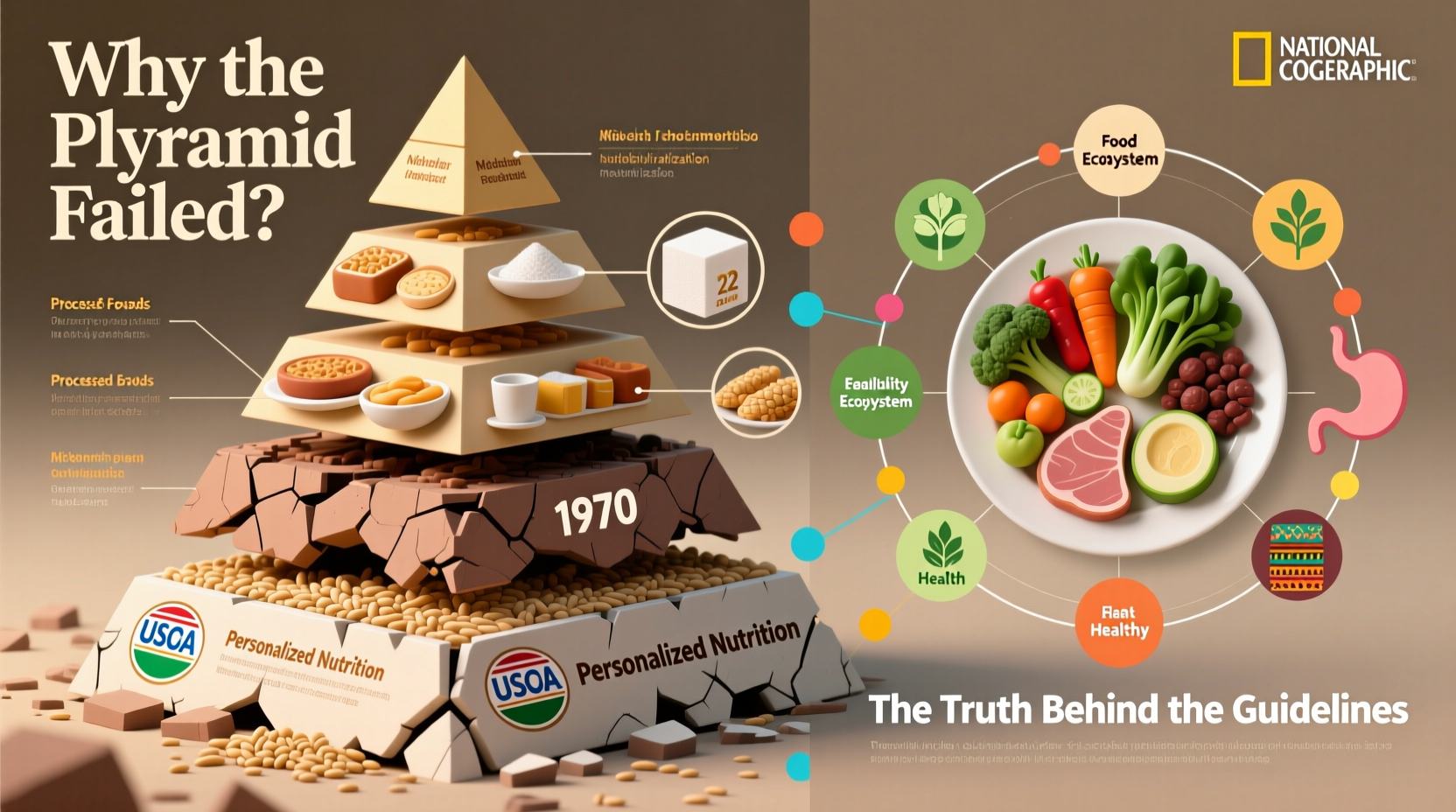
The development of the USDA’s food pyramid was not driven purely by science. Instead, it emerged from a complex interplay of agricultural lobbying, political pressure, and outdated nutritional theories. In the 1970s, Senator George McGovern’s Senate Select Committee on Nutrition and Human Needs proposed dietary guidelines that emphasized reducing fat and cholesterol intake. This recommendation alarmed the meat and dairy industries, which lobbied heavily against it.
By the time the USDA finalized the food pyramid in 1992, animal agriculture and grain producers had significantly influenced its structure. As a result, the pyramid overemphasized refined carbohydrates—like white bread, pasta, and cereals—while underrepresenting the importance of healthy fats and whole foods. Critics argue that this wasn’t a guide based on health, but one shaped by economic interests.
“We were advised to eat more grains, but much of what we got was highly processed. That set the stage for insulin resistance and weight gain.” — Dr. David Ludwig, Harvard T.H. Chan School of Public Health
Key Scientific Flaws in the Original Model
The food pyramid made several assumptions that modern nutrition science has since disproven:
- All calories are equal: The model treated a slice of white bread the same as a serving of quinoa, ignoring glycemic index and metabolic effects.
- Fats are inherently bad: It grouped all fats—saturated, trans, and unsaturated—into a single “use sparingly” category, discouraging even heart-healthy fats like those in avocados, nuts, and olive oil.
- Carbohydrates are the primary energy source: While carbs do provide energy, excessive intake—especially of refined grains—can lead to blood sugar spikes, insulin resistance, and fat storage.
- One-size-fits-all approach: The pyramid offered no distinction between sedentary individuals and active people, nor did it account for metabolic differences among populations.
Perhaps most damaging was the message that low-fat meant healthy. This led to a surge in low-fat, high-sugar processed foods marketed as “diet-friendly,” which often contained added sugars to compensate for flavor lost when fat was removed. These products contributed to increased calorie consumption and poor metabolic outcomes.
A Better Alternative: The Healthy Eating Plate
In response to the shortcomings of the food pyramid, Harvard’s School of Public Health developed the Healthy Eating Plate in 2011. Unlike the USDA’s model, it is not influenced by agricultural policy and reflects current nutritional science.
This visual guide divides a plate into proportional sections:
- Half the plate: Fruits and non-starchy vegetables
- Quarter of the plate: Whole grains
- Quarter of the plate: Healthy protein (fish, poultry, beans, nuts)
- Side: Healthy oils (olive, canola) and a glass of water, tea, or coffee
Crucially, it removes the misleading emphasis on dairy as essential, replacing it with optional servings, and explicitly warns against sugary drinks—a major contributor to obesity.
Comparison: Food Pyramid vs. Healthy Eating Plate
| Aspect | Food Pyramid (1992) | Healthy Eating Plate (Harvard) |
|---|---|---|
| Base Ingredient | Grains (6–11 servings) | Fruits & Vegetables (½ plate) |
| Fat Guidance | Limited across the board | Encourages healthy fats (oils, nuts, avocado) |
| Protein Sources | Meat, poultry, fish, eggs, nuts | Emphasizes plant-based proteins |
| Dairy | 2–3 servings recommended | Optional; water preferred over milk |
| Sugary Drinks | No mention | Explicitly discouraged |
| Influences | Agricultural industry | Nutritional science |
Other Evidence-Based Dietary Models
Beyond the Healthy Eating Plate, other frameworks offer flexible, sustainable approaches to nutrition:
- Mediterranean Diet: Rich in vegetables, legumes, whole grains, olive oil, fish, and moderate wine. Linked to lower rates of heart disease and longer lifespan.
- DASH Diet: Designed to combat hypertension, emphasizing potassium, calcium, and fiber while reducing sodium.
- Low-Carb/Whole-Food Diets: Focus on minimizing processed carbs and added sugars, prioritizing nutrient-dense foods.
These models share key principles: emphasize whole, unprocessed foods; limit added sugars and refined grains; include healthy fats; and personalize based on activity level and health goals.
Mini Case Study: Reversing Prediabetes Through Diet Change
John, a 52-year-old office worker, was diagnosed with prediabetes in 2020. His diet mirrored the old food pyramid: cereal for breakfast, a sandwich and chips for lunch, pasta for dinner. After meeting with a registered dietitian, he shifted to a plate-based model inspired by Harvard’s guide.
He replaced white bread with leafy greens, swapped pasta for roasted vegetables and lentils, and added nuts and olive oil to his meals. Within six months, his fasting blood sugar normalized, and he lost 18 pounds without calorie counting. His case illustrates how moving away from the outdated pyramid can yield real health benefits.
Practical Steps to Adopt a Modern, Balanced Diet
Transitioning from outdated guidelines to a science-backed approach doesn’t require drastic changes. Follow this checklist to build a sustainable, health-promoting diet:
- Fill half your plate with colorful vegetables and fruits at every meal.
- Choose whole grains like brown rice, quinoa, or oats over refined versions.
- Include a source of healthy protein—beans, tofu, fish, or poultry—at each meal.
- Use healthy oils (olive, avocado) instead of butter or margarine.
- Limit sugary beverages and opt for water, herbal tea, or sparkling water.
- Read labels: avoid products with high-fructose corn syrup and hydrogenated oils.
- Cook more meals at home to control ingredients and portions.
Frequently Asked Questions
Was the food pyramid ever updated?
Yes. In 2005, the USDA replaced the pyramid with “MyPyramid,” a more abstract symbol that included physical activity. However, it remained confusing and still overemphasized grains. In 2011, it was replaced again by “MyPlate,” a simpler plate diagram that aligns more closely with the Harvard model—though it still recommends daily dairy, which some experts question.
Are all fats good now?
No—but the distinction matters. Trans fats (found in partially hydrogenated oils) are harmful and should be avoided. Saturated fats (from red meat, butter) should be limited. Unsaturated fats—from avocados, nuts, seeds, and fatty fish—are beneficial and support heart and brain health.
Can I still eat grains?
Yes, but choose wisely. Whole grains like barley, farro, and whole wheat retain fiber and nutrients. Avoid refined grains such as white bread, white rice, and most breakfast cereals, which act like sugar in the body.
Conclusion: Rethink the Plate, Reclaim Your Health
The original food pyramid was a well-intentioned but deeply flawed guide that failed to keep pace with nutritional science. By promoting excessive carbohydrate intake and demonizing healthy fats, it may have done more harm than good. Today, we have better tools—models grounded in research, not politics.
Shifting to a balanced, whole-foods-based diet isn’t about following rigid rules. It’s about understanding what truly nourishes the body. Whether you adopt the Healthy Eating Plate, the Mediterranean pattern, or another evidence-based approach, the goal remains the same: to eat in a way that supports long-term vitality.




 浙公网安备
33010002000092号
浙公网安备
33010002000092号 浙B2-20120091-4
Comments
No comments yet. Why don't you start the discussion?