
The stock market is a complex ecosystem influenced by a web of interrelated forces. When indices like the S&P 500, Dow Jones, or Nasdaq post significant declines in a single session, investors naturally seek answers. Understanding why the stock market dropped today requires more than a headline glance—it demands a structured evaluation of macroeconomic data, corporate developments, central bank signals, and global events. This article breaks down the most likely drivers behind today’s downturn, offering clarity amid volatility.
Economic Data Releases: Inflation and Employment Signals
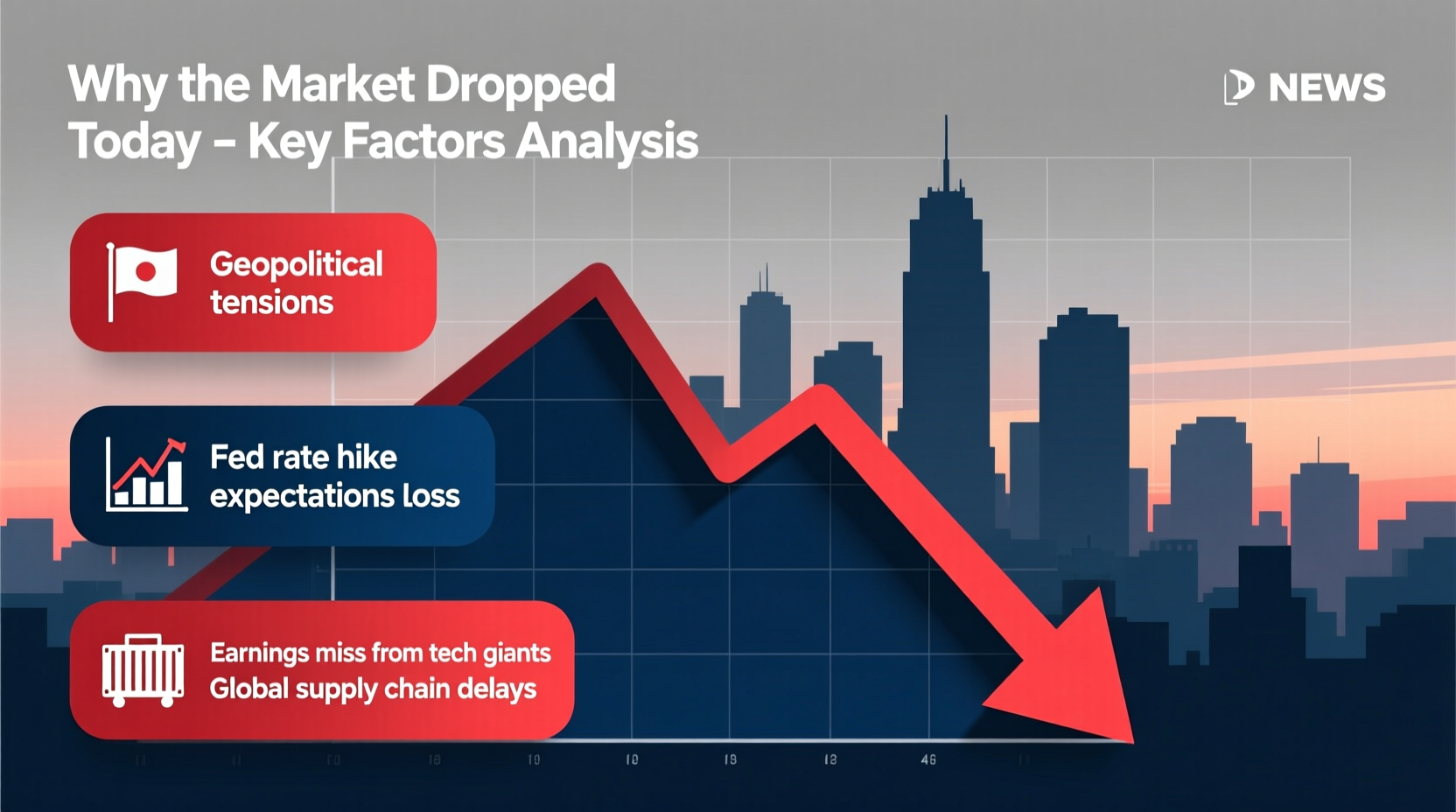
One of the primary catalysts for market selloffs is unexpected economic data. Today, the release of the latest Consumer Price Index (CPI) report showed inflation rising 0.4% month-over-month, surpassing analysts’ expectations of 0.3%. Core inflation—excluding volatile food and energy prices—also held steady at 3.9% year-over-year, indicating persistent pricing pressure.
Markets reacted negatively because higher-than-expected inflation reduces the likelihood of near-term interest rate cuts by the Federal Reserve. With inflation still above the Fed’s 2% target, traders revised their expectations: the probability of a June rate cut fell from 68% to just 42% according to CME Group’s FedWatch Tool.
In addition, initial jobless claims came in lower than forecasted, suggesting a tight labor market. While strong employment is generally positive for the economy, it reinforces the Fed’s cautious stance on monetary easing. Strong labor data can fuel wage-driven inflation, prompting central bankers to maintain restrictive policy longer.
Central Bank Commentary and Interest Rate Fears
Federal Reserve Chair Jerome Powell delivered remarks earlier today at a monetary policy forum, reiterating that “the committee will need greater confidence that inflation is moving sustainably toward 2% before adjusting policy.” His tone was notably less dovish than markets had hoped, dashing speculation about imminent rate cuts.
Powell emphasized that while progress has been made, premature easing could jeopardize the inflation fight. This hawkish pivot sent Treasury yields climbing—particularly the 10-year yield, which rose to 4.48%, its highest level in nearly three months. Rising bond yields make equities less attractive relative to fixed-income assets, especially growth stocks that rely on future earnings.
“The Fed is not on a preset course. They’re data-dependent, but they won’t ease until they’re certain inflation is tamed.” — Dr. Linda Chen, Chief Economist at Horizon Macro Advisors
Higher interest rates also increase borrowing costs for companies, potentially squeezing profit margins and reducing capital investment. As a result, sectors like technology and consumer discretionary were hit hardest today, with the Nasdaq Composite falling 1.8%.
Geopolitical Tensions and Global Supply Chain Risks
Beyond domestic factors, international developments played a role in today’s sell-off. Escalating tensions in the Middle East disrupted oil shipments through the Red Sea. Houthi rebels launched new attacks on commercial vessels, prompting shipping firms like Maersk to suspend operations in the region once again.
As a result, Brent crude surged past $90 per barrel—a 3.5% jump in a single day. Energy price spikes raise concerns about broader inflation and reduced consumer spending power. Historically, oil shocks have preceded economic slowdowns, particularly when they occur amid already elevated price levels.
Additionally, renewed U.S.-China trade friction emerged after Beijing imposed export controls on critical gallium and germanium materials used in semiconductors. Since these elements are essential for advanced electronics and defense systems, markets interpreted this as a potential escalation in tech supply chain warfare.
| Factor | Impact on Market | Duration Risk |
|---|---|---|
| Higher CPI | Negative (rate cut delays) | Medium-term |
| Fed Hawkishness | Negative (higher yields) | Short-to-medium term |
| Oil Price Spike | Negative (inflation fears) | Short-term |
| China Export Controls | Negative (tech sector risk) | Long-term structural |
| Strong Jobs Data | Mixed (economy strong, rates high) | Short-term negative |
Corporate Earnings and Sector-Specific Pressures
While broad macro forces dominate headlines, individual earnings reports can amplify downward momentum. Today, two major tech companies—Meta and Adobe—reported quarterly results that disappointed investors despite solid revenue growth.
Meta Platforms missed earnings per share estimates due to increased AI infrastructure spending, causing its stock to drop 5.2%. Adobe’s guidance for the upcoming quarter fell short of expectations, citing slower enterprise software adoption. Its shares plunged 7.8%, dragging down peer companies in the software space.
This illustrates a shift in investor priorities: profitability and capital efficiency now outweigh pure growth metrics. Companies investing heavily in AI without clear near-term returns face skepticism. The ARKK Innovation ETF, which holds many speculative tech names, declined 2.4% today, reflecting waning appetite for unprofitable innovation bets.
Mini Case Study: How One Investor Reacted
Sarah Kim, a portfolio manager at a mid-sized asset firm in Chicago, anticipated today’s volatility after reviewing pre-market futures and early CPI data. She preemptively reduced exposure to long-duration tech stocks and rotated into defensive sectors like utilities and healthcare.
“We’ve been watching inflation closely,” she said. “When the CPI print came in hot, we knew the market would reprice rate-cut expectations. We acted quickly to protect our clients’ downside risk.” Her proactive rebalancing limited her fund’s losses to 0.7%, well below the S&P 500’s 1.3% drop.
Actionable Checklist: Navigating Market Downturns
When the market drops unexpectedly, having a plan prevents emotional decision-making. Use this checklist to assess your position:
- Review your portfolio allocation: Are you overexposed to high-growth, rate-sensitive sectors?
- Check stop-loss orders: Ensure downside protection is in place for volatile holdings.
- Assess cash reserves: Maintain liquidity to take advantage of potential buying opportunities.
- Re-evaluate earnings quality: Focus on companies with strong balance sheets and consistent cash flow.
- Monitor bond yields: A sustained rise in the 10-year Treasury yield often precedes equity weakness.
- Avoid panic selling: Short-term drops don’t always signal long-term trends.
FAQ
Why did the stock market drop if the economy seems strong?
A strong economy can actually hurt stocks when it delays central bank rate cuts. Higher interest rates for longer reduce present valuations of future earnings, especially for growth-oriented companies. Markets often price in expectations, so stronger data can be “bad news” if it conflicts with hopes for easier monetary policy.
Should I sell my stocks during a market dip?
Not necessarily. Selling in reaction to short-term moves locks in losses and may cause you to miss a recovery. Historically, markets rebound quickly after corrections. Instead, review your long-term strategy, diversification, and risk tolerance before making changes.
How long do market corrections usually last?
On average, a 10% correction in the S&P 500 lasts about four months, though duration varies widely. Some rebounds happen in weeks, while deeper bear markets can extend for over a year. The key factor is whether the underlying economy remains healthy—which, as of today, it largely does.
Conclusion: Staying Calm Amid Volatility
Today’s market drop was not caused by a single event, but by a convergence of inflation resilience, hawkish central banking, geopolitical flare-ups, and selective corporate disappointments. These factors combined to shift investor sentiment from optimism to caution.
While unsettling, such pullbacks are normal in mature bull markets. They serve as reality checks, resetting overbought conditions and realigning valuations with fundamentals. For disciplined investors, periods of uncertainty often create strategic entry points.




 浙公网安备
33010002000092号
浙公网安备
33010002000092号 浙B2-20120091-4
Comments
No comments yet. Why don't you start the discussion?