
Tornado Alley, a loosely defined region stretching from northern Texas through Oklahoma, Kansas, Nebraska, and into South Dakota, is infamous for its high frequency of tornadoes. Each spring and early summer, this corridor becomes a hotspot for some of the most violent and destructive twisters on Earth. But why does this particular area see such an extraordinary concentration of tornado activity? The answer lies in a unique convergence of geographic, atmospheric, and meteorological factors that create ideal conditions for supercell thunderstorms—the primary producers of strong tornadoes.
Understanding the science behind Tornado Alley’s vulnerability not only satisfies curiosity but also enhances preparedness. By examining the interplay of air masses, terrain, and wind shear, we gain insight into one of nature’s most powerful phenomena.
The Geography of Tornado Alley
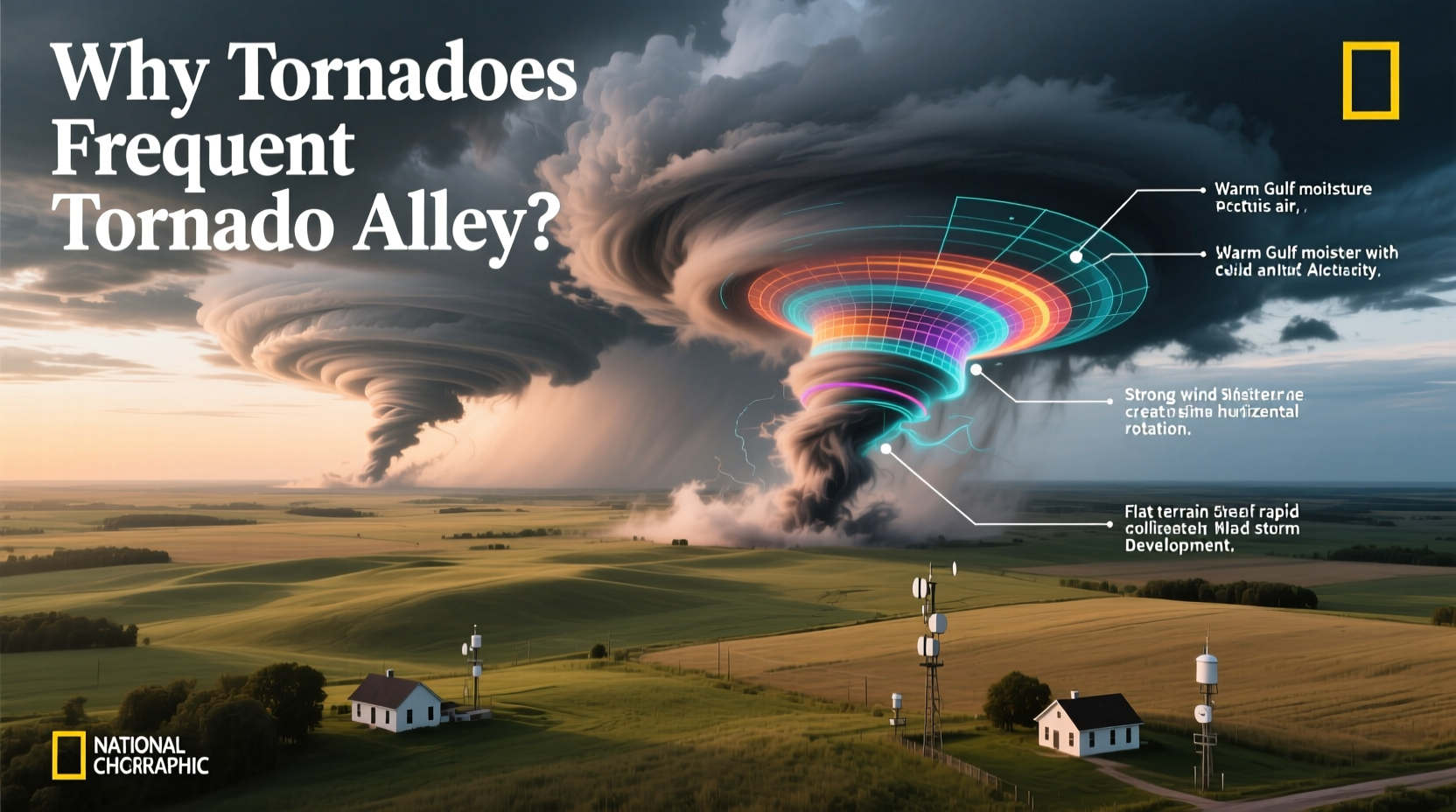
Tornado Alley isn’t officially demarcated by strict borders, but it generally includes parts of the central United States where flat terrain dominates. This geographical openness plays a crucial role in storm development. Unlike mountainous regions that disrupt airflow, the Great Plains offer unobstructed pathways for air masses to collide.
The region sits at a crossroads of three major air sources:
- Warm, moist air from the Gulf of Mexico moving northward.
- Dry, cool air descending from the Rocky Mountains and the desert Southwest.
- Cold, dry polar air sweeping down from Canada.
When these contrasting air masses converge—especially during spring—the stage is set for explosive thunderstorm development. The flat land allows storms to organize and intensify without disruption, increasing the likelihood of rotation and, ultimately, tornado formation.
How Supercell Thunderstorms Fuel Tornadoes
Not all thunderstorms produce tornadoes. The ones that do are typically supercells—long-lived, rotating storms with a deep, persistent updraft known as a mesocyclone. These systems can last for hours and travel hundreds of miles, often spawning multiple tornadoes.
Three key ingredients must align for a supercell—and potentially a tornado—to form:
- Moisture: Provided by Gulf of Mexico air, fueling storm clouds.
- Lift: A front or boundary that forces warm air upward.
- Wind shear: Changes in wind speed and direction with height, which promotes storm rotation.
In Tornado Alley, wind shear is especially potent due to the jet stream’s position during spring. As high-altitude winds blow from the west or southwest and surface winds come from the south, horizontal rotation develops. When this rotating tube of air is tilted vertically by a thunderstorm’s updraft, it forms the mesocyclone—the engine of a potential tornado.
“Tornado Alley’s location places it directly in the path of colliding air masses and under the influence of the subtropical jet stream—making it the perfect breeding ground for tornadic supercells.” — Dr. Harold Brooks, Senior Scientist at NOAA’s National Severe Storms Laboratory
Seasonal Patterns and Climate Influence
Tornado frequency in Tornado Alley peaks between April and June, though isolated events can occur year-round. This seasonal trend corresponds to the optimal alignment of atmospheric conditions:
- Gulf moisture reaches its northernmost extent.
- Cold Canadian air remains available to clash with warming southern systems.
- The jet stream begins retreating northward, lingering just over the plains.
Climate change may be influencing these patterns. Some studies suggest that while overall tornado counts haven’t increased, there’s a shift in timing and location. Outbreaks are becoming more clustered, with fewer days featuring many tornadoes and more days with none. Additionally, there’s evidence of a gradual eastward expansion of high-risk areas, sometimes referred to as “Dixie Alley,” where tornadoes often form at night and cause higher fatality rates.
| Factor | Role in Tornado Formation | Presence in Tornado Alley |
|---|---|---|
| Warm, moist air | Fuels thunderstorm updrafts | Abundant from Gulf of Mexico |
| Cold, dry air aloft | Increases instability | Regularly present from Rockies/Canada |
| Wind shear | Enables storm rotation | Strong due to jet stream dynamics |
| Flat terrain | Allows unimpeded storm movement | Predominant across the Great Plains |
| Lift mechanism | Triggers storm initiation | Fronts common in spring transitions |
Real-World Impact: The 2013 Moore, Oklahoma Tornado
A stark example of Tornado Alley’s destructive potential occurred on May 20, 2013, when an EF5 tornado struck Moore, Oklahoma. With winds exceeding 200 mph, it carved a 17-mile path of devastation, destroying homes, schools, and businesses. Tragically, 24 people lost their lives, including seven children at Plaza Towers Elementary School.
Meteorologists had issued warnings nearly 16 minutes in advance—a significant lead time—but the intensity and rapid development of the storm overwhelmed response efforts. The event highlighted both the accuracy of modern forecasting and the ongoing challenges in community preparedness.
What made this tornado so powerful? A classic setup: extreme instability from record-warm Gulf moisture, strong wind shear from a dipping jet stream, and a strong surface low-pressure system providing lift. These elements converged precisely over central Oklahoma—ground zero for Tornado Alley climatology.
Preparedness Checklist for Residents
Living in Tornado Alley demands proactive planning. Use this checklist to ensure safety before storm season begins:
- ✅ Identify a safe room (basement, storm shelter, or interior room on the lowest floor).
- ✅ Install a NOAA Weather Radio with alert capabilities.
- ✅ Practice tornado drills with household members every spring.
- ✅ Keep emergency supplies stocked (water, flashlight, batteries, first aid kit).
- ✅ Know the difference between a tornado watch (conditions favorable) and a tornado warning (tornado detected or imminent).
- ✅ Document property and valuables for insurance purposes.
Frequently Asked Questions
Why doesn’t Tornado Alley include Florida, even though it has many tornadoes?
Florida actually experiences a high number of tornadoes, particularly from tropical storms and hurricanes. However, most are weak (EF0–EF1) and short-lived. Tornado Alley is defined by the frequency of strong, long-track tornadoes spawned by supercells—not total count. Florida’s tornadoes form under different mechanisms and lack the intensity typical of Great Plains twisters.
Is climate change making tornadoes worse in Tornado Alley?
There is no conclusive evidence that climate change is increasing tornado frequency or intensity. However, research suggests shifts in behavior: tornadoes may be occurring in larger outbreaks, spreading eastward, and happening earlier in the year. Scientists continue to study how warming temperatures affect atmospheric instability and shear—the two opposing factors in tornado formation.
Can tornadoes be predicted days in advance?
While meteorologists can identify periods of heightened risk several days ahead, pinpointing exactly when and where a tornado will touch down remains limited to hours—or even minutes—before impact. Forecast models can signal favorable environments, but the exact trigger (like a specific thunderstorm) is too small-scale to predict far in advance.
Conclusion: Respecting Nature’s Power Through Knowledge
The recurring fury of tornadoes in Tornado Alley is not random—it’s the result of a precise and powerful natural formula. Warm air, cold air, wind shear, and open terrain combine each spring to make this region the most tornado-prone in the world. While we cannot prevent these storms, understanding the science behind them empowers communities to prepare, respond, and recover more effectively.
Advances in radar technology, forecasting, and public warning systems have saved countless lives. Yet vigilance remains essential. Whether you live in the heart of the Plains or simply seek to understand extreme weather, recognizing the forces at play fosters respect for nature’s complexity and strength.




 浙公网安备
33010002000092号
浙公网安备
33010002000092号 浙B2-20120091-4
Comments
No comments yet. Why don't you start the discussion?