
Traffic lights are a universal presence in modern life. Whether you're driving, cycling, or walking, these three-colored signals guide movement and maintain order on roads worldwide. But have you ever wondered why the colors red, yellow (or amber), and green were chosen? The answer lies at the intersection of physics, human perception, historical precedent, and behavioral psychology. Understanding the reasoning behind these colors reveals how deeply engineered they are for safety, clarity, and efficiency.
The Origins of Color-Coded Signals
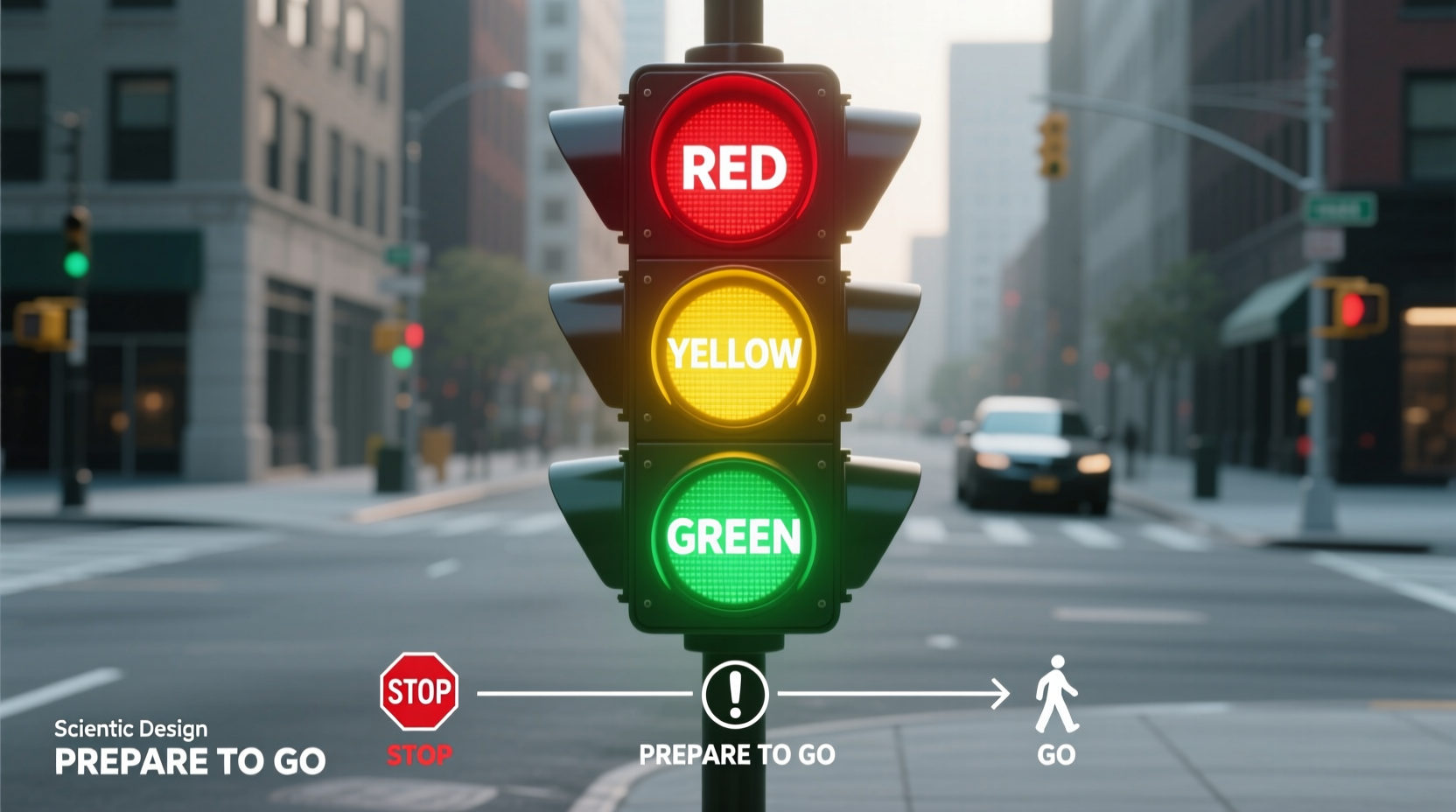
The use of colored signals predates automobiles by over a century. In the early 1800s, railroads began using colored lanterns to direct train movements. Red was already associated with danger or stop due to its long-standing symbolic use in warnings and military signals. Green indicated “proceed,” while white meant “caution” — though this later caused confusion when white lights were mistaken for stars or distant lamps.
In 1912, police officer Lester Farnsworth Wire in Salt Lake City installed one of the first electric traffic lights. It used only red and green, modeled after railroad signals. By 1920, Detroit police officer William Potts added the yellow light to create a transition phase between green and red, reducing abrupt stops and collisions. This tri-color system quickly became standard across the U.S. and eventually adopted globally.
“Choosing the right colors wasn’t arbitrary—it was about maximizing visibility and minimizing reaction time.” — Dr. Alan Reyes, Human Factors Engineer at the Transportation Research Board
Why Red Means Stop: Physics and Psychology Combined
Red is universally recognized as the signal to stop. This isn’t just cultural—it’s rooted in biology and optics. Among visible light wavelengths, red has the longest wavelength (approximately 620–750 nanometers), which means it scatters less in the atmosphere than shorter-wavelength colors like blue or violet. As a result, red remains highly visible over long distances and through fog, rain, or haze.
Psychologically, red triggers an alert response. Studies in color psychology show that red increases heart rate and attention, making it ideal for signaling danger or urgency. Because humans instinctively associate red with fire, blood, or warning signs, it commands immediate action—critical when stopping a moving vehicle.
The Role of Yellow: A Warning, Not Just a Pause
Yellow—or more accurately, amber—is not merely decorative. It serves a precise function: to warn drivers that the signal is about to change from green to red. Introduced to prevent sudden stops and reduce rear-end collisions, the yellow phase gives motorists time to decide whether to stop safely or continue through the intersection if already too close.
Amber light sits in the middle of the visible spectrum (around 570–590 nm) and is highly distinguishable from both red and green. Unlike red, it doesn’t provoke panic; unlike green, it doesn’t encourage forward motion. Instead, it creates a cognitive pause—activating caution without triggering full-stop reflexes.
Duration of the yellow phase varies based on speed limits and intersection size, typically lasting 3 to 6 seconds. Too short, and drivers may run the red light; too long, and impatience builds, leading to risky behavior.
Green for Go: Clarity and Natural Association
Green signals “go” because it contrasts sharply with red and stands out in natural environments. With a wavelength of about 495–570 nm, green is easily detectable by the human eye, especially during daylight. Our visual system is most sensitive to green light, which falls near the peak sensitivity of the human photopic (daylight) vision curve.
Culturally, green also aligns with concepts of safety, nature, and progress. Think “green light” as approval, or “going green” as environmentally sound. These associations reinforce its role as a permission signal. However, early systems faced challenges: some people with color vision deficiencies struggled to distinguish red from green, prompting innovations like position-based signals and later LED enhancements.
| Color | Wavelength Range | Primary Function | Visibility Conditions |
|---|---|---|---|
| Red | 620–750 nm | Stop | Best in fog, rain, low light |
| Yellow (Amber) | 570–590 nm | Caution/Transition | High daytime contrast |
| Green | 495–570 nm | Go | Optimal in daylight |
Designing for All Users: Accessibility and Global Standards
While the red-yellow-green sequence is nearly universal, designers must account for color vision deficiency (CVD), affecting roughly 1 in 12 men and 1 in 200 women globally. To address this, many countries use positional cues: red is always on top, green on the bottom, and yellow in the middle. This allows individuals who cannot differentiate colors to interpret signals by location.
Modern LED traffic lights enhance accessibility further. They offer brighter, more consistent illumination and can be programmed with extended yellow phases or countdown timers. Some cities, like Tokyo and Taipei, use distinctive shapes—such as arrowheads or bicycles—to indicate turning permissions alongside standard lights.
Mini Case Study: London’s Adaptive Signal System
In central London, Transport for London (TfL) implemented adaptive traffic signals that adjust timing based on real-time congestion data. While the color logic remains unchanged, sensors detect approaching buses, emergency vehicles, and pedestrian flows. During rush hour, green phases extend slightly for high-occupancy lanes. Despite technological advances, TfL maintains strict adherence to red-yellow-green sequencing to avoid public confusion. User feedback shows that even small deviations in expected patterns cause hesitation, proving how deeply ingrained these color meanings are.
Step-by-Step: How Traffic Light Cycles Work
A typical traffic light cycle follows a carefully timed sequence designed for safety and flow:
- Green Phase: Vehicles may proceed if the intersection is clear. Duration depends on traffic volume and road type.
- Yellow Phase: Begins after green ends. Drivers should prepare to stop unless unsafe to do so.
- Red Phase: All traffic must stop. Pedestrians may begin crossing if signaled.
- Red + Yellow (in some countries): Indicates upcoming green, preparing drivers to move—used in Europe but not North America.
- Back to Green: Cycle repeats, often synchronized with adjacent intersections to promote smooth travel.
This sequence prevents conflicting movements and reduces collision risks at crossroads. Timing algorithms now use AI to optimize flow during peak hours, but the core color logic remains unchanged since the 1920s.
Frequently Asked Questions
Why don't traffic lights use blue or purple?
Blue and purple have shorter wavelengths and scatter more in the atmosphere, reducing visibility in bad weather. Blue is also used for emergency vehicle identification, avoiding confusion. Purple has no strong psychological association with traffic control and could be mistaken for malfunctioning lights.
Can animals see traffic light colors the same way humans do?
No. Most mammals, including dogs and cats, have dichromatic vision and struggle to distinguish red from green. However, they rely more on brightness and movement than color when navigating streets. This is why animal crossings often use flashing lights or audible signals instead of color alone.
Are there places where traffic lights aren’t red, yellow, and green?
The color trio is standardized under the Vienna Convention on Road Signs and Signals, adopted by over 70 countries. A few nations use slight variations in timing or add supplementary symbols, but no major jurisdiction uses different primary colors. Consistency ensures international drivers can navigate safely.
Conclusion: Colors That Save Lives
The red-yellow-green traffic light system endures because it works—blending scientific precision with intuitive human response. These colors were not chosen by chance but refined through decades of engineering, observation, and safety research. They communicate instantly, transcend language barriers, and protect millions every day.
Next time you approach an intersection, remember: those simple lights represent a triumph of design, psychology, and public safety. By understanding their meaning, we become not just better-informed road users, but active participants in a shared system of order and care.




 浙公网安备
33010002000092号
浙公网安备
33010002000092号 浙B2-20120091-4
Comments
No comments yet. Why don't you start the discussion?