
For many, the post-shower hair routine ends at rinse-out conditioner. But skipping the next step—leave-in conditioning—means missing out on long-term hydration, protection, and manageability. Unlike traditional conditioners that are washed away, leave-in formulas stay in your hair, offering continuous nourishment from root to tip. Whether you have curly, fine, coarse, or color-treated hair, incorporating a leave-in conditioner can transform your hair health. This guide breaks down why it matters, who benefits most, and how to use it effectively.
The Science Behind Leave-In Conditioners
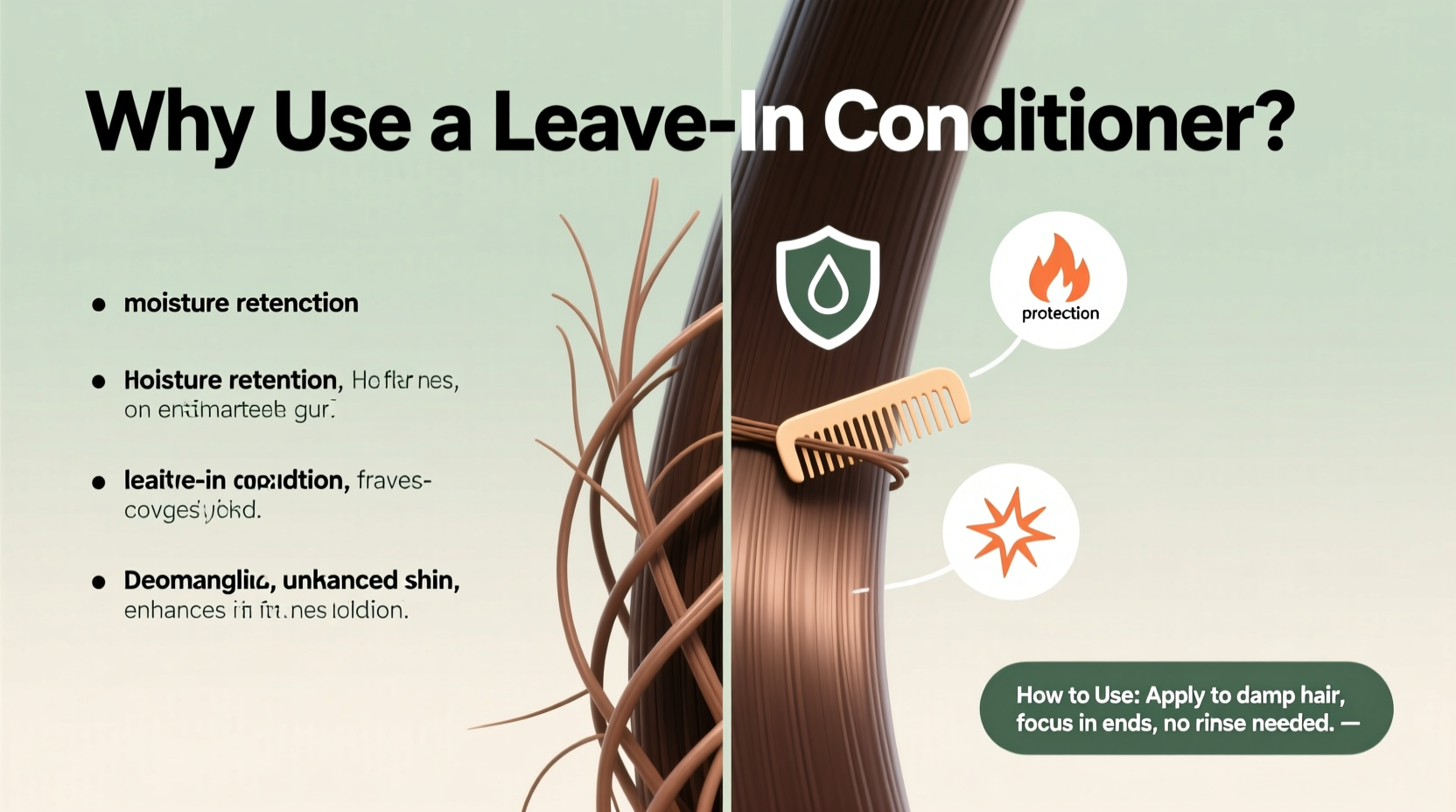
Leave-in conditioners are formulated with lighter emulsions than their rinse-out counterparts. They contain humectants like glycerin, emollients such as silicones or natural oils, and film-forming agents that help seal moisture into the hair shaft without weighing it down. Because they remain on the hair, they create a protective barrier against environmental stressors like UV exposure, pollution, and heat styling.
Unlike rinse-out conditioners that primarily work during the brief time they're applied, leave-ins provide sustained benefits. They improve elasticity, reduce friction between strands (which lowers breakage), and help smooth the cuticle layer for enhanced shine and softness.
“Leave-in conditioners are essential for anyone dealing with dryness, frizz, or damage. They act like daily moisturizers for your hair, just as lotion does for your skin.” — Dr. Lena Torres, Trichologist & Hair Research Specialist
Top 5 Benefits of Using a Leave-In Conditioner
- Deep, Lasting Hydration: Continuously replenishes moisture, especially beneficial for curly, coily, or chemically treated hair.
- Frizt Control: Seals the hair cuticle and reduces static, keeping flyaways under control in humid or dry climates.
- Heat Protection: Many formulas include thermal protectants that shield hair from blow dryers, flat irons, and curling tools.
- Detangling Made Easier: Lubricates strands to reduce combing force, minimizing split ends and breakage during styling.
- Improved Manageability: Makes hair softer, smoother, and easier to style—ideal for busy mornings or complex routines.
Who Should Use a Leave-In Conditioner?
While nearly all hair types can benefit, certain textures and conditions see dramatic improvements:
| Hair Type | Primary Benefit | Recommended Formula |
|---|---|---|
| Curly/Coily | Moisture retention & definition | Cream-based or spray with shea butter |
| Fine/Straight | Lightweight hydration | Leave-in sprays or milks |
| Thick/Coarse | Softening & manageability | Richer creams or butters |
| Color-Treated | Protection from fading & dryness | UV-protectant + sulfate-free formula |
| Damaged or Heat-Styled | Repair & heat shielding | Protein-enriched with ceramides |
If your hair feels brittle, tangles easily, or lacks shine, a leave-in conditioner is not optional—it's necessary. Even those with oily scalps can benefit by applying product only to mid-lengths and ends, avoiding the roots.
How to Use a Leave-In Conditioner: Step-by-Step Guide
- Wash and gently towel-dry: After shampooing and rinsing out your regular conditioner, squeeze excess water with a microfiber towel or cotton T-shirt. Hair should be damp, not dripping.
- Choose the right amount: Start with a dime-sized amount for short hair, quarter-sized for medium, and a nickel to quarter-sized dollop for long or thick hair. Adjust based on density.
- Emulsify in hands: Rub the product between palms to warm and distribute evenly before application.
- Apply from mid-length to ends: Focus on areas most prone to dryness and damage. For curly hair, use the \"praying hands\" method to smooth product along strands.
- Optional: Comb through: Use a wide-tooth comb to ensure even distribution and detangle knots gently.
- Style as usual: Proceed with air drying, diffusing, or heat styling. The leave-in will continue to protect throughout the day.
Avoid These Common Mistakes
- Using too much product: Can lead to buildup, greasiness, or limp hair. Less is often more.
- Applying to soaking wet hair: Dilutes the formula and reduces effectiveness. Towel off first.
- Skipping distribution: Clumping in one area causes uneven results. Always spread thoroughly.
- Using on dirty hair: Buildup blocks absorption. Clean hair absorbs leave-ins better.
- Ignoring scalp contact: Avoid applying directly to the scalp unless specified, especially for oily or fine hair types.
Real-Life Example: Transformation in 4 Weeks
Sophia, a 34-year-old teacher with shoulder-length wavy hair, struggled with post-wash frizz and constant tangling. She used a rinse-out conditioner but skipped leave-ins, assuming they were only for curly hair. After switching to a lightweight leave-in milk, she noticed changes within days. Her hair dried smoother, required less brushing, and felt softer. By week three, she reduced her heat styling frequency because her waves looked defined without effort. At four weeks, a salon stylist commented on improved hair integrity and recommended continuing the routine for long-term strength.
This isn’t an isolated case. Consistent use of leave-in conditioners builds cumulative benefits—especially when matched to hair type and lifestyle.
Checklist: Getting Started With Leave-In Conditioner
- ☐ Assess your hair type and concerns (dryness, frizz, damage)
- ☐ Choose a formula suited to your texture (spray, milk, cream, balm)
- ☐ Perform a patch test if sensitive to ingredients
- ☐ Wash and towel-dry hair until damp
- ☐ Apply appropriate amount from mid-lengths to ends
- ☐ Style as usual and observe results over 7–10 days
- ☐ Adjust quantity or switch formulas if greasy or ineffective
Frequently Asked Questions
Can I use leave-in conditioner every day?
Yes, most leave-in conditioners are designed for daily use. If you wash your hair frequently, apply after each wash. For non-wash days, a light reapplication can refresh dry ends. Watch for buildup and clarify weekly if needed.
Is leave-in conditioner good for thin hair?
Absolutely—but choose a lightweight formula like a spray or fluid. Heavy creams can weigh down fine strands. Apply only to the lower two-thirds of the hair to maintain volume at the roots.
Can I use leave-in conditioner on dry hair?
Yes. Many people use spritz-style leave-ins to revive dry, tangled, or frizzy hair between washes. It’s especially useful before bedtime to protect hair during sleep or before sun exposure.
Final Thoughts and Action Steps
Integrating a leave-in conditioner into your routine is one of the simplest yet most effective upgrades for hair health. It bridges the gap between cleansing and styling, offering protection, moisture, and manageability that lasts all day. The key is choosing the right product for your hair type and applying it correctly—not too much, not too little, and always on damp, clean hair.
Start today: examine your current hair challenges, pick a well-formulated leave-in tailored to your needs, and follow the application steps consistently. Track changes over two to four weeks. You’ll likely notice fewer tangles, less breakage, and a noticeable improvement in texture and shine.




 浙公网安备
33010002000092号
浙公网安备
33010002000092号 浙B2-20120091-4
Comments
No comments yet. Why don't you start the discussion?