
Grammar is often viewed as a rigid set of rules imposed by tradition, but its true value lies in function — not form. Understanding *why* grammatical structures exist and how they shape meaning transforms grammar from a memorization task into a powerful communication tool. When writers and speakers grasp the reasoning behind subject-verb agreement, punctuation placement, or sentence structure, they gain precision, confidence, and adaptability in their expression.
This deeper awareness doesn’t just prevent errors; it enables intentional choices. Whether crafting an email, drafting a novel, or delivering a presentation, knowing the purpose behind grammatical conventions allows for more effective and persuasive communication.
The Functional Purpose of Grammar
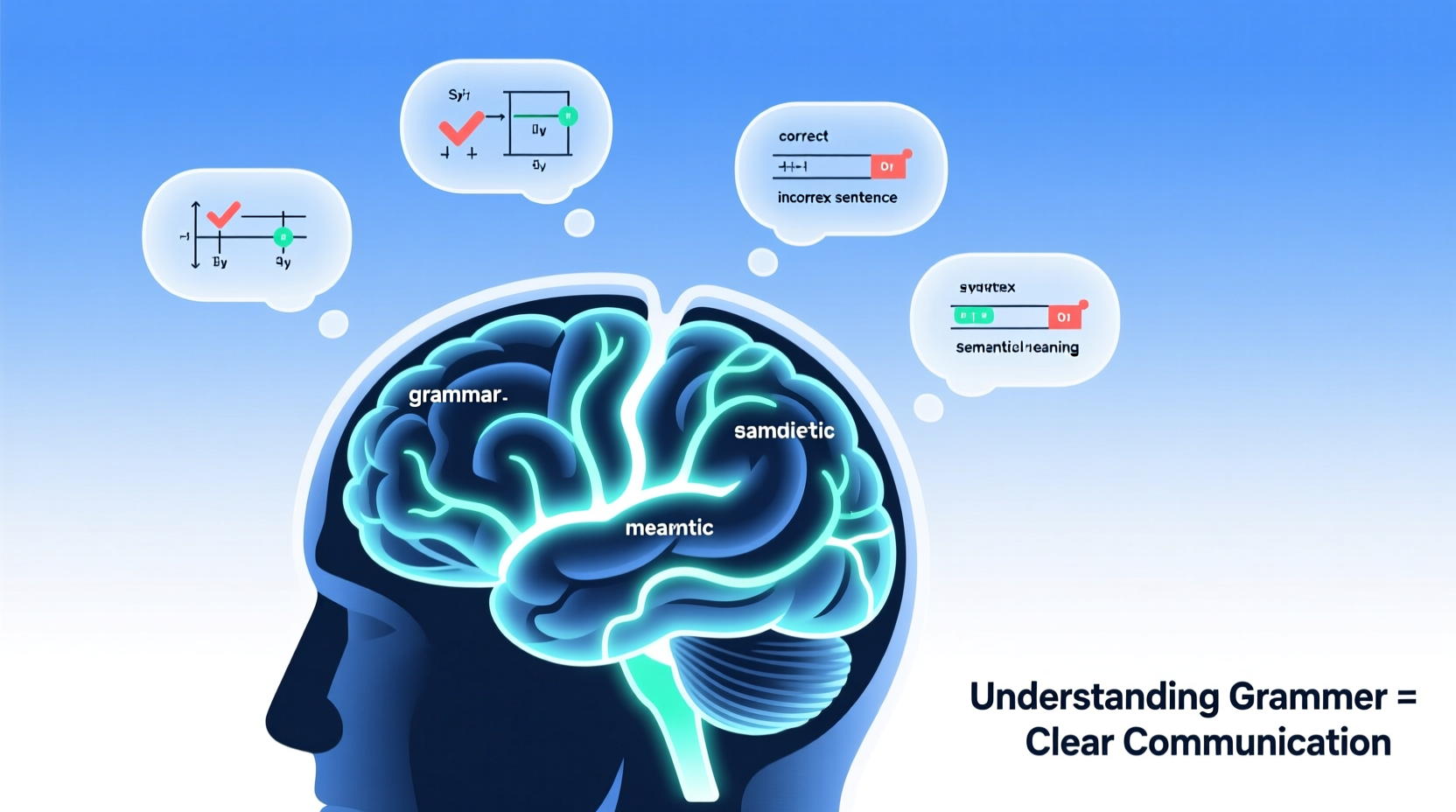
At its core, grammar exists to ensure clarity and consistency in language. Without shared structural norms, messages become ambiguous or misunderstood. Consider the classic example: “Let’s eat, Grandma” versus “Let’s eat Grandma.” The comma isn’t merely a rule — it prevents cannibalism (at least on paper).
Every grammatical rule serves a communicative purpose:
- Punctuation guides rhythm and meaning, signaling pauses, emphasis, or separation of ideas.
- Syntax (sentence structure) determines logical flow and emphasis.
- Tense consistency preserves temporal coherence.
- Agreement rules maintain logical relationships between subjects, verbs, and objects.
When these elements are applied without understanding, mistakes creep in. But when users comprehend the underlying logic, they can self-correct and adapt rules to context — such as choosing passive voice for objectivity in scientific writing, or using fragments deliberately for dramatic effect in creative prose.
Improved Writing Through Intentional Choices
Writers who understand grammatical reasoning make deliberate decisions rather than defaulting to habit or imitation. For instance, consider the impact of varying sentence length:
| Sentence Structure | Effect | Best Used In |
|---|---|---|
| Short, simple sentences | Urgency, clarity, impact | News headlines, action scenes |
| Complex sentences with subordination | Nuance, cause-effect relationships | Academic writing, analytical essays |
| Compound-complex structures | Detailed elaboration, layered ideas | Literary prose, reports |
Knowing *why* a complex sentence works — because it links dependent clauses to show hierarchy of ideas — empowers a writer to use it effectively. This contrasts sharply with mechanically stringing together long sentences in hopes of sounding “sophisticated,” which often leads to confusion.
“Grammar is not about policing correctness; it’s about equipping people to express complex thoughts clearly.” — Dr. Lydia Chen, Linguistics Professor at Stanford University
Common Misconceptions About Grammar Rules
Many so-called “rules” are actually outdated prescriptive habits with no basis in modern usage. These myths persist because they’re taught without context. Here are three common examples:
- You must never split infinitives. Originating from Latin grammar, this has no functional justification in English. “To boldly go” sounds more natural and emphatic than “To go boldly.”
- Never start a sentence with a conjunction. And yet, this practice adds rhythm and emphasis. But, it should be used judiciously. Because overuse weakens impact.
- Always avoid passive voice. Passive constructions are essential in scientific writing (“The solution was heated”) or when the actor is unknown (“Mistakes were made”).
Understanding the *purpose* of active vs. passive voice — control over focus and responsibility — allows writers to choose appropriately, rather than follow blanket prohibitions.
Mini Case Study: From Confusion to Clarity
Carlos, a non-native English speaker working in international business, struggled with reports being returned for “unclear messaging.” He followed grammar rules strictly but lacked contextual understanding. After working with a communications coach, he learned that his overuse of passive voice obscured accountability, and his run-on sentences buried key points.
By studying *why* certain structures enhance clarity — such as placing the main idea early in a sentence and using active voice to assign responsibility — Carlos revised his approach. His next report used concise, active constructions: “The team completed Phase One ahead of schedule” instead of “Phase One was completed ahead of schedule by the team.” Feedback improved dramatically, with colleagues noting greater transparency and confidence in his tone.
Building Long-Term Language Mastery
Mechanical grammar drills may help pass tests, but lasting proficiency comes from comprehension. When learners understand the reasoning behind grammatical choices, they internalize patterns and apply them flexibly across contexts.
A step-by-step method to develop this deeper understanding includes:
- Analyze real texts — Examine well-written articles or essays. Identify sentence structures and ask: Why did the author choose this form?
- Revise with purpose — Rewrite sentences using different structures. Compare clarity, tone, and impact.
- Ask “what happens if?” — Remove a comma, change verb tense, or alter word order. Observe how meaning shifts.
- Consult usage guides, not just rulebooks — Resources like The Cambridge Guide to English Usage explain variations and historical context.
- Seek feedback focused on meaning — Ask readers: Was my point clear? Where did you get confused?
Checklist: Developing Grammatical Awareness
- ✅ Identify the function of each punctuation mark in your latest piece.
- ✅ Highlight all instances of passive voice — justify each one or revise.
- ✅ Read your work aloud to detect awkward phrasing caused by poor syntax.
- ✅ Replace two vague sentences with precise, active constructions.
- ✅ Explain one grammar choice you made (e.g., semicolon use) based on meaning, not rules.
FAQ
Isn’t grammar just about avoiding mistakes?
No. While error reduction is a benefit, grammar’s primary role is to support clear, effective communication. Understanding it enables better expression, not just fewer corrections.
Can I break grammar rules once I understand them?
Yes — intentionally. Just as master painters learn techniques before experimenting, skilled writers follow conventions to build trust, then deviate for stylistic effect (e.g., fragments in dialogue). Random rule-breaking confuses; informed deviation enhances.
Does this apply to informal writing too?
Absolutely. Even in emails or social media, clarity matters. Knowing the rules helps you gauge how much to relax them without sacrificing understanding. A text to a friend might omit formal punctuation, but still rely on grammatical logic to convey tone and intent.
Conclusion
Understanding the reasons behind grammatical usage transforms language from a minefield of arbitrary rules into a dynamic system of meaning-making. It fosters precision, builds credibility, and empowers confident communication across contexts. Whether teaching, presenting, or writing creatively, those who grasp the “why” behind grammar wield language with purpose and skill.




 浙公网安备
33010002000092号
浙公网安备
33010002000092号 浙B2-20120091-4
Comments
No comments yet. Why don't you start the discussion?