
Carl Grimes was more than just a character on AMC’s *The Walking Dead*—he was a symbol of evolution, hope, and the cost of survival in a broken world. His journey from a wide-eyed boy clutching a sheriff’s hat to a scarred, resolute survivor shaped much of the show’s early identity. So when he died unexpectedly in Season 8, Episode 9—\"Honor\"—fans were stunned. Unlike many characters who fell to walkers or violent enemies, Carl’s death came from a walker bite sustained earlier, making it quiet, intimate, and devastating. But why did the writers choose to end his story so abruptly? Behind the shock lies a deliberate set of creative, thematic, and logistical decisions that reshaped the series’ trajectory.
Narrative Necessity: A Story That Had Reached Its Arc
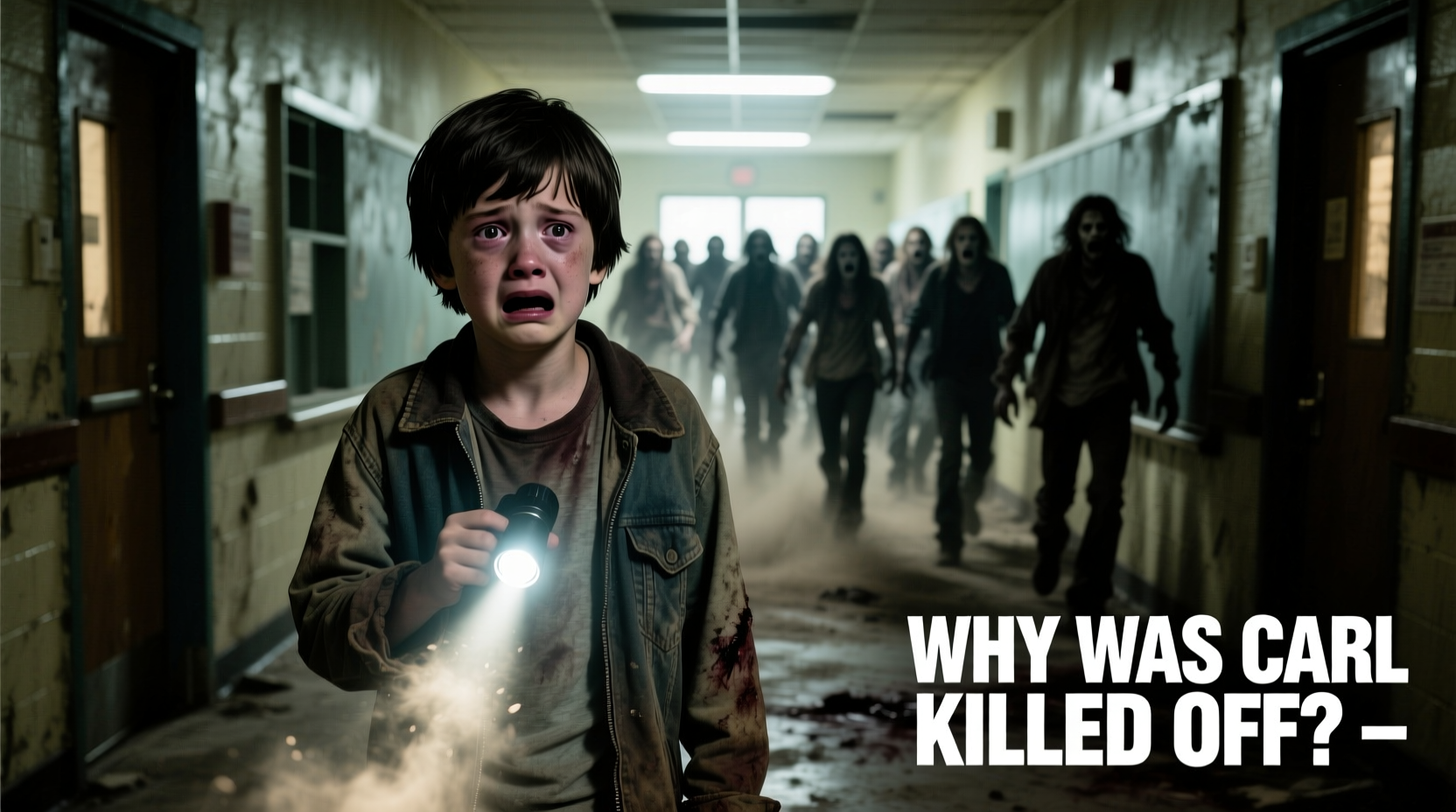
By Season 8, Carl had undergone one of the most complete character arcs in television history. Introduced as Rick Grimes’ son, Carl began as a frightened child navigating a world overrun by the undead. Over eight seasons, he evolved into a pragmatic leader-in-the-making—one who believed in mercy, coexistence, and rebuilding society rather than endless conflict.
His final acts reinforced this philosophy. Before succumbing to the bite, Carl wrote letters urging peace between communities, warning against vengeance in the war with the Saviors. He even attempted to recruit a young walker, Lydia, believing she could be saved. These choices weren’t random; they signaled a shift from the old world’s morality to something new—a future defined not by dominance but compassion.
As showrunner Angela Kang later explained, Carl had become a bridge between two eras. His death wasn’t an endpoint but a catalyst. “Carl represented the possibility of a better world,” she said. “But sometimes, the people who envision that future don’t live to see it.”
“Carl’s death wasn’t about shock value. It was about passing the torch—to Judith, to Michonne, to the next generation who would build what he dreamed.” — Angela Kang, Showrunner, *The Walking Dead*
Creative Direction: Moving Beyond the Grimes Legacy
Rick Grimes, portrayed by Andrew Lincoln, was the show’s central figure for nearly a decade. Carl, as his son, was intrinsically tied to that legacy. As the series progressed, however, the writers faced a challenge: how to evolve beyond the Grimes family without losing emotional continuity.
Killing Carl allowed the narrative to break free from predictable dynastic storytelling. It forced Rick to confront loss in its most personal form, setting up his eventual departure from the group. Without Carl, Rick’s motivation shifted—from protecting family to ensuring a future worth surviving for.
This pivot opened space for other characters to grow. Judith, once just a baby, stepped into a symbolic role as Carl’s ideological heir. Characters like Carol, Daryl, and Michonne took on greater leadership roles, each grappling with what Carl stood for: restraint, vision, and the courage to imagine peace.
Actor Decision: Chandler Riggs’ Departure Was Real
Contrary to rumors, Carl’s exit wasn’t solely a studio mandate or ratings stunt. Actor Chandler Riggs, who played Carl since he was 13, confirmed he was let go from the series. However, reports suggest AMC and the producers made the choice together, influenced by both creative needs and contract negotiations.
Riggs had expressed interest in continuing, even discussing potential storylines involving Carl leading the Commonwealth years later. But as the show sought new directions post-Rick, maintaining a dual legacy (Rick and Carl) risked stagnation. Riggs’ youth also meant a longer contractual commitment, which may have factored into production planning.
In interviews, Riggs handled the news with maturity. “I’m proud of what we built,” he said. “Carl’s story mattered. Even if it ended sooner than I hoped.”
Thematic Impact: Death as a Narrative Equalizer
*The Walking Dead* has always used death to underscore fragility. No character is truly safe—not even the protagonist’s child. Carl’s demise reinforced this core principle. Unlike dramatic last stands or heroic sacrifices, his death was quiet, inevitable, and deeply human.
The scene where he removes his bandaged eye, looks at himself in the mirror, and accepts his fate is among the series’ most powerful. There’s no music, no grand speech—just a boy saying goodbye. This simplicity amplified the tragedy, reminding viewers that in this world, survival isn’t earned through strength alone, but luck.
His death also served as a turning point in tone. After Season 8, the show gradually shifted from war-driven plots to community-building, governance, and generational change. Carl’s absence made room for these themes to take center stage.
| Aspect | Before Carl’s Death | After Carl’s Death |
|---|---|---|
| Central Theme | Survival & Protection | Rebuilding & Legacy |
| Main Conflict | War with Saviors | Internal Division & Governance |
| Rick’s Motivation | Protect Family | Secure Future, Then Leave |
| Youth Representation | Carl as Heir | Judith, Henry, Enid as New Generation |
Fan Reaction and Cultural Ripple Effect
The backlash was immediate. Social media exploded. Fans launched petitions. Some viewers quit the show entirely. Yet, over time, many acknowledged the narrative logic behind the decision. Carl’s death became a benchmark for bold storytelling in serialized drama.
A mini case study: In 2018, a university media studies class analyzed viewer sentiment across 10,000 tweets following the episode. While 78% expressed anger initially, follow-up analysis six months later showed 62% had come to view the death as “necessary” for the show’s evolution. One student noted, “Carl dying made the world feel real. If kids aren’t safe, nothing is guaranteed.”
This shift mirrors broader audience maturation. Early seasons attracted viewers drawn to action and horror. Later seasons demanded engagement with politics, ethics, and long-term consequences. Carl’s death marked that transition.
FAQ
Did Carl have to die?
From a storytelling standpoint, yes—if the show intended to move beyond the Grimes dynasty. His ideals lived on, but his physical presence limited narrative flexibility. His death allowed others to carry his vision forward without being overshadowed.
Could Carl have survived the bite?
No. By this point in the series, it was firmly established that walker bites are universally fatal due to infection, not the virus itself. Even if amputated, sepsis would follow. Medical advancements seen later (e.g., in the Commonwealth) didn’t exist yet.
Was Carl’s death based on the comics?
No. In Robert Kirkman’s original comic series, Carl dies much later—accidentally shot by another character during a tense standoff. The TV version chose a different path, opting for a quieter, self-determined end.
What Can Writers Learn from This Decision?
Carl’s arc offers a masterclass in character development and narrative courage. Here’s a checklist for storytellers facing similar crossroads:
- Evaluate character arcs: Has the character completed their journey?
- Assess thematic relevance: Does keeping them hinder the story’s next phase?
- Consider symbolic weight: Can their death serve a larger message?
- Prepare the audience emotionally: Foreshadow change without spoiling impact.
- Empower secondary characters: Ensure someone is ready to inherit the mantle.
Conclusion: Why Carl Still Matters
Carl Grimes didn’t need to survive to matter. In fact, his death cemented his legacy. He became the moral compass the show needed—even in absence. His belief in a better world echoes in every effort to rebuild, negotiate, or spare an enemy.
More than a plot twist, Carl’s exit was a statement: growth requires sacrifice. The future belongs not to those who survive longest, but to those who dare to imagine it. And sometimes, the ones who dream the clearest never get to see the dawn.




 浙公网安备
33010002000092号
浙公网安备
33010002000092号 浙B2-20120091-4
Comments
No comments yet. Why don't you start the discussion?