
In an era when news traveled slowly and television broadcasts were limited to scheduled programming, a revolutionary idea emerged: what if people could access live news at any moment? This vision led to the creation of the Cable News Network—CNN—the first 24-hour cable news channel in the United States. Founded on the principle of delivering real-time information, CNN transformed how the world consumes news. Its inception marked a turning point in journalism, setting new standards for immediacy, global reach, and continuous coverage.
The Origins of CNN: A Vision for Continuous News
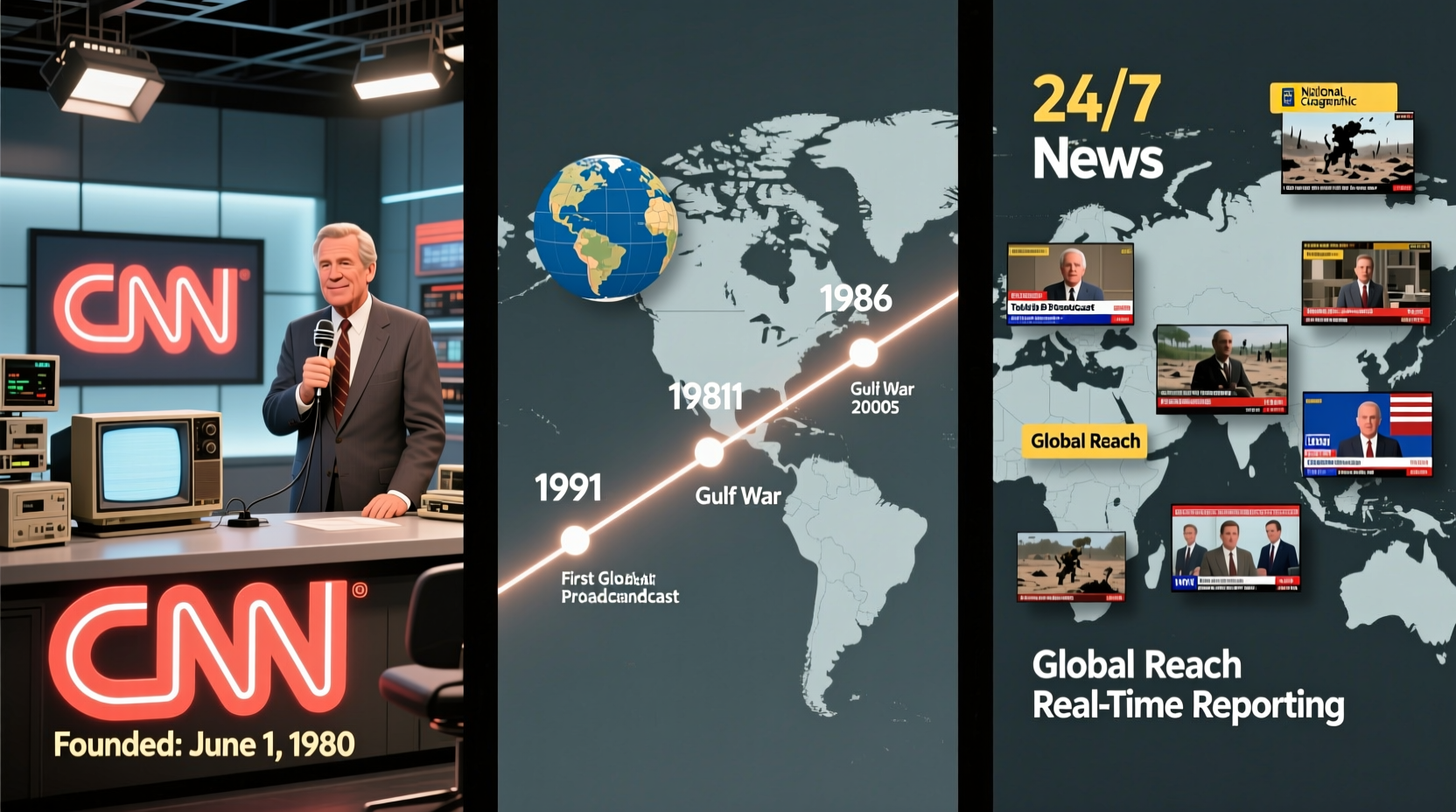
CNN was launched on June 1, 1980, by media entrepreneur Ted Turner. At the time, Turner owned a small but growing network of stations under the umbrella of his company, Turner Broadcasting System (TBS). The concept behind CNN was radical: provide uninterrupted news coverage, every hour of every day, using satellite technology and a dedicated team of journalists.
Prior to CNN’s debut, most television networks aired news only during fixed timeslots—typically morning, evening, and late-night broadcasts. Major events outside these windows often went unreported until the next scheduled bulletin. Turner saw this gap as an opportunity. He believed that with advances in satellite communication and cable distribution, a constant stream of news was not only possible but necessary in a fast-moving world.
The initial skepticism was immense. Critics dubbed it the “Chicken Noodle Network” and doubted whether audiences would want or need nonstop news. Advertisers were hesitant. Even within Turner’s own organization, many questioned the viability of such a venture. But Turner remained resolute. As he later said:
“We’re going to go into every home in America. We’re going to report the news live, no matter where it happens.” — Ted Turner
Historical Milestones That Defined CNN’s Rise
CNN didn’t gain immediate traction, but key moments in its early years proved the value of its mission. The network’s credibility soared during two pivotal events: the 1991 Gulf War and the 1986 Challenger space shuttle disaster.
During the Gulf War, CNN became the only news outlet broadcasting live from Baghdad as bombs fell. Reporters like Peter Arnett delivered real-time updates from hotels under attack, capturing global attention. For the first time, millions watched war unfold live on their screens—a defining moment in media history.
Similarly, in 1986, CNN provided continuous coverage of the Challenger explosion, outpacing the major networks in both speed and depth. These events demonstrated that 24-hour news wasn’t just a novelty—it was essential.
Over the decades, CNN expanded its footprint globally, launching international editions, developing digital platforms, and pioneering online streaming through CNN.com and later CNNgo. It also diversified its programming with shows focused on politics, health, entertainment, and investigative reporting.
Timeline of Key Moments in CNN’s History
- 1980: CNN launches on June 1, becoming the first 24-hour all-news network.
- 1986: Live coverage of the Space Shuttle Challenger disaster establishes CNN as a credible source.
- 1991: Real-time reporting from Baghdad during the Gulf War cements CNN’s global reputation.
- 1995: Launch of CNN.com, one of the earliest news websites.
- 2001: Around-the-clock coverage of the September 11 attacks draws record viewership.
- 2013: Launch of CNN International Digital and expansion into mobile apps.
- 2018: AT&T acquires Time Warner, placing CNN under WarnerMedia ownership.
- 2022: CNN+ launches and shuts down within weeks, signaling challenges in the streaming news market.
The Purpose Behind CNN: Informing the Public in Real Time
The core purpose of CNN has always been to inform the public without delay. Unlike traditional broadcasters constrained by time slots, CNN aimed to be a constant companion to viewers seeking up-to-date information. This mission rests on three foundational principles:
- Immediacy: Deliver breaking news as it happens, minimizing the lag between event and broadcast.
- Accuracy: Maintain journalistic integrity even under pressure to report quickly.
- Global Reach: Cover stories not just from Washington or New York, but from every corner of the world.
This model redefined the expectations of news consumers. No longer did people have to wait for the evening news to learn about critical developments. Natural disasters, political upheavals, elections, and conflicts could now be followed live, often with eyewitness footage and expert analysis.
Moreover, CNN helped democratize information. By partnering with cable providers and later expanding online, it made timely news accessible to millions who previously relied on print or delayed broadcasts. In many countries, CNN became the default source for English-language international news.
How CNN Changed Journalism Forever
The emergence of CNN sparked a seismic shift in the media landscape. Other networks quickly followed suit, launching their own 24-hour channels—Fox News in 1996, MSNBC in 1996, and BBC World News shortly after. The competitive environment pushed all outlets to prioritize speed, visuals, and continuous updates.
However, this shift also introduced new challenges. The demand for constant content sometimes led to speculation, repetition, and a focus on sensationalism over substance. Critics argue that the 24-hour news cycle can amplify misinformation and create echo chambers.
Despite these concerns, CNN’s influence on modern journalism is undeniable. It set the template for crisis reporting, pioneered the use of field correspondents in conflict zones, and embraced technological innovation—from satellite trucks to social media integration.
| Aspect | Before CNN | After CNN |
|---|---|---|
| News Availability | Limited to scheduled broadcasts | 24/7 live coverage |
| Breaking News Response | Hours or days later | Minutes after occurrence |
| Global Reporting | Occasional foreign segments | Permanent international bureaus |
| Viewer Expectation | Passive consumption | Demand for instant updates |
Real-World Impact: A Case Study in Crisis Coverage
In 2005, Hurricane Katrina devastated New Orleans and the Gulf Coast. While government response was slow and chaotic, CNN played a crucial role in informing the nation. Reporters like Anderson Cooper reported from flooded streets, showing stranded families and overwhelmed shelters. His emotional on-the-ground coverage drew national attention and intensified calls for federal action.
This example illustrates how CNN’s infrastructure enables rapid deployment of resources during emergencies. Within hours, crews were on site, transmitting images and interviews that shaped public perception and policy decisions. Without a 24-hour news network committed to sustained coverage, the full scale of the disaster might have taken days to emerge.
“CNN didn’t just report the story—they amplified voices that otherwise wouldn’t have been heard.” — Dr. Lena Reyes, Media Studies Professor, University of Chicago
Frequently Asked Questions
Why was CNN considered revolutionary when it launched?
CNN was the first television network to offer 24-hour news coverage, changing how audiences accessed information. Before CNN, news was confined to specific time slots. The ability to watch live updates anytime was unprecedented and reshaped media consumption.
Who owns CNN today?
As of 2023, CNN is owned by Warner Bros. Discovery, following the merger of WarnerMedia (formerly Time Warner) with Discovery, Inc. The network operates under the umbrella of CNN Worldwide, which includes CNN U.S., CNN International, and digital platforms.
Has CNN won any major awards for journalism?
Yes, CNN has received numerous accolades, including multiple Emmy Awards, Peabody Awards, and Edward R. Murrow Awards. Its investigative units have broken stories on human rights abuses, corruption, and global conflicts, earning recognition for excellence in reporting.
Practical Checklist: Evaluating Trusted News Sources Like CNN
While CNN remains influential, media literacy is more important than ever. Use this checklist to assess any news outlet, including CNN:
- ✅ Does it cite credible sources and experts?
- ✅ Is there a clear distinction between news reporting and opinion segments?
- ✅ Does it issue corrections when mistakes occur?
- ✅ Are diverse perspectives represented in coverage?
- ✅ Is there transparency about ownership and funding?
Conclusion: The Enduring Legacy of CNN
CNN was created to answer a simple but powerful question: What if the world could know what’s happening right now? That ambition not only birthed a new form of journalism but also redefined the relationship between the public and the news. From war zones to natural disasters, elections to pandemics, CNN has been a witness to history as it unfolds.
Its journey reflects both the promise and perils of constant connectivity—speed versus accuracy, visibility versus bias, access versus overload. Yet, its core mission endures: to deliver timely, factual information to empower informed citizens.




 浙公网安备
33010002000092号
浙公网安备
33010002000092号 浙B2-20120091-4
Comments
No comments yet. Why don't you start the discussion?