
In the rich tapestry of Greek mythology, few figures embody genius, tragedy, and defiance as profoundly as Daedalus. A master craftsman, inventor, and architect, Daedalus is best known for designing the Labyrinth on Crete—a structure so intricate that none who entered could escape. Yet despite his brilliance, he spent years imprisoned on the island. Why was Daedalus confined? The myths offer layered explanations: political intrigue, moral transgression, divine retribution, and human pride. Understanding his imprisonment requires peeling back centuries of storytelling to examine both literal and symbolic interpretations.
The Historical and Mythological Context
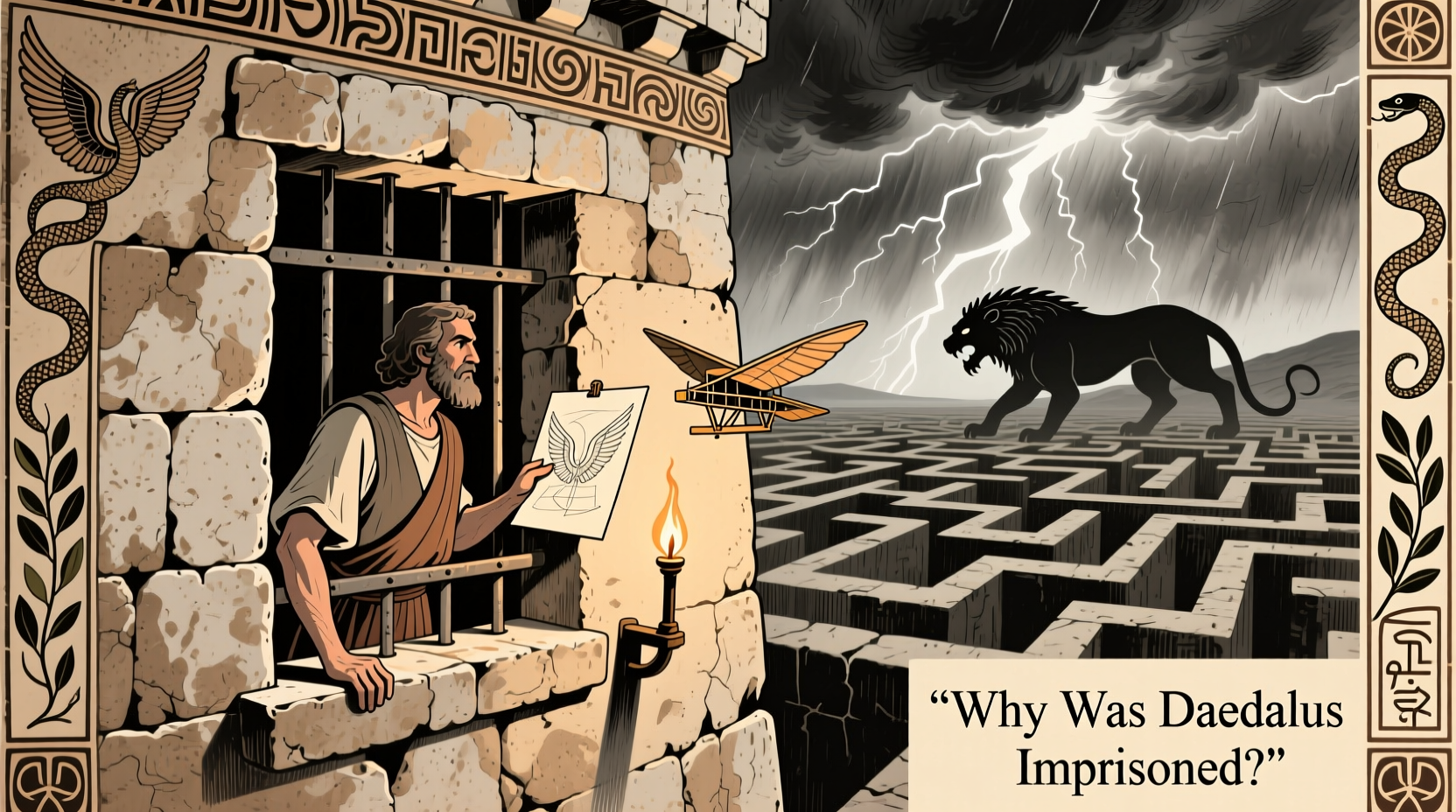
Daedalus appears in several ancient sources, including Ovid’s *Metamorphoses*, Plutarch’s writings, and fragments from lost plays by Sophocles. Though details vary, the core narrative remains consistent: Daedalus was an Athenian artisan of unmatched skill who fled Athens after killing his nephew (or apprentice), Perdix, out of jealousy. He sought refuge at the court of King Minos of Crete, where he gained favor through his inventions and architectural feats.
It was during this time that he constructed the Labyrinth to contain the Minotaur—a monstrous half-man, half-bull born from Queen Pasiphaë’s unnatural union with a bull. But once the Labyrinth was complete, Daedalus himself became trapped on Crete. The reasons for his confinement are not explicitly stated in one definitive source, leading scholars and mythologists to interpret multiple possible causes.
Political Consequences of Loyalty and Betrayal
One compelling reason for Daedalus’s imprisonment lies in the shifting dynamics of royal trust. Initially welcomed by King Minos, Daedalus earned prestige by solving complex problems—such as crafting artificial flowers indistinguishable from real ones, or building self-moving statues powered by hidden mechanisms. However, his loyalty was tested when Ariadne, Minos’s daughter, fell in love with Theseus, the Athenian hero sent to kill the Minotaur.
Daedalus aided Ariadne by giving her the famous thread that allowed Theseus to navigate the Labyrinth and escape. This act, while heroic from an Athenian perspective, may have been seen as treasonous by King Minos. By helping the enemy defeat the Minotaur—the very creature the Labyrinth was built to contain—Daedalus undermined Cretan sovereignty and broke his oath to the king.
Hubris and Divine Disfavor
Beyond politics, another layer of meaning emerges through the theme of hubris—excessive pride before the gods. Daedalus repeatedly crossed boundaries considered sacred. He created lifelike automatons, mimicked nature flawlessly, and even engineered a device that enabled bestial unions (the wooden cow used by Pasiphaë to mate with the bull). These acts blurred the line between human ingenuity and divine domain.
The ancient Greeks believed certain forms of knowledge were reserved for the gods. When mortals overstepped, they invited punishment. In this light, Daedalus’s imprisonment wasn’t merely a political decision by Minos—it may have reflected cosmic balance. His confinement served as a check on unchecked innovation, a warning against tampering with natural order.
“Man may shape bronze, stone, and wood—but to reshape life itself? That belongs to Zeus alone.” — Pausanias, 2nd-century CE traveler and geographer
A Timeline of Daedalus’s Downfall
To understand how Daedalus went from royal favorite to prisoner, consider the following sequence of events based on classical accounts:
- Exile from Athens: Kills his talented nephew Perdix out of envy; flees to Crete.
- Rise in Minos’s Court: Becomes chief engineer and architect; designs wonders for the palace.
- Construction of the Labyrinth: Builds the maze to hide the shame of the Minotaur’s birth.
- Assisting Ariadne and Theseus: Provides the thread and possibly navigational advice.
- Discovery and Confinement: Minos learns of the betrayal and restricts Daedalus’s movement.
- Escape via Flight: Crafts wings from wax and feathers; Icarus dies during flight.
This progression shows a steady erosion of trust. While Daedalus may have believed he was acting justly—helping love triumph over tyranny—Minos saw only disloyalty. Imprisonment ensured control over a man whose intellect made him dangerous.
Was It Literal Imprisonment or Symbolic Isolation?
Scholars debate whether Daedalus was physically locked away or simply restricted in movement. Some versions suggest he was held under house arrest within the palace complex, unable to leave without permission. Others imply he was confined within the Labyrinth itself—an ironic fate for its creator.
Symbolically, his imprisonment represents the consequences of genius without ethics. He solved every technical challenge put before him but failed to navigate the moral ones. His isolation mirrors the loneliness of innovation untempered by wisdom.
| Interpretation | Explanation | Evidence from Myth |
|---|---|---|
| Political Punishment | Penalty for aiding Theseus | Minos hunts Daedalus across Mediterranean after escape |
| Moral Transgression | Killing Perdix; enabling Pasiphaë’s lust | Athena withdraws favor after murder |
| Divine Warning | Punishment for overreaching human limits | Icarus’s fall immediately follows escape |
| Self-Imposed Exile | Fear of Athenian justice if he returns | Chooses Sicily over Athens after flight |
Expert Insight: The Dual Nature of Genius
Modern interpretations often frame Daedalus as a proto-scientist—brilliant yet ethically ambiguous. As Dr. Helen Morales, Professor of Classical Reception at Cambridge, notes:
“Daedalus fascinates because he embodies our anxieties about technology. He creates solutions that lead to deeper problems. His imprisonment isn’t just about one king’s anger—it’s about society’s fear of what happens when creators operate beyond oversight.”
This view reframes the myth as timeless: every era grapples with inventors who push boundaries, sometimes at great cost.
Mini Case Study: The Parallels to Modern Whistleblowers
Consider the story of Edward Snowden, who leaked classified NSA documents in 2013. Like Daedalus, he possessed rare technical knowledge, worked within a powerful system, and ultimately chose to assist those seeking freedom—though his actions were deemed treasonous by authorities.
Snowden wasn’t imprisoned in the traditional sense, but he lost his liberty, forced into exile. Similarly, Daedalus’s skills made him invaluable, yet his choices led to restriction. Both stories ask: When does loyalty require obedience, and when does conscience demand rebellion?
Frequently Asked Questions
Did King Minos imprison Daedalus immediately after the escape of Theseus?
No direct timeline exists, but most sources suggest Daedalus remained free long enough to build the wings and attempt escape. His imprisonment likely began shortly after Minos discovered his role in helping Theseus, possibly triggered by questioning Ariadne or finding evidence in the workshop.
Could Daedalus have avoided imprisonment by staying loyal to Minos?
Theoretically, yes. If he had refused to help Ariadne, he might have retained favor. However, mythological narratives often emphasize inevitability—Daedalus’s fate was tied to his nature: inventive, restless, and morally conflicted.
Is there any historical basis for Daedalus’s imprisonment?
While Daedalus is mythical, some historians believe his story reflects real tensions between Minoan Crete and mainland Greece. The “imprisonment” could symbolize economic or diplomatic restrictions placed on foreign artisans during periods of political instability.
Actionable Checklist: Lessons from Daedalus’s Imprisonment
- ✅ Recognize that power always demands loyalty—innovation without alignment can be dangerous.
- ✅ Consider the ethical implications of your creations, not just their functionality.
- ✅ Understand that aiding one cause may betray another; weigh consequences carefully.
- ✅ Avoid jealousy and professional insecurity—they corrupt judgment and destroy relationships.
- ✅ When facing confinement (literal or metaphorical), plan escape routes—but don’t ignore warnings.
Conclusion: Why the Myth Still Matters
The question of why Daedalus was imprisoned has no single answer. Was it revenge? Justice? Fear of his mind? Or a divine lesson about limits? The enduring power of the myth lies in its ambiguity. It forces us to confront uncomfortable truths: brilliance does not guarantee freedom; creation carries responsibility; and even the most ingenious minds can become trapped by their own designs.




 浙公网安备
33010002000092号
浙公网安备
33010002000092号 浙B2-20120091-4
Comments
No comments yet. Why don't you start the discussion?