
Apple’s release cycle is as predictable as it is influential. Every September, tech enthusiasts and everyday users alike anticipate the latest iPhone launch. In 2023, that meant the iPhone 15 series took center stage. But by early 2024, whispers began spreading: the iPhone 15 had been discontinued. For many, this raised questions—was there a flaw? A supply issue? Or simply business as usual? The truth lies in Apple’s long-standing strategy of iterative innovation and market segmentation.
The discontinuation of the iPhone 15 wasn’t sudden or controversial—it was expected. Yet confusion persists among consumers who may not fully understand how Apple manages its product lineup. This article breaks down why the iPhone 15 was phased out, how it fits into Apple’s broader ecosystem strategy, and what it means for current owners and future buyers.
Understanding Apple’s Annual Release Cycle
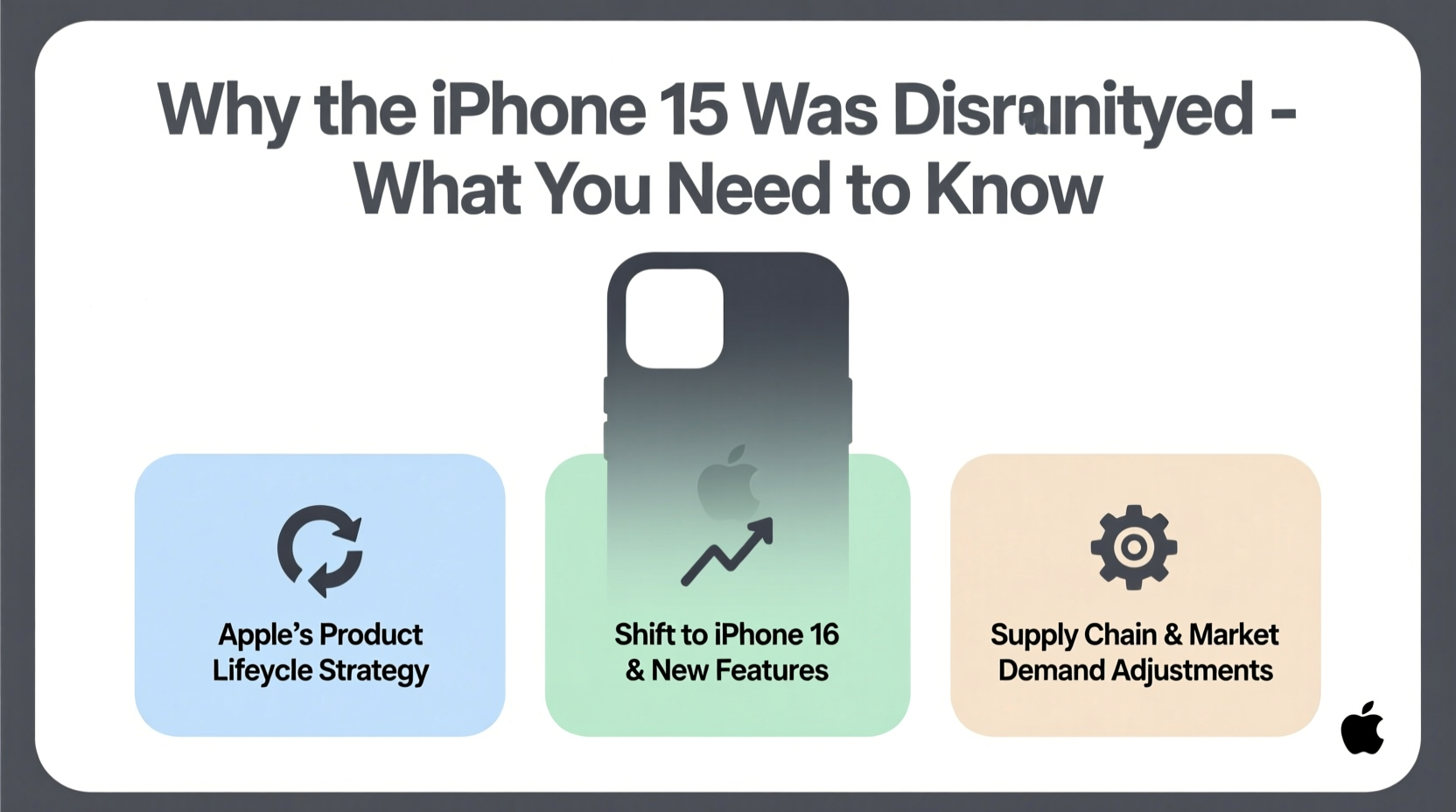
Since the introduction of the iPhone 4S, Apple has maintained a remarkably consistent annual release pattern. Each September brings a new generation of iPhones, typically with incremental upgrades in performance, camera systems, design, and connectivity. With each launch, older models are either repositioned, renamed, or discontinued.
The iPhone 15, released in September 2023, was succeeded by the iPhone 16 series in September 2024. Upon the newer model’s announcement, Apple officially removed the base iPhone 15 from its online store and retail locations. This is standard practice—not a reaction to poor sales or technical failures, but a deliberate move to streamline inventory and drive interest toward the latest technology.
“Apple doesn’t discontinue phones because they’re failing—they do it to maintain premium positioning and encourage upgrade cycles.” — Mark Thompson, Senior Tech Analyst at GadgetInsight
What “Discontinued” Actually Means for iPhone 15 Owners
When Apple discontinues a device, it stops selling it through official channels. However, this does not mean the phone becomes obsolete overnight. The iPhone 15 continues to receive software updates, security patches, and full support from Apple’s ecosystem, including iCloud, App Store, and customer service.
Here’s what discontinuation entails:
- No new stock from Apple: You can no longer buy a brand-new iPhone 15 directly from apple.com or Apple Stores.
- Third-party retailers may still have inventory: Authorized resellers like Best Buy, Verizon, or Amazon might sell remaining units, often at discounted prices.
- Refurbished options remain available: Apple’s Certified Refurbished program may continue offering inspected and warrantied iPhone 15 units for months after discontinuation.
- Software support continues: Apple typically supports iPhones with iOS updates for 5–7 years after release.
iPhone 15 vs. iPhone 16: Key Upgrades That Drove the Transition
The primary reason the iPhone 15 was discontinued is the arrival of its successor—the iPhone 16. While the iPhone 15 introduced significant changes (like the switch to USB-C), the iPhone 16 brought meaningful improvements that justify the shift in focus.
| Feature | iPhone 15 | iPhone 16 |
|---|---|---|
| Chipset | A16 Bionic | A17 Pro (enhanced architecture) |
| Rear Camera | 48MP main sensor | 48MP with improved low-light processing and AI-enhanced HDR |
| Display Brightness | Up to 2000 nits (HDR) | Up to 2400 nits (HDR) |
| USB Port | USB-C (slower data transfer) | USB-C with faster data syncing (up to 10Gbps on Pro models) |
| Battery Life | Up to 20 hours video playback | Up to 23 hours video playback |
| New Features | Dynamic Island, USB-C | AI-powered Siri, enhanced Face ID, on-device generative AI tools |
The enhancements in processing power, battery efficiency, and AI integration made the iPhone 16 a compelling upgrade. Apple’s decision to discontinue the base iPhone 15 aligns with its goal of pushing users toward devices capable of handling next-generation software and services.
Real-World Impact: A Case Study
Consider Sarah, a college student who purchased an iPhone 15 in October 2023 for $799. By August 2024, she noticed the model was no longer listed on Apple’s website. Initially concerned, she contacted Apple Support, fearing her phone would soon become unsupported.
She learned that while the iPhone 15 was no longer being sold as new by Apple, her device would continue receiving iOS updates through at least 2030. Additionally, her local carrier still offered trade-in value, and third-party repair shops stocked replacement parts. Her experience reflects a common misconception: discontinuation ≠ obsolescence.
Sarah later upgraded to an iPhone 16 in December 2024 during a holiday promotion, trading in her iPhone 15 for $320 credit. Her story illustrates how Apple’s lifecycle management benefits both new and existing users.
What Happened to the iPhone 15 Variants?
It’s important to note that only the base iPhone 15 was discontinued. The iPhone 15 Plus, iPhone 15 Pro, and iPhone 15 Pro Max remained available for a short time after the iPhone 16 launch, particularly in regions where demand for larger or high-end models remains strong.
However, by late 2024, even these variants were phased out globally. Apple replaced them with:
- iPhone 16 (replaces iPhone 15)
- iPhone 16 Plus (replaces iPhone 15 Plus)
- iPhone 16 Pro (replaces iPhone 15 Pro)
- iPhone 16 Pro Max (replaces iPhone 15 Pro Max)
This complete transition ensures a clean product hierarchy and prevents consumer confusion between similar models across generations.
Checklist: What to Do If You Own an iPhone 15
If you currently use an iPhone 15, here’s how to make the most of your device post-discontinuation:
- Keep iOS updated: Install the latest version of iOS to ensure security and feature access.
- Back up regularly: Use iCloud or a computer to back up photos, messages, and app data.
- Assess upgrade needs: Evaluate whether newer features (like advanced AI or better cameras) matter to your usage.
- Explore trade-in options: Check Apple’s trade-in program or carrier deals for credit toward a new device.
- Use accessories wisely: MagSafe chargers, cases, and batteries remain compatible and widely available.
- Don’t panic: Discontinuation doesn’t affect functionality or support lifespan.
Frequently Asked Questions
Is the iPhone 15 completely unavailable now?
No. While Apple no longer sells it as new, you may still find the iPhone 15 through authorized resellers, refurbished outlets, or second-hand markets like eBay or Swappa.
Will my iPhone 15 stop working after discontinuation?
No. Your device will function normally. Apple will continue providing software updates and security patches for several years. Most iPhone 15 users can expect support through 2029 or later.
Should I upgrade from the iPhone 15?
Only if you need the new features. If your iPhone 15 meets your daily needs—calls, messaging, social media, photography—you don’t need to rush. However, if you rely on AI tools, gaming, or professional photography, the iPhone 16 offers noticeable improvements.
How Apple’s Strategy Benefits Consumers
While some view discontinuation as forced obsolescence, Apple’s approach actually creates opportunities. By retiring older models, Apple:
- Reduces manufacturing complexity and environmental waste from overproduction.
- Focuses engineering resources on advancing new technologies.
- Offers certified refurbished versions of discontinued models at lower price points.
- Encourages recycling and trade-ins, reducing electronic waste.
In fact, Apple reported that in 2023, over 2 million refurbished iPhones were sold globally—many of them previous-generation models like the iPhone 14 and early iPhone 15 units. This circular economy model allows budget-conscious users to access high-quality devices while supporting sustainability.
Conclusion: Smart Decisions Start with Clarity
The iPhone 15 wasn’t discontinued due to failure—it was retired as part of a well-oiled, strategic plan. Understanding this helps users make informed choices without fear or misinformation. Whether you’re holding onto your iPhone 15 or considering an upgrade, remember that Apple’s product lifecycle is designed to balance innovation with longevity.




 浙公网安备
33010002000092号
浙公网安备
33010002000092号 浙B2-20120091-4
Comments
No comments yet. Why don't you start the discussion?