
In the heart of Queens, New York, one of the world’s busiest aviation hubs stands as a testament to 20th-century innovation and global connectivity. Today, it’s known as John F. Kennedy International Airport (JFK), but few modern travelers realize that before it bore the name of a fallen president, it carried a far more pastoral identity: Idlewild Airport. The story behind this now-forgotten name reveals much about New York’s evolution—from rural retreats to urban expansion, from private leisure to mass transit, and from local airfields to international gateways.
The name “Idlewild” evokes images of quiet meadows and country escapes, a stark contrast to the roaring jet engines and bustling terminals we associate with JFK today. Yet, for nearly two decades, Idlewild was not just a name—it was a vision of what air travel could become.
The Origins of the Name \"Idlewild\"
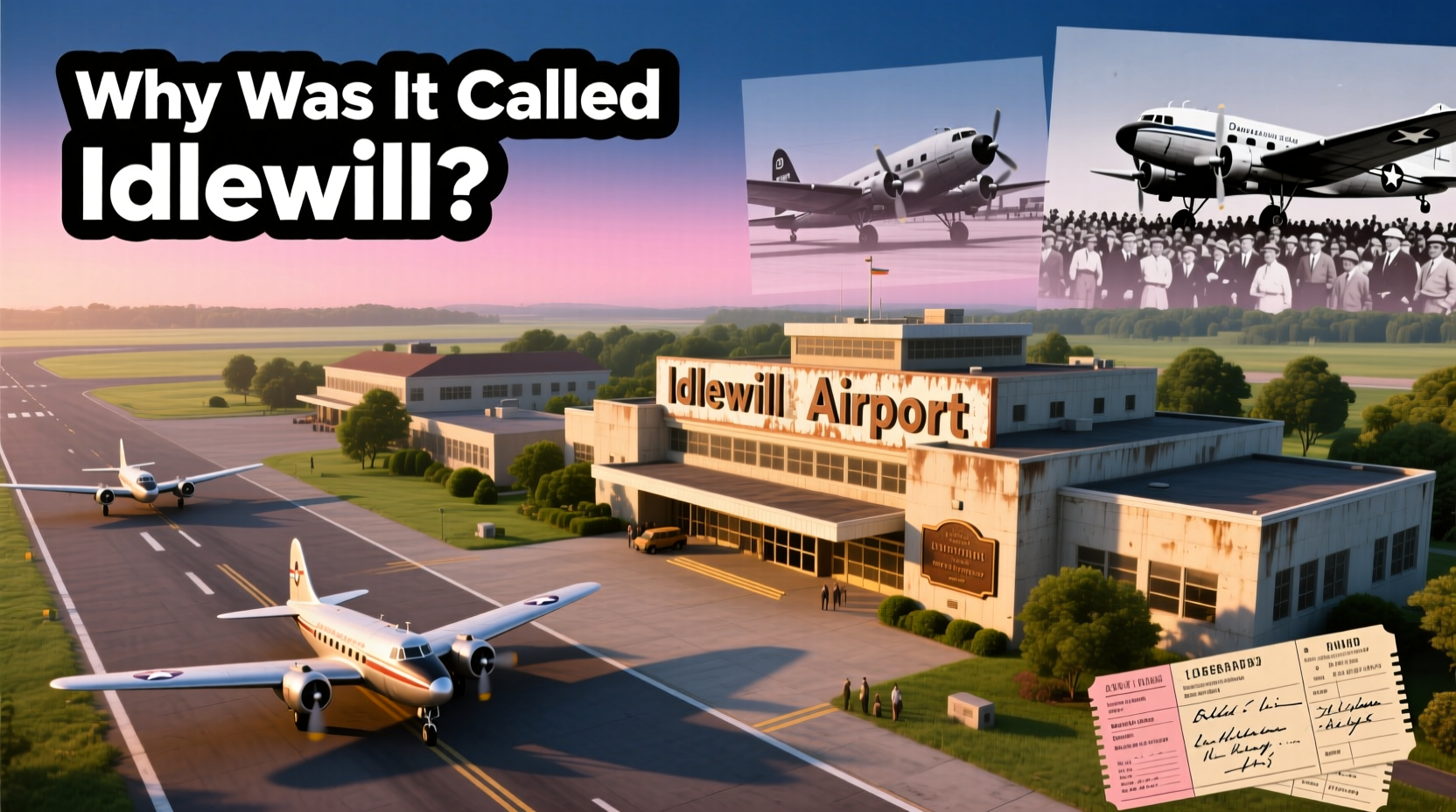
The land where JFK Airport now stands was once part of a vast stretch of marshland and farmland in southern Queens. In the early 20th century, developers saw potential in the area's open space and proximity to Manhattan. In 1905, a group of investors established a luxury residential community named \"Idlewild\" — a compound suggesting idleness and wilderness, reflecting the era’s romanticization of country living.
The name itself combined “idle,” meaning peaceful or relaxed, with “wild,” denoting natural, undeveloped terrain. Together, they painted a picture of serene escape—an idealized suburban retreat where city dwellers could enjoy fresh air and greenery. At its peak, Idlewild featured golf courses, country clubs, and seaside bungalows, catering primarily to affluent families seeking respite from urban life.
When New York City began planning a major municipal airport in the late 1930s, officials selected this largely undeveloped area due to its flat topography and minimal population density. Though most of the original resort community had faded by then, the name “Idlewild” remained on maps and property records. Thus, when construction began in 1942, the project inherited the name—officially becoming Idlewild Airport.
“Names are never arbitrary. Idlewild wasn’t just a label—it was a reflection of how we once imagined space, leisure, and progress.” — Dr. Helen Torres, Urban Historian, Columbia University
From Vision to Reality: Building a Modern Airfield
Idlewild Airport was conceived during a transformative period in aviation history. As transatlantic flight became increasingly viable, city planners recognized the need for a large-scale, municipally operated airport to complement the smaller LaGuardia Field, which had opened in 1939. The goal was ambitious: create a state-of-the-art facility capable of handling the next generation of commercial airliners.
Construction spanned World War II, with work continuing despite material shortages and labor constraints. By 1948, the airport was ready for operation. On July 1st of that year, the first commercial flight—a Pan American World Airways Constellation bound for London—departed from Idlewild, marking the beginning of its legacy as an international gateway.
Initially, only a fraction of the planned infrastructure was complete. Runways were extended multiple times throughout the 1950s to accommodate newer, heavier jets like the Boeing 707. Terminal designs evolved rapidly to meet growing passenger demand, culminating in the iconic circular terminal layout introduced in the mid-1950s.
A Timeline of Transformation: Idlewild to JFK
The airport operated under the name Idlewild for 15 years, though many locals continued to refer to it simply as “the new airport at Jamaica Bay.” Despite its official title, there was never widespread public attachment to the name. It lacked the gravitas expected of a world-class aviation center.
The shift came abruptly—and poignantly—on December 24, 1963. Just weeks after the assassination of President John F. Kennedy, the New York City Council voted unanimously to rename Idlewild Airport in his honor. Mayor Robert F. Wagner signed the resolution, declaring that the airport would henceforth be known as John F. Kennedy International Airport.
The formal dedication took place on December 29, 1963, with dignitaries including Jacqueline Kennedy and Senator Robert F. Kennedy in attendance. A plaque bearing the president’s words—“The New Frontier”—was installed at the main terminal.
| Year | Event |
|---|---|
| 1905 | Idlewild residential community established |
| 1942 | Construction begins on municipal airport |
| 1948 | Idlewild Airport opens to commercial traffic |
| 1950s | Expansion for jet aircraft; rise as global hub |
| Dec 24, 1963 | Renamed John F. Kennedy International Airport |
Why the Change Made Sense
While nostalgic for some, the name “Idlewild” no longer reflected the airport’s role or reputation. By the early 1960s, it was one of the busiest international airports in the world, serving millions annually and acting as a primary entry point into the United States. The whimsical connotations of “Idlewild” clashed with the seriousness and scale of modern air travel.
Rather than honoring a defunct resort, city leaders chose to commemorate a national figure whose presidency symbolized progress, diplomacy, and hope. John F. Kennedy had been a strong advocate for science, technology, and international engagement—all values embodied by global aviation.
Moreover, renaming major infrastructure after prominent political figures was already a well-established tradition. Washington National Airport (now Reagan National) and Chicago’s O’Hare International Airport followed similar paths. The change aligned Idlewild with this symbolic practice, elevating its status on the world stage.
Public Reaction and Cultural Impact
Though the renaming was officially celebrated, some longtime residents expressed mixed feelings. For older generations, “Idlewild” carried personal memories of summers spent near Jamaica Bay, family outings, and a slower pace of life. But for most travelers and airline operators, the transition was seamless. Within months, “JFK” became synonymous with international departure and arrival.
Cultural references soon followed. Songs, films, and literature began using “JFK” as shorthand for journeys, farewells, and new beginnings. The old name faded into obscurity—though traces remain. A street named Idlewild Boulevard still runs near the airport grounds, and historical markers note the site’s earlier identity.
Legacy and Lessons: What Idlewild Teaches Us
The story of Idlewild is more than a footnote in New York’s history—it’s a case study in how cities evolve. Landscapes transform, functions shift, and names adapt to reflect changing values. What began as a leisure destination became a critical node in the global transportation network.
This transition also underscores the impermanence of place names. They are not fixed but fluid, shaped by politics, memory, and utility. Idlewild reminds us that even seemingly permanent institutions have roots in forgotten worlds.
“Every airport tells two stories: one of engineering and logistics, and another of culture and identity. Idlewild’s name may be gone, but its spirit lingers in the idea of movement, possibility, and reinvention.” — Marcus Lee, Transportation Historian
Mini Case Study: The Last Resident of Old Idlewild
In a 2001 oral history interview archived at Queens College, 94-year-old Margaret Ellsworth recalled childhood summers in the Idlewild community. Her family rented a cottage near Hook Creek in the 1920s, where she learned to swim and played tennis at the Idlewild Beach Club.
“We’d take the trolley from Jamaica Avenue,” she said. “It felt like another world—quiet, green, full of laughter. When I flew out of JFK decades later, I looked down at the runways and tried to imagine where our house once stood. All that peace, replaced by noise and motion. Progress, I suppose.”
Her story illustrates how deeply personal these changes can be—not just administrative rebrandings, but erasures of lived experience.
Frequently Asked Questions
Was Idlewild Airport ever privately owned?
No. Although the surrounding land was developed as a private resort community in the early 1900s, the airport itself was always a public project funded and operated by New York City.
Do any structures from the original Idlewild resort still exist?
None remain within the current airport perimeter. However, some homes from the early 20th-century development survive in nearby neighborhoods like Rosedale and Laurelton.
Why wasn’t LaGuardia renamed after a president too?
LaGuardia Airport was named after Fiorello H. La Guardia, New York City’s mayor during the Great Depression and WWII. He was instrumental in creating the city’s modern airport system. There has been little public support for changing a name that honors a key civic leader.
Conclusion: Remembering Where We’ve Been
The name “Idlewild” may no longer appear on departure boards, but understanding its origin enriches our appreciation of one of the world’s most important airports. It reminds us that even the most modern infrastructures grow from humble, human beginnings.
Next time you pass through JFK, take a moment to consider the layers of history beneath your feet—the summer cottages, the golf greens, the quiet baylands that once defined this place. In doing so, you don’t just see an airport; you witness the unfolding story of a city, a nation, and the relentless march of time.




 浙公网安备
33010002000092号
浙公网安备
33010002000092号 浙B2-20120091-4
Comments
No comments yet. Why don't you start the discussion?