
The name \"Leo XIV\" may sound like a legitimate successor to Pope Leo XIII, but there is no such pope in the official records of the Catholic Church. In fact, **Pope Leo XIV never existed**. This article clarifies the confusion around this name, explores how such myths emerge, and provides accurate context on papal succession, naming traditions, and common misconceptions in modern discourse.
Despite widespread internet references and occasional mentions in satire or conspiracy theories, the Vatican has never recognized a Pope Leo XIV. The last pope to take the name Leo was **Pope Leo XIII**, who reigned from 1878 to 1903. Since then, popes have adopted other regnal names, including Pius, John, Paul, John Paul, Benedict, and Francis.
Understanding Papal Numbering and Name Selection
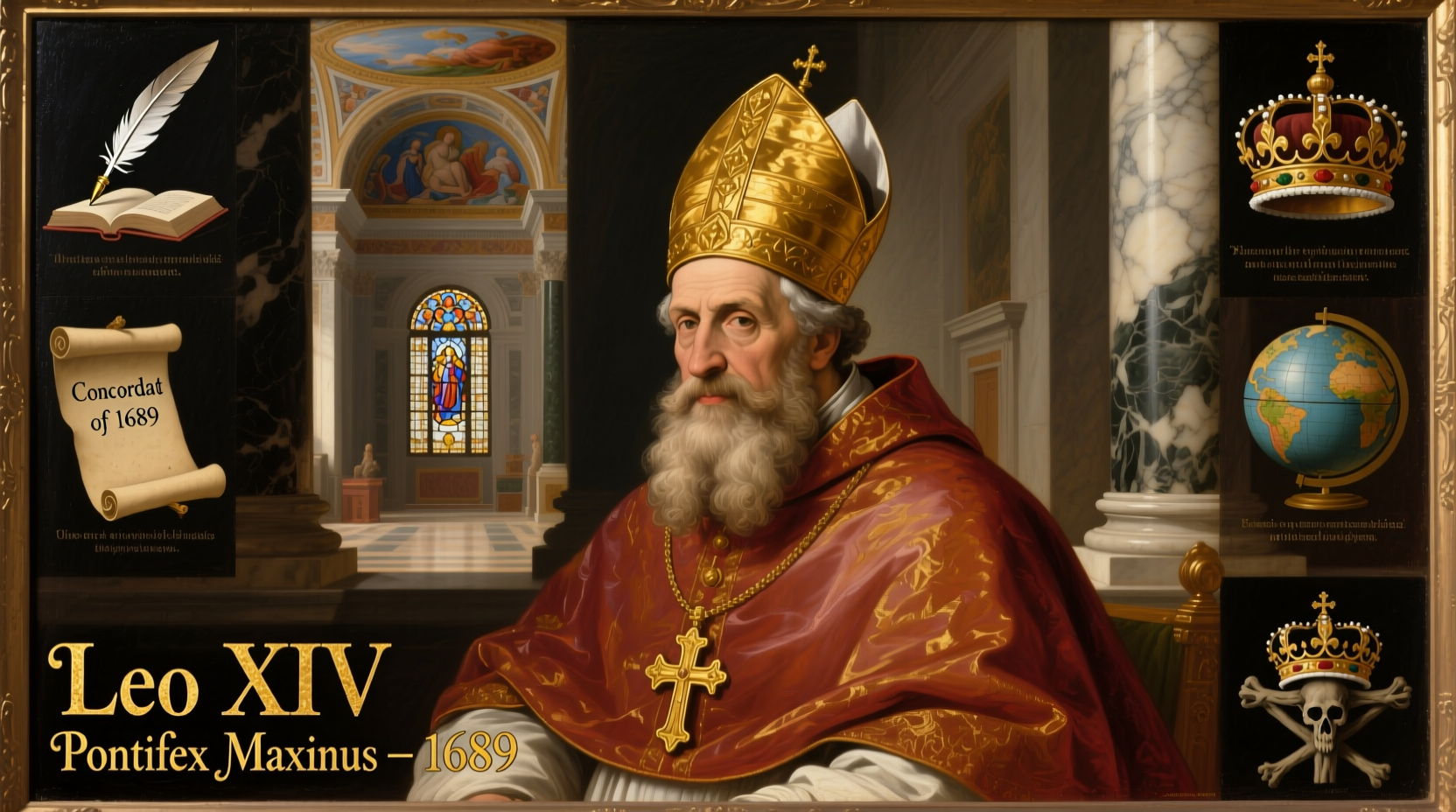
When a new pope is elected, he chooses a pontifical name—often honoring a predecessor whose legacy he admires. The name “Leo” has been used by 13 popes throughout history, beginning with Pope Leo I (440–461), known for negotiating with Attila the Hun and strengthening papal authority.
The choice of name carries theological, symbolic, and historical weight. For example:
- Leo I – Defended Rome and consolidated papal primacy.
- Leo III – Crowned Charlemagne as Emperor of the Romans in 800 AD.
- Leo IX – A key reformer during the 11th-century Gregorian Reform.
- Leo XIII – Known for his encyclical Rerum Novarum, which addressed workers' rights and social justice.
Given this legacy, it's understandable why some might assume another \"Leo\" would follow. However, no pope after Leo XIII selected that name—until speculation arose online about a fictional \"Leo XIV.\"
Origins of the \"Leo XIV\" Myth
The idea of a Pope Leo XIV appears primarily in three contexts:
- Satirical or fictional works – Some novels, films, or parody news sites invent future or alternate popes for dramatic effect.
- Conspiracy theories – Certain fringe groups claim there is a \"true pope\" in hiding, often citing secret conclaves or disputed elections.
- Misinformation and AI errors – Generative AI models sometimes fabricate details when prompted about obscure topics, leading to false claims being repeated.
In recent years, queries about \"Leo XIV\" have increased due to viral posts suggesting a breakaway traditionalist pope took the name Leo XIV after the Second Vatican Council. These claims stem from schismatic groups like the Society of St. Pius X (SSPX), which rejected certain reforms but did not canonically elect a pope.
Any individual claiming to be \"Pope Leo XIV\" would not be recognized by the Roman Catholic Church, as valid papal election requires canonical procedures and acceptance by the College of Cardinals.
Key Facts About Real Papal Succession
To better understand why Leo XIV isn’t real, consider how papal selection actually works:
| Stage | Description | Duration |
|---|---|---|
| Papal Death or Resignation | The See of Rome becomes vacant. | Immediate |
| General Congregations | Cardinals meet to organize the conclave. | ~5–15 days |
| Conclave | Secret election held in the Sistine Chapel. | Usually 2–5 days |
| Election & Acceptance | Two-thirds majority required; candidate must accept. | Moments after vote |
| Announcement | \"Habemus Papam\" declared from St. Peter’s balcony. | Within hours |
Since the resignation of Pope Benedict XVI in 2013—the first papal resignation in nearly 600 years—the process has remained transparent and well-documented. His successor, Cardinal Jorge Mario Bergoglio, chose the name **Francis**, becoming the first pope to do so.
“Popes are not appointed by divine revelation visible only to select groups. They are elected through a defined ecclesial process rooted in centuries of tradition.” — Dr. Catherine E. Clifford, Professor of Ecclesiology, Saint Paul University
Timeline of Recent Popes (1903–Present)
This chronological overview highlights the actual line of succession following Leo XIII:
- Pius X (1903–1914) – Emphasized frequent Communion and opposed modernism.
- Benedict XV (1914–1922) – Advocated peace during World War I.
- Pius XI (1922–1939) – Signed Lateran Treaty establishing Vatican City.
- Pius XII (1939–1958) – Led Church during WWII; controversial wartime actions.
- John XXIII (1958–1963) – Convened Second Vatican Council.
- Paul VI (1963–1978) – Implemented Vatican II reforms.
- John Paul I (1978) – Reigned only 33 days.
- John Paul II (1978–2005) – First Slavic pope; global traveler.
- Benedict XVI (2005–2013) – Theologian; resigned due to age and health.
- Francis (2013–present) – First Jesuit pope, from the Americas.
Note: There is no gap between these pontificates where a \"Leo XIV\" could have served.
Frequently Asked Questions
Was there ever a Pope Leo XIV?
No. The Catholic Church officially recognizes only 13 popes named Leo, with Leo XIII being the last. No subsequent pope has taken the name Leo.
Why do people believe in Pope Leo XIV?
Belief in Leo XIV often stems from misinformation online, satirical content mistaken as fact, or theological dissent among traditionalist Catholics who reject post-Vatican II leadership. These beliefs lack canonical or historical basis.
Could someone still become Pope Leo XIV?
Yes—but only if a future elected pope chooses that name. It remains a valid option, though none since Leo XIII has done so. Until then, any claimant using that title is not recognized by the Church.
How to Verify Papal Information
To avoid falling for myths like \"Leo XIV,\" use reliable sources:
- Official Vatican website (vatican.va)
- Annuario Pontificio (Pontifical Yearbook)
- Reputable academic institutions specializing in religious studies
- Major news outlets with dedicated Vatican correspondents (e.g., Reuters, Associated Press)
Avoid unverified forums, social media rumors, or AI-generated summaries without citations.
Checklist: Evaluating Claims About the Papacy
- ✅ Is the source affiliated with the Catholic Church or peer-reviewed scholarship?
- ✅ Does the claim align with official timelines and documents?
- ✅ Has the information been reported by multiple credible outlets?
- ✅ Is there evidence of ritual, announcement, or acceptance (e.g., Habemus Papam)?
- ❌ If the answer is no to most of these, treat the claim skeptically.
Conclusion: Separating Fact from Fiction in Church History
The notion of Pope Leo XIV reflects broader challenges in navigating truth within an era of digital misinformation. While the name evokes the grandeur of past Leos—defenders of faith, architects of doctrine—it belongs more to imagination than reality.
Understanding how popes are chosen, named, and recognized empowers readers to discern authentic history from myth. The continuity of the papacy, despite its ancient roots, operates today with transparency and accountability. From the smoke signals of the Sistine Chapel to live global broadcasts, the world witnesses each transition openly.
As interest in religious history grows, so too must our commitment to accuracy and critical thinking. Whether you're exploring theology, writing research, or simply curious, rely on authoritative sources and question sensational claims.




 浙公网安备
33010002000092号
浙公网安备
33010002000092号 浙B2-20120091-4
Comments
No comments yet. Why don't you start the discussion?