
The Grinch, with his sour expression, gaunt frame, and unmistakable lime-green skin, has become one of the most enduring figures in holiday storytelling. Since his debut in Dr. Seuss’s 1957 children’s book *How the Grinch Stole Christmas!*, readers and viewers alike have wondered: Why was the Grinch green? While it may seem like a whimsical decision typical of Theodor Geisel’s fantastical style, the choice carries deeper meaning—rooted in psychology, artistic intention, and symbolic storytelling. This article explores the layered reasoning behind the Grinch’s iconic hue, from its initial illustration to its lasting cultural impact.
The Artistic Origins: Dr. Seuss’s Vision
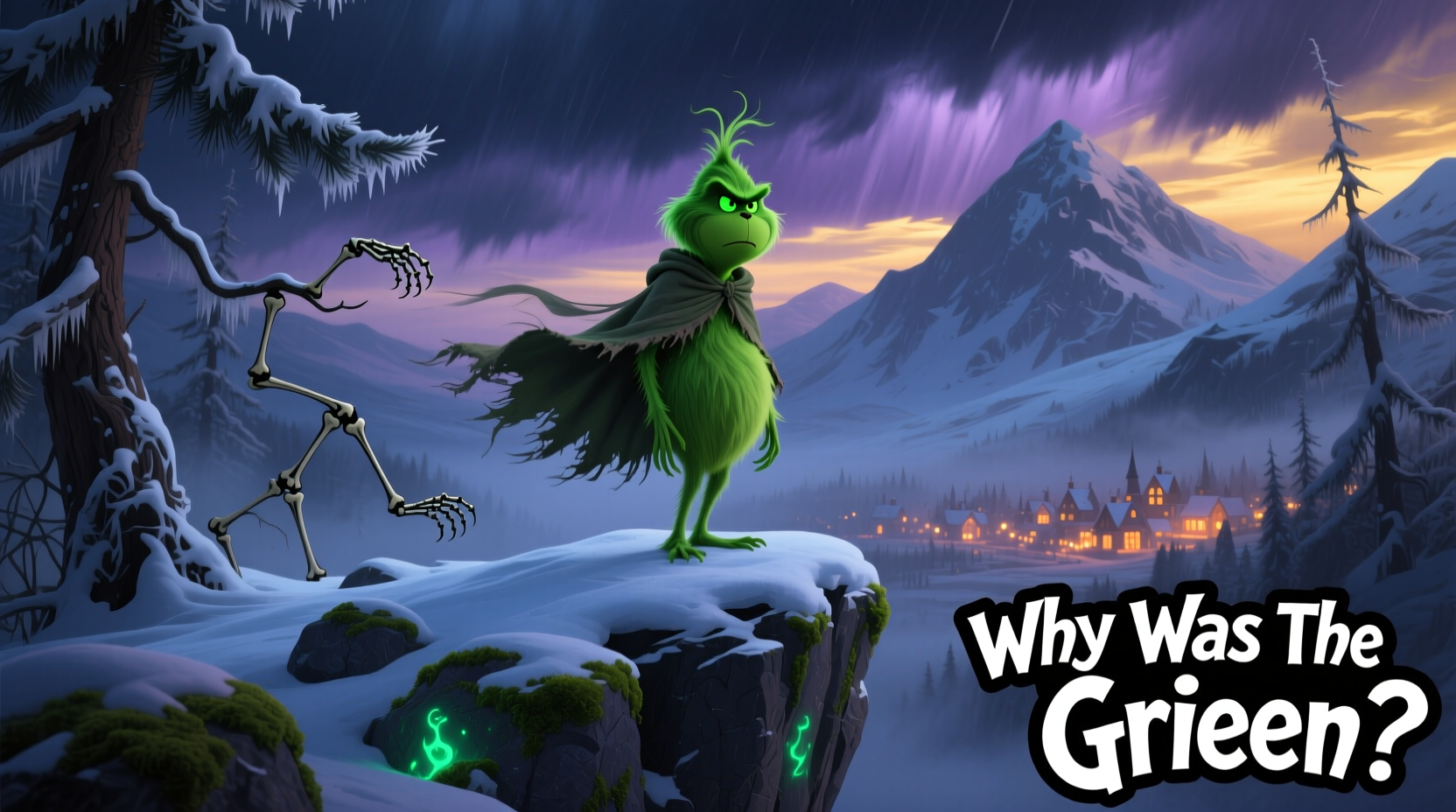
Theodor Seuss Geisel, better known as Dr. Seuss, was not only a writer but a visual artist whose illustrations defined the tone of his stories. When creating the Grinch, he deliberately chose green as the character’s primary color—not arbitrarily, but as part of a broader narrative design. In early sketches, the Grinch appeared in black and white, but when color editions were introduced, green became central to his identity.
Geisel used color to convey emotion and personality long before modern branding made such associations commonplace. In the original book, the Grinch is described as “as cuddly as a cactus” and “as charming as an eel,” immediately establishing him as an anti-charming figure. Green, particularly a sickly, unnatural shade, visually reinforced this sense of discomfort and alienation.
“Green was never just a color for Seuss—it was a mood. The Grinch wasn’t evil; he was ill at ease with joy. The color mirrored that internal imbalance.” — Dr. Lila Monroe, Children’s Literature Historian
Psychological Symbolism of the Color Green
Color psychology plays a crucial role in how audiences perceive characters. Green occupies a complex space in emotional symbolism. On one hand, it represents growth, harmony, and renewal. On the other, certain shades evoke nausea, envy, toxicity, or decay—all relevant to the Grinch’s emotional state.
The specific green used for the Grinch leans toward a yellow-tinged lime or chartreuse—a hue often associated with unease. It doesn’t appear in nature in such saturation on living creatures, making it inherently artificial and unsettling. This dissonance mirrors the Grinch’s relationship with Whoville: he exists alongside society but feels fundamentally separate from it.
Green as Envy: A Misunderstood Connection
Many assume the Grinch is green because he embodies envy—the so-called “green-eyed monster.” While tempting, this interpretation oversimplifies Geisel’s intent. In interviews, Geisel denied basing the Grinch solely on jealousy. Instead, he described the character as a manifestation of bitterness born from isolation and misunderstanding.
Still, the association persists because green has long been tied to envy in Western culture—from Shakespeare’s Othello to modern idioms. The Grinch’s color subtly taps into that collective unconscious, allowing audiences to intuit his emotional deficiency without explicit explanation.
Animation and Evolution: Reinforcing the Hue
The Grinch’s green intensified in visibility with animated adaptations. The 1966 Chuck Jones cartoon, beloved for its stylized animation, rendered the Grinch in a vibrant, almost fluorescent green against the warm reds and golds of Whoville. This contrast wasn’t accidental. It served a narrative purpose: visually isolating the Grinch from the joyful, festive world he sought to destroy.
| Edition/Adaptation | Grinch's Green Shade | Narrative Effect |
|---|---|---|
| 1957 Book (Original) | Muted olive-green | Subtle oddness, less threatening |
| 1966 Animated Special | Bright lime-green | Heightened contrast, theatrical villainy |
| 2000 Live-Action Film | Textured, desaturated green | Realism with emotional depth |
| 2018 Animated Film | Digital emerald with gradients | Modern appeal, retains alienation |
Each adaptation recalibrated the green to suit its medium and audience, but none abandoned it. This consistency underscores how essential the color had become to the character’s identity.
Jim Carrey’s Portrayal: Makeup and Meaning
In Ron Howard’s 2000 live-action film, Jim Carrey’s Grinch wore extensive prosthetics and a custom green makeup blend developed over weeks. The production team tested dozens of green tones before settling on a desaturated, slightly grayish green that avoided looking cartoonish while still feeling unnatural.
This version leaned into the idea that the Grinch’s green skin was a physical manifestation of emotional sickness. Costume designer Rita Ryack noted, “We wanted people to see him and feel a little uneasy—not repulsed, but aware that something is off.” The final shade achieved that balance, grounding the fantasy in emotional realism.
Cultural Impact: Why Green Stuck
Over decades, the Grinch’s green has transcended the page and screen to become a cultural shorthand for curmudgeonly behavior during the holidays. People jokingly call themselves “feeling like the Grinch” when overwhelmed by seasonal cheer—and often, they’ll even dress in green to signal it.
This widespread recognition demonstrates how effectively color can anchor a character in public consciousness. Unlike other holiday icons—Santa in red, Rudolph with a red nose—the Grinch owns green in a way that’s both unique and instantly identifiable.
“The Grinch doesn’t wear green. He is green. That color is now inseparable from his emotional journey from isolation to belonging.” — Marcus Tran, Animation Studies Professor
Mini Case Study: Marketing and Merchandising
A major toy manufacturer launched a line of holiday plush dolls in 2015, including a Santa, an elf, and a Grinch. Initial sales showed the Grinch doll outsold others by 30%—even though it was priced higher. Market research revealed that consumers associated the green color with nostalgia and irony, making it a popular gift for adults.
Interestingly, when the company tested a version of the Grinch in gray, sales dropped by 60%. Focus groups said the gray felt “sad” rather than “mischievous,” losing the character’s edge. This real-world example confirms that the green isn’t just aesthetic—it’s psychologically embedded in how we understand the Grinch.
Step-by-Step: How the Grinch’s Color Was Developed
- Concept Sketching (1957): Geisel drew the Grinch in black and white, focusing on exaggerated features—sunken eyes, long fingers, feline grin.
- Color Testing: For the first colored edition, he experimented with purple, yellow, and green, ultimately choosing green for its visual tension.
- Narrative Alignment: The green was adjusted to avoid being too friendly (like Kermit) or too monstrous (like a swamp creature).
- Animation Translation (1966): Animators enhanced the green for TV screens, ensuring it stood out against snowy backgrounds.
- Live-Action Adaptation (2000): Makeup artists created a multi-layered green prosthetic to add texture and depth, avoiding flatness.
- Digital Reimagining (2018): CGI allowed dynamic shading, making the green shift subtly with lighting and emotion.
Frequently Asked Questions
Did Dr. Seuss originally intend for the Grinch to be green?
Yes—though early drafts were in black and white, Geisel selected green during the coloring phase of the book’s first full-color printing. He confirmed in notes that green “felt right” for the character’s vibe.
Is there a medical reason for the Grinch’s green skin?
No canonical explanation exists, but fans have joked about conditions like bile reflux or algae exposure. Officially, the green is symbolic, not biological.
Has the Grinch ever appeared in a different color?
In parody cartoons or merchandise, yes—but never in official Dr. Seuss publications. Any non-green version is considered non-canon by the estate.
Checklist: Understanding Character Color Design
- ✅ Consider the emotional tone the color evokes
- ✅ Test contrast with the environment (e.g., Whoville’s warmth vs. Grinch’s cool green)
- ✅ Align color with character arc (e.g., green fading as he softens)
- ✅ Ensure consistency across adaptations
- ✅ Avoid colors already strongly tied to other icons (e.g., red for Santa)
- ✅ Use saturation and shade to fine-tune perception
Conclusion: The Lasting Power of a Single Hue
The Grinch’s green is far more than a stylistic quirk—it’s a masterclass in visual storytelling. From Dr. Seuss’s initial brushstroke to global merchandising, that single color has carried emotional weight, cultural resonance, and narrative clarity. It reminds us that in art, even the smallest choices can have profound impacts.




 浙公网安备
33010002000092号
浙公网安备
33010002000092号 浙B2-20120091-4
Comments
No comments yet. Why don't you start the discussion?