
The outbreak of World War II in 1939 was not the result of a single event but the culmination of decades of political instability, economic hardship, ideological extremism, and failed diplomacy. Understanding why the war began requires examining the deep-rooted causes, the aggressive actions of expansionist regimes, and the international failures that allowed conflict to escalate unchecked. This article breaks down the key factors, presents a clear timeline of critical events, and explains how global tensions reached a breaking point.
Root Causes of World War II
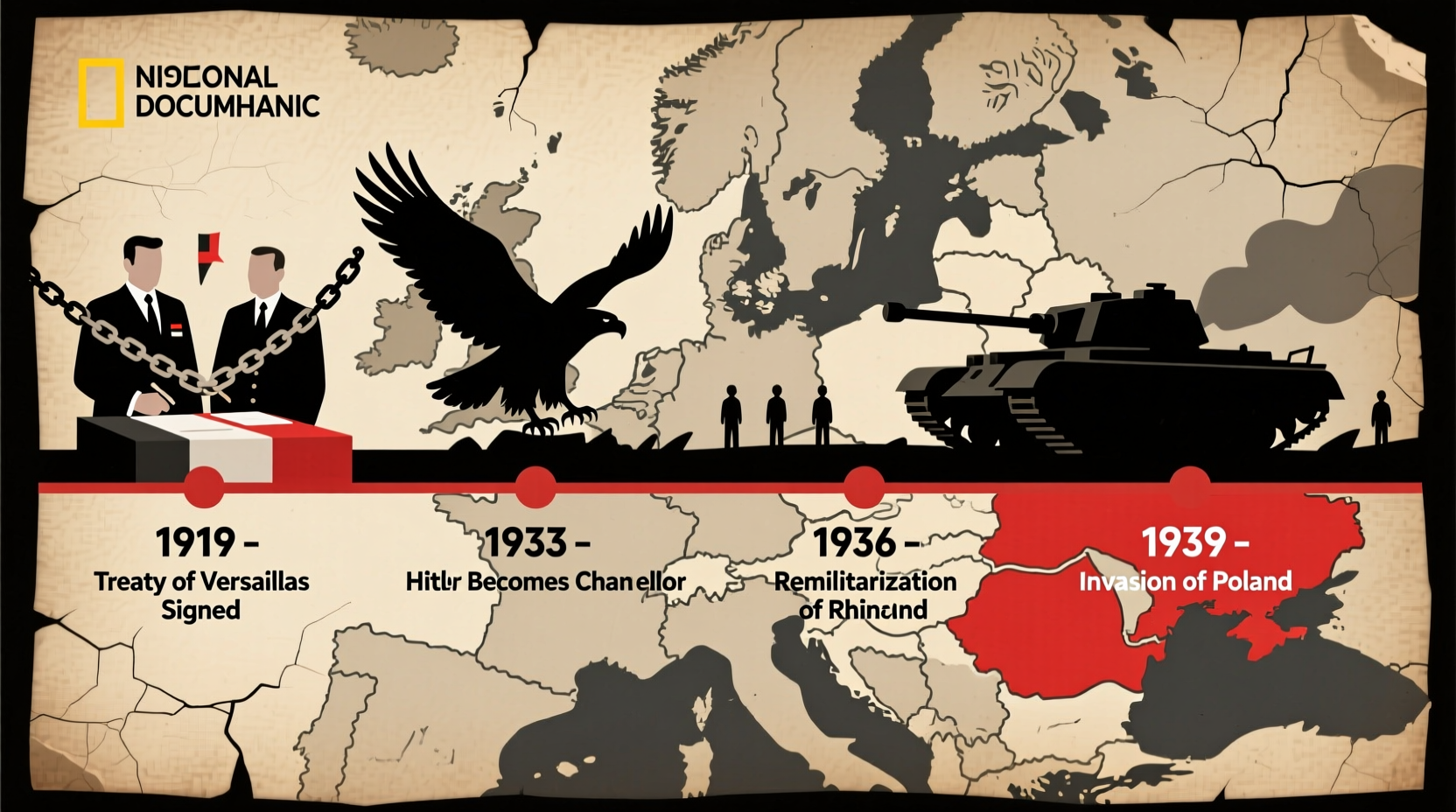
The seeds of World War II were sown in the aftermath of World War I. The Treaty of Versailles (1919) imposed harsh penalties on Germany, including massive reparations, territorial losses, and military restrictions. While intended to prevent future aggression, these terms fostered widespread resentment among the German population. Economic collapse during the Great Depression further destabilized Europe, creating fertile ground for extremist ideologies.
Nationalism, militarism, and totalitarian regimes rose in response. In Germany, Adolf Hitler and the Nazi Party exploited public anger, promising national revival through rearmament and territorial expansion. Similarly, Benito Mussolini’s fascist regime in Italy and imperial Japan’s militaristic government pursued aggressive foreign policies aimed at building empires.
The failure of the League of Nations to enforce collective security and prevent acts of aggression—such as Japan’s invasion of Manchuria (1931) and Italy’s conquest of Ethiopia (1935)—demonstrated the weakness of international institutions. Meanwhile, Western democracies like Britain and France adopted policies of appeasement, hoping to avoid another war by conceding to some of Hitler’s demands.
Timeline of Key Events Leading to WWII
A chronological review of major pre-war developments reveals a steady erosion of peace and stability across multiple continents.
- 1919: Treaty of Versailles signed, weakening Germany economically and politically.
- 1929: Wall Street Crash triggers the Great Depression, destabilizing economies worldwide.
- 1931: Japan invades Manchuria, establishing the puppet state of Manchukuo; League of Nations condemns but takes no effective action.
- 1933: Adolf Hitler becomes Chancellor of Germany; begins dismantling democratic institutions and expanding military capabilities.
- 1935: Italy invades Ethiopia; League sanctions fail to stop Mussolini.
- 1936: Germany remilitarizes the Rhineland in violation of the Treaty of Versailles.
- 1936–1939: Spanish Civil War becomes a proxy conflict between fascist and democratic forces.
- 1938: Germany annexes Austria (Anschluss) without resistance from other powers.
- September 1938: Munich Agreement allows Germany to annex the Sudetenland from Czechoslovakia; British Prime Minister Neville Chamberlain declares “peace for our time.”
- March 1939: Germany occupies the rest of Czechoslovakia, proving that Hitler’s ambitions went beyond ethnic unification.
- August 1939: Nazi Germany and the Soviet Union sign the Molotov-Ribbentrop Pact, a non-aggression treaty with secret clauses dividing Eastern Europe into spheres of influence.
- September 1, 1939: Germany invades Poland using blitzkrieg tactics.
- September 3, 1939: Britain and France declare war on Germany—World War II officially begins.
Major Aggressors and Their Motivations
Three primary Axis powers drove the expansionist agenda that led to global war:
- Germany: Under Hitler, sought Lebensraum (“living space”) in Eastern Europe, aiming to conquer Slavic territories and eliminate Jews and other groups deemed undesirable. The Nazi ideology combined racism, anti-communism, and extreme nationalism.
- Italy: Mussolini desired to restore the glory of the Roman Empire, invading Ethiopia and later joining Germany in hopes of gaining colonies and influence.
- Japan: Facing resource shortages and overpopulation, Japan pursued imperial dominance in Asia. Its invasion of China in 1937 (Second Sino-Japanese War) preceded broader Pacific conflict.
These regimes shared a disdain for liberal democracy and international cooperation, instead embracing authoritarian rule and militarized economies.
“The policy of appeasement made war more likely because it convinced Hitler that he could act with impunity.” — Richard Overy, historian and WWII expert
Appeasement and the Failure of Diplomacy
The policy of appeasement—most notably associated with British leadership in the late 1930s—was based on the belief that satisfying reasonable grievances could preserve peace. However, it misjudged Hitler’s intentions. Each concession only emboldened further aggression.
The Munich Agreement is the most infamous example. By allowing Germany to absorb the Sudetenland, Britain and France hoped to avoid war. But when Hitler seized the remainder of Czechoslovakia months later, it became clear that his goals were not limited to uniting ethnic Germans.
This miscalculation delayed preparation for war and weakened alliances. It also signaled to dictators that democracies lacked resolve. Once Poland became the next target, Britain and France finally drew a line—but by then, war was inevitable.
| Policy | Intent | Outcome |
|---|---|---|
| Treaty of Versailles | Punish Germany and prevent future wars | Fueled resentment and economic instability |
| League of Nations | Maintain collective security | Lacked enforcement power; ignored invasions |
| Appeasement | Avoid war through negotiation | Encouraged further aggression |
| Molotov-Ribbentrop Pact | Ensure temporary peace between USSR and Germany | Enabled invasion of Poland; collapsed in 1941 |
Mini Case Study: The Invasion of Poland
The German invasion of Poland on September 1, 1939, was the immediate trigger for WWII. Using coordinated air and land assaults—blitzkrieg—German forces overwhelmed Polish defenses within weeks. The Soviets invaded from the east on September 17, as agreed in the secret protocol of the Nazi-Soviet pact.
Poland had sought guarantees from Britain and France, which were honored with declarations of war on September 3. However, no direct military support reached Poland in time. The rapid fall of Poland demonstrated the effectiveness of modern mechanized warfare and the inability of traditional alliances to respond swiftly.
This event marked the end of diplomatic delay and the beginning of total war. Within months, Norway, Denmark, the Low Countries, and France would fall under Axis control.
Frequently Asked Questions
Was World War II avoidable?
Many historians argue it was preventable. Stronger enforcement of treaties, earlier resistance to aggression, and better coordination among democracies might have deterred Hitler. However, widespread pacifism after WWI and economic turmoil limited political will for intervention until it was too late.
Did the Treaty of Versailles directly cause WWII?
While not the sole cause, the treaty played a significant role. Its punitive measures humiliated Germany, destabilized its economy, and created conditions that allowed extremist movements like Nazism to gain support. A more balanced peace settlement might have fostered stability rather than revenge.
Why didn’t the U.S. enter the war immediately in 1939?
The United States maintained a policy of neutrality, reflecting strong isolationist sentiment after World War I. Public opinion favored staying out of European conflicts. It wasn’t until Japan’s attack on Pearl Harbor in December 1941 that the U.S. formally entered the war.
Action Checklist: Understanding the Path to WWII
To deepen your understanding of how WWII began, follow these steps:
- Study the Treaty of Versailles and its impact on Germany.
- Analyze Hitler’s foreign policy moves from 1933–1939.
- Review key events like the remilitarization of the Rhineland and the Anschluss.
- Examine the role of the League of Nations in failing to stop early aggressions.
- Compare the ideologies of fascism, Nazism, and imperialism in Japan.
- Assess how economic depression influenced political extremism.
- Understand the significance of the Molotov-Ribbentrop Pact.
Conclusion
World War II did not erupt overnight. It was the result of interconnected forces—historical grievances, economic collapse, ideological extremism, and diplomatic failure—that eroded peace over two decades. From the ashes of World War I arose regimes that rejected compromise and embraced conquest. When the world hesitated to confront early acts of aggression, it paved the way for a conflict of unprecedented scale and devastation.
Learning from this history is essential. Vigilance against authoritarianism, commitment to international cooperation, and timely responses to threats are crucial to preventing future catastrophes. The lessons of 1939 remain relevant today.




 浙公网安备
33010002000092号
浙公网安备
33010002000092号 浙B2-20120091-4
Comments
No comments yet. Why don't you start the discussion?