
In an era where late-night talk shows often follow predictable formats, Why? with Hannibal Buress emerged as a refreshingly off-kilter alternative. Airing on Comedy Central from 2015 to 2018, the show blended stand-up, man-on-the-street interviews, sketches, and surreal field segments into a genre-defying format that mirrored Buress’s own comedic sensibility—observant, dry, and unafraid of absurdity. Unlike traditional talk shows built around celebrity interviews and monologues, Why? asked viewers to lean into discomfort, curiosity, and the awkwardness of everyday life. It wasn’t just another comedy program; it was a social experiment disguised as entertainment.
Buress, known for breaking the Bill Cosby story in 2014 during a stand-up set, already had cultural credibility when the show launched. But Why? allowed him to step beyond that moment and showcase the full range of his artistry: part philosopher, part prankster, part laid-back guide through America’s oddities. The show didn’t chase ratings or viral fame—it cultivated a niche audience that appreciated its authenticity and refusal to conform.
The Format That Defied Convention
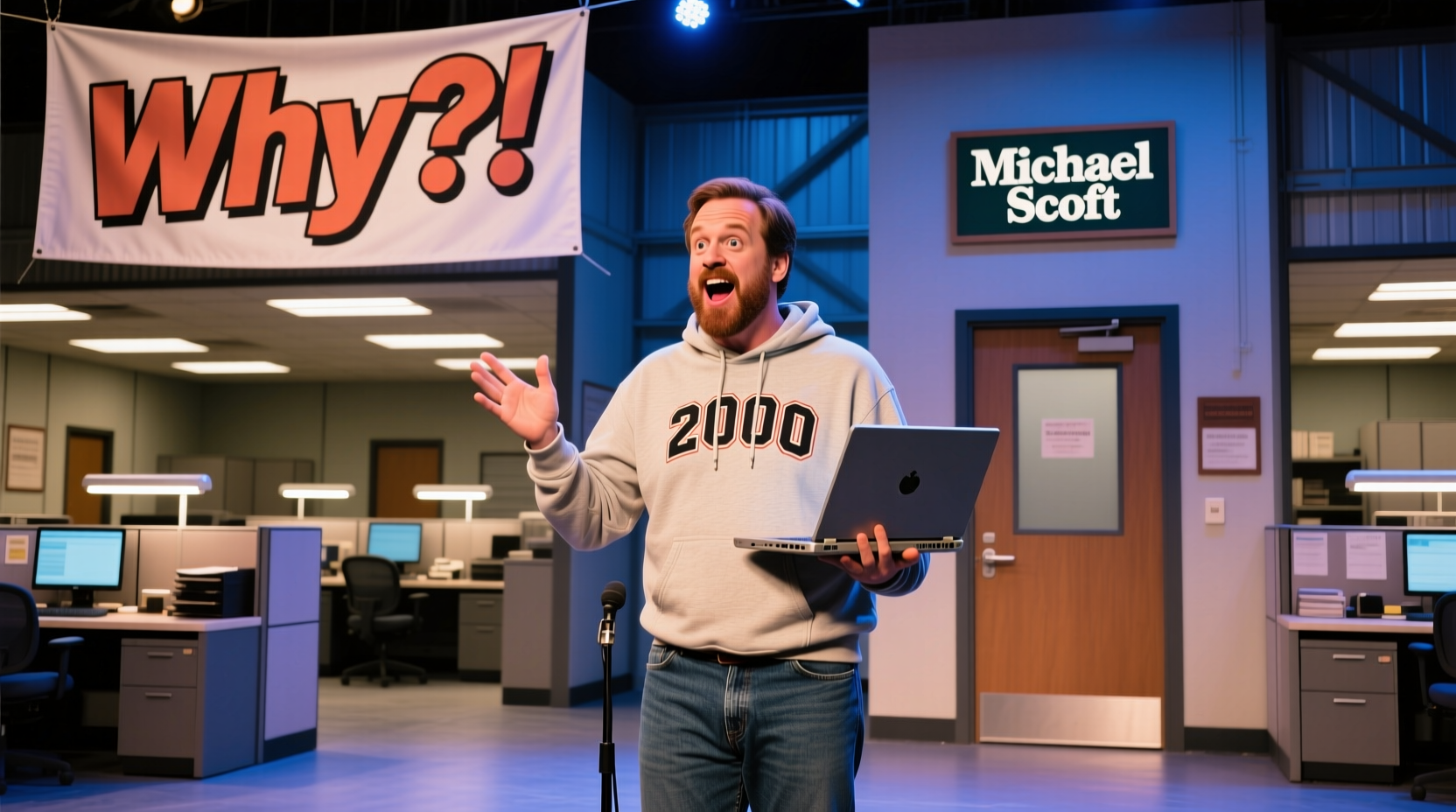
Most talk shows rely on structure: opening monologue, guest interviews, musical performance. Why? with Hannibal Buress dismantled that template. Instead, each episode unfolded like a loosely connected series of vignettes, held together by Buress’s deadpan narration and genuine curiosity about human behavior.
Segments ranged from “Why Do People…?” investigations—such as why people wear socks with sandals—to surreal stunts like Buress attempting to open a bank account using only emojis. These weren’t just jokes; they were probes into societal norms, asking viewers to question habits they’d never thought twice about.
The show embraced spontaneity. Field segments often featured real people reacting to bizarre scenarios, such as being handed a live chicken in public or asked to interpret modern art made of trash. There was no script, no safety net—just Buress watching the world react to absurdity with a smirk.
Comedy with a Sociological Lens
What separated Why? from other comedy shows was its implicit commentary on culture. Buress didn’t mock his subjects; he observed them. Whether interviewing conspiracy theorists, visiting competitive eateries, or exploring underground fight clubs, he maintained a neutral tone that invited viewers to draw their own conclusions.
This observational approach echoes the work of documentarians like Louis Theroux, but filtered through a distinctly American comedic lens. As media scholar Dr. Lena Peterson notes:
“Buress uses humor not to ridicule, but to create space for reflection. He asks ‘why’ not because he expects an answer, but because the question itself reveals something about us.” — Dr. Lena Peterson, Media & Culture Research Institute
For example, in one episode, Buress spends time at a “rage room” where people smash belongings to relieve stress. Instead of laughing at the concept, he participates, then quietly muses on the emotional cost of modern life. The joke isn’t the destruction—it’s the fact that we need this outlet at all.
Behind the Scenes: Creative Freedom and Risk-Taking
One reason Why? felt so fresh was the level of creative control Buress maintained. Unlike many hosts who inherit a pre-produced format, Buress co-created the show with his writing team, allowing ideas to emerge organically from street-level experiences rather than network mandates.
This freedom led to bold choices. In one memorable segment, Buress hired actors to stage fake protests outside random businesses, then filmed reactions from passersby. The results were uncomfortable, revealing biases and herd mentality in real time. Comedy Central aired it—proof of the network’s willingness to back risky content when rooted in insight.
| Aspect | Traditional Talk Show | Why? with Hannibal Buress |
|---|---|---|
| Pacing | Fast, tightly edited | Loose, meandering |
| Host Role | Centerpiece, interviewer | Guide, observer |
| Audience Engagement | Laughter, applause | Thought, discomfort, surprise |
| Risk Level | Low (scripted, safe) | High (improvised, unpredictable) |
| Primary Goal | Entertain, promote guests | Provoke curiosity, challenge norms |
Mini Case Study: The “Silent Commute” Experiment
In Season 2, Episode 7, Buress conducted what became one of the show’s most talked-about experiments: a “silent commute.” He boarded a Chicago subway and stood completely still, making eye contact with passengers but saying nothing. Over several minutes, commuters grew visibly uneasy. Some looked away, others smiled nervously, a few left the car entirely.
The segment lasted less than four minutes but sparked online discussion about personal space, urban alienation, and nonverbal communication. It wasn’t designed to go viral—but it did, shared across Reddit, Twitter, and psychology forums. Educators used it in sociology classes to discuss social contracts. The power of the moment lay in its simplicity: no punchline, just presence.
This experiment exemplified the show’s ethos: comedy as inquiry. Buress wasn’t trying to shock or offend—he was testing invisible rules that govern daily life.
Actionable Takeaways for Creators and Viewers
Why? may have ended, but its influence lingers. For aspiring comedians, writers, and content creators, the show offers a blueprint for authentic storytelling. Here’s how to apply its principles:
- Start with a question, not a premise. Instead of “Let’s make a sketch about dating,” ask “Why do people lie on dating apps?” The question drives exploration.
- Embrace low-stakes absurdity. You don’t need a big budget. Try filming strangers reacting to a person walking a stapler on a leash.
- Cast real people, not actors. Authentic reactions are more compelling than scripted ones.
- Edit for rhythm, not polish. Allow pauses, stumbles, and silence—they build tension and realism.
- Stay curious, not cynical. Buress never mocked his subjects. His humor came from wonder, not superiority.
Checklist: Recreate the Why? Vibe in Your Own Projects
- Identify a mundane behavior worth questioning
- Design a simple, low-cost experiment around it
- Record real-time reactions without interference
- Narrate with dry, understated commentary
- End without resolution—leave the audience thinking
Frequently Asked Questions
Why did Why? with Hannibal Buress end after three seasons?
The show concluded in 2018 as Buress shifted focus to stand-up tours and film projects. While it had a loyal fanbase, its unconventional format didn’t achieve mainstream ratings. However, Comedy Central cited creative fulfillment over cancellation, emphasizing that Buress completed his vision.
Is Why? appropriate for all audiences?
The show contains mature themes, occasional strong language, and socially provocative content. It’s best suited for teens and adults who appreciate satire and sociological humor. Parents should preview episodes before sharing with younger viewers.
Where can I watch Why? with Hannibal Buress today?
Full episodes are available on Paramount+ and Comedy Central’s official website (with cable login). Select clips are also on YouTube and Vimeo, often uploaded by fans and educational channels.
Conclusion: Keep Asking Why
Why? with Hannibal Buress wasn’t just a TV show—it was an invitation to see the world differently. In an age of algorithm-driven content and performative outrage, Buress offered something rare: quiet curiosity. He reminded us that comedy doesn’t have to punch down or chase trends to be powerful. Sometimes, the funniest thing you can do is ask a simple question and let the world answer.
The legacy of Why? lives on in creators who prioritize authenticity over virality, who find humor in the mundane, and who aren’t afraid to sit in awkward silence. If you’ve never seen the show, start with Season 1, Episode 3: “Why Do People Tailgate?” You’ll laugh, yes—but you’ll also think. And maybe, just maybe, you’ll start asking “why” a little more often.




 浙公网安备
33010002000092号
浙公网安备
33010002000092号 浙B2-20120091-4
Comments
No comments yet. Why don't you start the discussion?