
The phrase “why you mad” has become one of the most recognizable and widely used expressions in internet culture. It’s short, dismissive, and dripping with sarcasm—perfect for shutting down arguments, trolling opponents, or just poking fun at someone overreacting. But where did it come from? How did it evolve into a meme phenomenon? And what makes it so effective in online discourse? This article dives deep into the history, evolution, and cultural significance of the “why you mad” meme, complete with real-world usage and some of the funniest examples circulating online.
The Origins: From Street Talk to Internet Slang
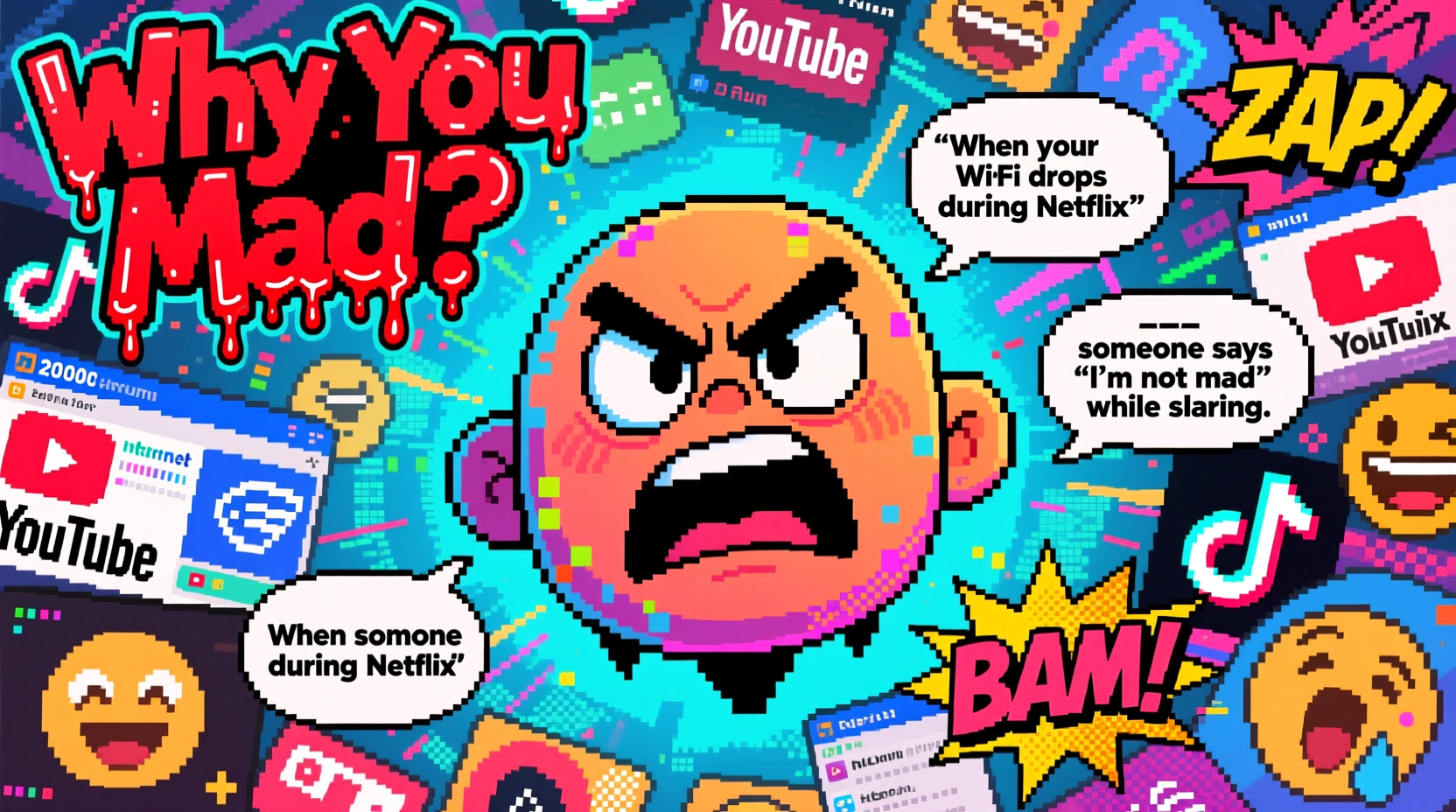
The phrase “why you mad” didn’t start on social media. Its roots trace back to African American Vernacular English (AAVE), where it was commonly used in casual conversation as a rhetorical question—often delivered with a smirk—to challenge someone’s emotional reaction. It gained traction in hip-hop lyrics and urban comedy during the 2000s, appearing in tracks by artists like Lil Wayne and in stand-up routines that highlighted exaggerated responses to trivial situations.
By the early 2010s, the phrase began migrating to online forums like Reddit, 4chan, and Twitter. Its brevity and confrontational tone made it ideal for comment sections and flame wars. Users would drop “why you mad?” after making a provocative statement, turning frustration into humor. The phrase wasn’t just about asking a question—it was a power move, asserting dominance in digital debates through irony and detachment.
“Internet slang often emerges from marginalized communities before being adopted and repackaged by mainstream users. ‘Why you mad’ is a textbook example of linguistic appropriation turned viral.” — Dr. Lena Torres, Digital Linguistics Researcher, University of California
Evolution Into a Meme Format
The transformation of “why you mad” from a spoken phrase to a full-blown meme format happened around 2015–2016. Image macros featuring smug-looking characters—often animated figures like SpongeBob SquarePants, Patrick Star, or cartoon foxes—began pairing the text “why you mad?” with absurd or petty scenarios. These memes followed a predictable formula:
- A character does something annoying or slightly unethical.
- The victim reacts with visible anger.
- The original character responds with a calm “why you mad?”
One of the earliest viral versions featured Patrick Star blowing bubbles in a library while other patrons fume, ending with him saying, “why you mad?” The humor lies in the mismatch between action and consequence—the bubble-blowing is childish but not truly disruptive, yet the response is outrage. The meme mocks both the overreaction and the obliviousness of the provocateur.
Cultural Usage and Contextual Nuances
While the meme is often used for comedic effect, its usage varies significantly depending on context. In gaming communities, players might say “why you mad?” after winning a match by exploiting a glitch. On political threads, it appears as a taunt when someone loses an argument. However, there's a fine line between playful teasing and genuine provocation.
In competitive spaces like League of Legends or Fortnite, typing “why you mad?” in chat after securing a kill can be seen as salt-spreading—adding insult to injury. Conversely, among friends, the same message might be interpreted as lighthearted banter. Tone, relationship dynamics, and platform norms all influence whether the phrase lands as funny or hostile.
It’s also been co-opted by influencers and brands trying to appear “relatable.” Fast food chains, sneaker companies, and even politicians have used variations of the meme in marketing campaigns, sometimes successfully, sometimes awkwardly. When done well, it feels authentic; when forced, it comes across as cringe.
Do’s and Don’ts of Using “Why You Mad” Online
| Do | Don’t |
|---|---|
| Use it in low-stakes, humorous contexts | Deploy it in serious discussions about trauma or injustice |
| Pair it with absurd visuals for comedic effect | Use it to belittle someone genuinely upset |
| Know your audience—friends vs. strangers | Assume everyone will get the joke |
| Keep it light and ironic | Use it to escalate conflicts |
Funny Examples That Broke the Internet
The longevity of the “why you mad” meme owes much to its adaptability. Here are some of the most iconic and hilarious iterations that have circulated across platforms:
- SpongeBob at the DMV: A meme shows SpongeBob calmly filing paperwork while the person behind him screams silently. Caption: “Me submitting my form on time… why you mad?”
- Pet Edition: A cat sitting on a keyboard with the owner visibly frustrated. Text overlay: “I’m not mad, I’m just disappointed… said no pet owner ever. Why you mad?”
- Gym Logic: Guy using all the weights and then spotting someone waiting. “Bro, it’s called circuit training. Why you mad?”
- Streaming Wars: Person watching Netflix while their friend rants about Disney+ exclusives. Final frame: “You mad because I don’t care? Why you mad?”
- Office Humor: Coworker microwaving fish in the break room. Colleague storms in. Response: “Protein is important. Why you mad?”
These examples thrive on relatability. Everyone has encountered a minor annoyance or witnessed someone weaponizing innocence. The meme flips the script, casting the annoyed party as unreasonable—even if they’re technically in the right.
Mini Case Study: The Rise of “Why You Mad” in Esports
In 2020, during a high-profile Fortnite tournament, a young player named “SlickNick” won a close match by hiding until the final circle and sniping the last opponent. After the win, he typed in global chat: “gg ez… why you mad?” The clip went viral within hours, amassing over 2 million views on Twitter and TikTok.
What made this moment significant wasn’t just the taunt—it was the backlash and subsequent defense. Critics called it toxic behavior. Supporters argued it was just part of gaming culture, akin to trash talk in sports. Streamers debated ethics in online competition. Within days, “why you mad?” became a rallying cry for both sides—used ironically by commentators and literally by players continuing the trend.
This case illustrates how a simple meme phrase can spark broader conversations about digital etiquette, youth culture, and the boundaries of humor in competitive environments.
How to Use the Meme Responsibly
Like any internet expression rooted in confrontation, “why you mad” carries social weight. While it can enhance humor and camaraderie, misuse can alienate others or trivialize real emotions. Consider these steps before dropping the phrase:
- Assess the context. Is this a joke among friends or a public forum with diverse opinions?
- Check your intent. Are you trying to lighten the mood or provoke a reaction?
- Consider timing. Never use it in response to someone expressing pain or vulnerability.
- Be ready to engage. If someone calls you out, don’t double down—explain or apologize if needed.
- Know when to retire it. Overuse dilutes impact. Let memes breathe.
FAQ
Is “why you mad” considered cyberbullying?
Not inherently. Intent and context matter. When used playfully among peers, it’s generally harmless. But repeated use to mock or humiliate someone—especially in professional or educational settings—can cross into bullying territory.
Can brands use “why you mad” in advertising?
Yes, but carefully. Brands like Wendy’s and Mountain Dew have used similar edgy humor successfully by aligning it with their voice. However, attempts by more traditional companies often fall flat due to lack of authenticity.
Has the meme lost its impact?
Like all viral trends, its peak popularity has passed. But it remains a cultural reference point and continues to resurface in new formats—TikTok skits, AI-generated videos, and remixes—proving its staying power in digital folklore.
Conclusion
The “why you mad” meme is more than just a punchline—it’s a reflection of how language evolves in digital spaces. Born from street slang, amplified by internet irony, and shaped by millions of users, it exemplifies the speed and creativity of online communication. Whether you love it or find it grating, its influence is undeniable.




 浙公网安备
33010002000092号
浙公网安备
33010002000092号 浙B2-20120091-4
Comments
No comments yet. Why don't you start the discussion?