
In the wild, a zebra running from a lion experiences intense physiological stress—racing heart, surging adrenaline, elevated cortisol. Yet, once the threat passes, its body quickly returns to baseline. It doesn’t lie awake at night worrying about tomorrow’s predators or replaying yesterday’s near-miss. Humans, on the other hand, activate the same life-saving stress response not just for physical danger, but for traffic jams, work emails, financial anxiety, and social pressures. This mismatch between our evolved biology and modern lifestyle lies at the heart of Robert Sapolsky’s seminal work, Why Zebras Don’t Get Ulcers. His decades of research reveal how chronic psychological stress damages nearly every system in the human body—and why understanding this is critical for long-term health.
The Biology of Stress: Acute vs. Chronic
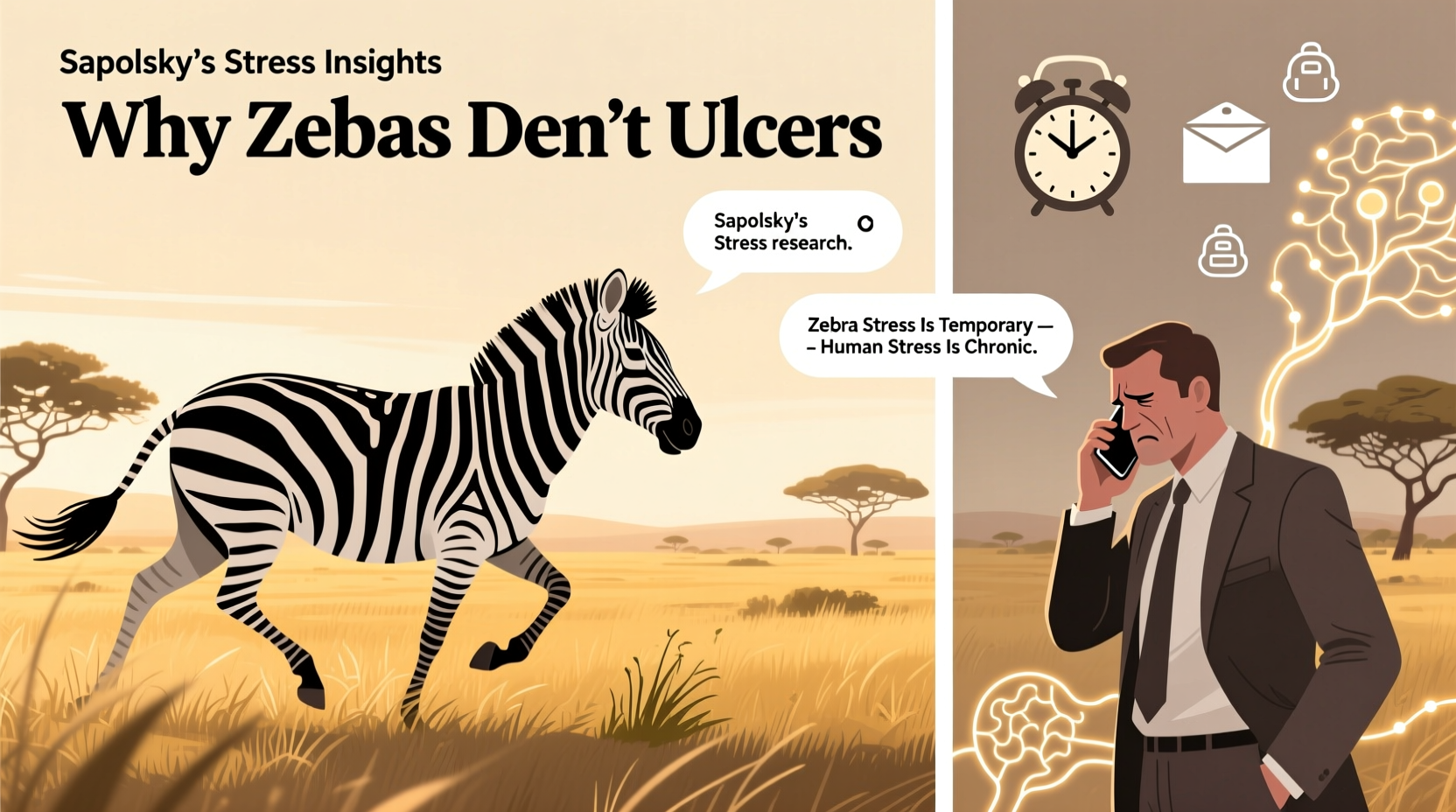
Sapolsky, a neuroscientist and primatologist, began his career studying baboons in East Africa. What he discovered was that while all animals experience acute stress—short-term threats requiring immediate survival responses—humans are uniquely prone to chronic stress. Unlike zebras, who only stress when actively threatened, humans trigger the same hormonal cascade over imagined, future, or abstract concerns.
The stress response begins in the brain’s hypothalamus, which activates the HPA axis (hypothalamic-pituitary-adrenal). This releases cortisol, the primary stress hormone, preparing the body for action by increasing blood sugar, suppressing non-essential functions like digestion and immunity, and sharpening focus. In short bursts, this is adaptive. But when cortisol remains elevated for days, weeks, or years, it becomes destructive.
Why Zebras Don’t Get Ulcers—And Why We Do
Zebra physiology is built for episodic stress. After escaping a predator, their cortisol levels drop within minutes. Their bodies aren’t designed to maintain high alert during prolonged mental strain. Humans, however, often live in a state of low-grade, continuous arousal. We worry about job security, relationships, global events, or past mistakes—all without physical outlets to discharge the tension.
This persistent activation leads to wear and tear known as allostatic load. Over time, high cortisol contributes to insulin resistance, hypertension, weakened immunity, memory impairment, and gastrointestinal disorders—including ulcers. Ironically, the very system meant to protect us ends up causing harm when chronically engaged.
“We’ve evolved to deal with emergencies lasting about three minutes—the time it takes to escape a predator. The problem is, our stressors now last for hours, days, or years.” — Robert Sapolsky, Why Zebras Don’t Get Ulcers
Modern Triggers of Chronic Stress
Unlike the tangible threats faced by animals, human stress is often psychological and self-generated. Sapolsky identifies several key factors that amplify stress in industrialized societies:
- Lack of control: Feeling powerless over outcomes increases stress more than the workload itself.
- No outlet: Without physical activity or emotional expression, stress hormones accumulate.
- No predictability: Uncertainty about the future keeps the brain in a state of hypervigilance.
- No social support: Loneliness exacerbates stress, while connection buffers its effects.
- Pessimistic outlook: Catastrophizing or ruminating prolongs the stress response.
These factors are common in high-pressure jobs, caregiving roles, financial instability, and even digital overload. The result? A population suffering from stress-related conditions despite relative safety and comfort.
Real-Life Example: The Overworked Executive
Consider Maria, a 42-year-old project manager. She works 60-hour weeks, constantly checking emails after hours. Deadlines loom, team conflicts arise, and she feels responsible for everything. Though she faces no physical danger, her cortisol levels remain elevated. Over two years, she develops insomnia, frequent colds, digestive issues, and high blood pressure. Her doctor diagnoses early signs of metabolic syndrome. Maria isn’t lazy or weak—she’s a victim of chronic stress, exactly the kind Sapolsky warns against. Her body is responding as if under siege, even though the “threat” is spreadsheets and meetings.
Strategies to Reduce Chronic Stress
The good news is that while we can’t eliminate all stressors, we can change how we respond to them. Drawing from Sapolsky’s research and behavioral science, here are evidence-based ways to lower allostatic load.
Step-by-Step Guide to Managing Stress Physiology
- Identify personal stress triggers: Keep a journal for one week noting when you feel tense, anxious, or irritable. Look for patterns.
- Interrupt the cycle: When stressed, practice box breathing (inhale 4 seconds, hold 4, exhale 4, hold 4) to calm the nervous system.
- Move your body: Exercise metabolizes excess cortisol and adrenaline. Even a 20-minute walk helps.
- Create predictability: Plan your day the night before. Structure reduces uncertainty.
- Build social connection: Talk to a friend, join a group, or seek therapy. Social support lowers cortisol.
- Reframe perspective: Ask: “Will this matter in five years?” Most stressors shrink under this lens.
- Practice mindfulness: Daily meditation—even 10 minutes—can reduce amygdala reactivity and improve emotional regulation.
Do’s and Don’ts of Stress Management
| Do | Don’t |
|---|---|
| Exercise regularly | Skip sleep to get more work done |
| Maintain strong social ties | Isolate when stressed |
| Set clear boundaries at work | Check email late at night |
| Practice gratitude daily | Ruminate on worst-case scenarios |
| Seek professional help when needed | Ignore physical symptoms of stress |
FAQ: Common Questions About Stress and Health
Can stress really cause ulcers?
While most ulcers are caused by H. pylori bacteria, chronic stress can worsen symptoms and delay healing by increasing stomach acid and reducing mucosal protection. Stress alone may not cause ulcers, but it significantly contributes to gastrointestinal dysfunction.
How does stress affect the brain?
Prolonged high cortisol shrinks the hippocampus (involved in memory) and overactivates the amygdala (fear center), impairing learning and increasing anxiety. It also reduces prefrontal cortex function, weakening decision-making and impulse control.
Are some people more resilient to stress?
Yes. Genetics play a role, but resilience is largely shaped by environment and behavior. People with strong social support, a sense of control, and effective coping strategies show lower cortisol responses and faster recovery from stress.
Conclusion: Reclaiming Control in a Stressed-Out World
Sapolsky’s central message isn’t that stress is avoidable—it’s that we must manage it wisely. Our bodies weren’t designed for the relentless pace of modern life, but we’re not helpless. By recognizing the invisible toll of chronic stress and taking deliberate steps to counteract it, we can protect our health and reclaim a sense of balance.
You don’t need to eliminate stress entirely. You need to create space between stimulus and response—time to breathe, connect, move, and reflect. Start small: take three deep breaths before replying to a stressful message, schedule a weekly call with a friend, or step outside for five minutes of sunlight. These acts aren’t indulgences; they’re biological necessities.




 浙公网安备
33010002000092号
浙公网安备
33010002000092号 浙B2-20120091-4
Comments
No comments yet. Why don't you start the discussion?